Table of Contents
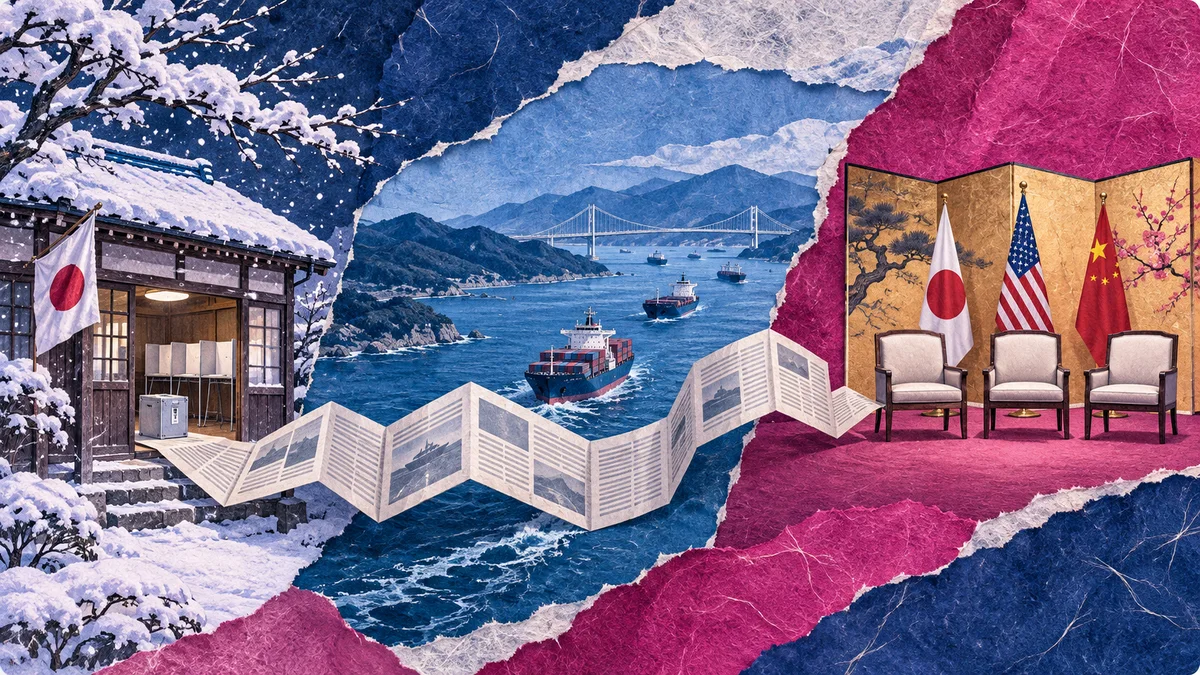
A Japanese petrol station in March and a summit in June had something in common: a narrow stretch of water. January’s winter election campaign resurfaced in September as a story about a political party’s unpaid bills. Reading the news a month at a time brings those connections back into view.
This is the annual edition of our daily news digest, One Minute Today. The first edition follows the year through November 16. We will return to this page several times before the year ends, including to report what happened at meetings that are still only pencilled into the calendar.
January · Flowers in Noto and a winter election
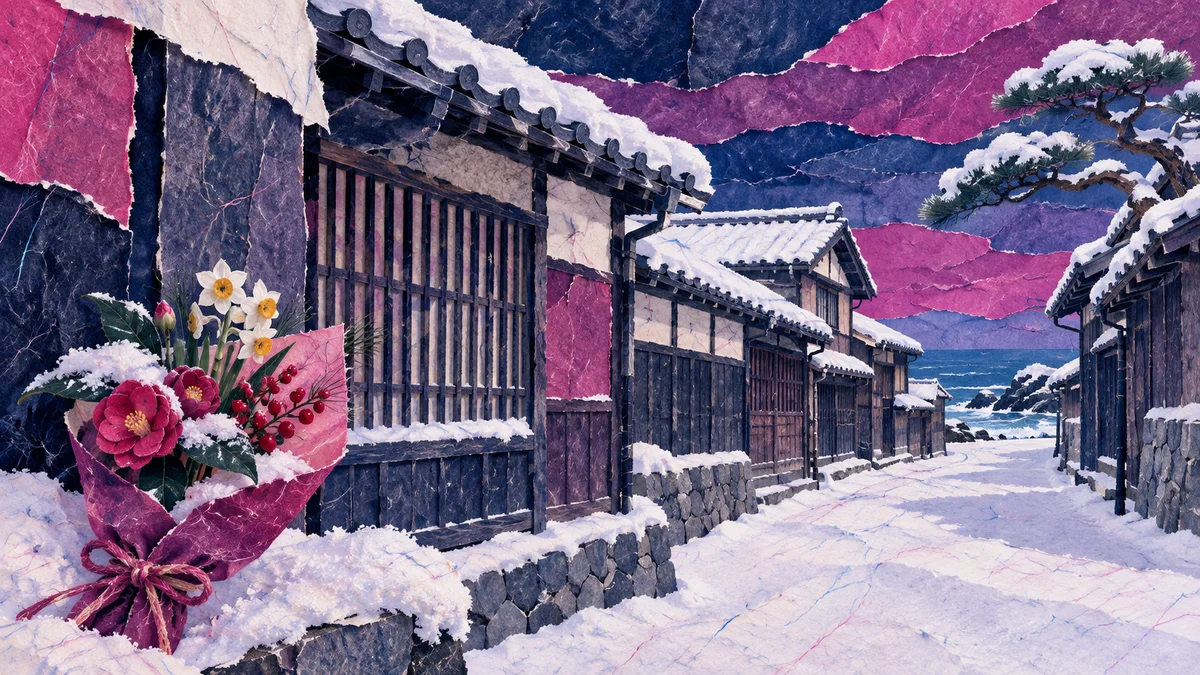
Two years after the Noto Peninsula earthquake, a man returned to lay flowers where a neighbouring building had collapsed, killing his wife and elder daughter. For many readers it was the first morning of a new year. For his family it was the anniversary of their deaths. Alongside that report, our January 1 edition carried a forecast of heavy snow on the Sea of Japan coast.
Later that month snow became part of the political landscape too. Dissolving the House of Representatives meant sending candidates and voters out in winter. In a poll reported on January 25, about four in ten respondents disapproved of the dissolution. Their answer to the question of timing would not necessarily tell you whose name they intended to write on the ballot.
February · The two clocks of election day
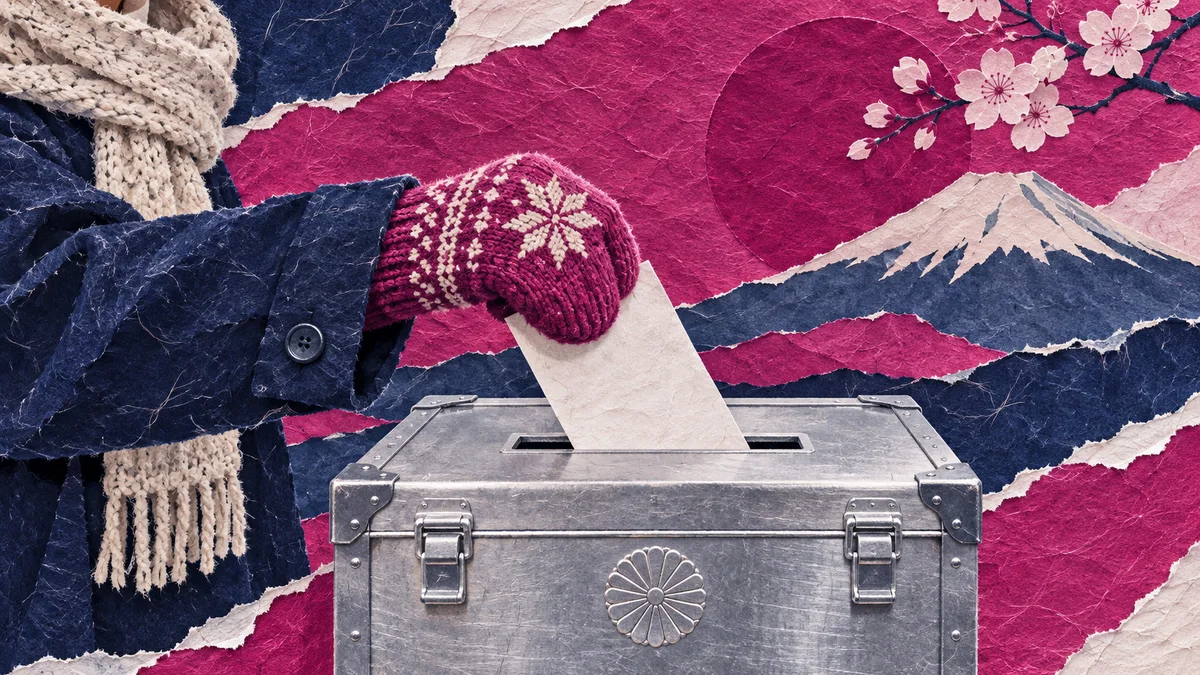
At 2 pm on February 8, reported turnout in Tochigi Prefecture stood at 13.59 percent. Include early voting and the figure was already 41.04 percent. Both numbers described the same election at the same hour. In Osaka, voters were also electing a governor, with another bid to reorganise Osaka’s government at stake.
After polling day came a different deadline. Our February 22 edition paired a rise in approval for Prime Minister Sanae Takaichi’s cabinet with a debate over holding budget deliberations on weekends. The election had determined who would decide how public money was spent. It had also used up some of the time available to agree on a budget before April.
At the Winter Olympics in Italy, Riku Miura and Ryuichi Kihara climbed from fifth after the short program to win gold in the free skate. It was Japan’s first Olympic pairs title. JOC
March · A shipping lane reaches the household bill

As fighting around Iran raised doubts about passage through the Strait of Hormuz, our March 1 edition followed the cargo. Oil tankers supply the fuel whose price drivers see on roadside signs. Ships carrying liquefied natural gas also supply power generation and city gas. Changes in purchasing costs and changes on the household bill arrive on different schedules.
By mid-month Japan was debating what its Self-Defense Forces could do. On March 23 the digest carried both an American account that Japan had promised support and the Japanese chief cabinet secretary’s denial. The country needed fuel deliveries to continue. What it had actually agreed to contribute became a question about the wording used at a summit.
In the World Baseball Classic, defending champion Japan lost its quarter-final 8–5 to Venezuela. Follow Japan’s opponent beyond the final out: Venezuela beat Italy and then the United States for its first title. MLB
April · Reading a ceasefire from the bridge of a ship
On April 8 came news of a two-week US–Iran ceasefire. In a telephone conversation with Iran’s president, Japan’s prime minister asked for safe passage through Hormuz. Keep two dates in mind when reading what followed: the expiry of the ceasefire and the day a particular ship could safely sail. On April 22 the archive reported a ceasefire extension alongside reports of gunfire directed at container ships.
On Japanese roads, April 1 brought a change to everyday journeys. Cyclists aged 16 and over became subject to the blue-ticket system for specified violations, including ignoring a red light or a stop sign. Paying the penalty settles the case without criminal proceedings. What changed for a student riding to school was the procedure following an offence. National Police Agency guide
May · What “ended” meant in Washington
On May 1 we carried a report that the US administration considered hostilities with Iran to have ended. The context was a deadline under the US War Powers Resolution. On May 9 the archive reported an American attack on an Iranian tanker. Read only the dates and it sounds as though something had ended and then immediately started again.
Washington was addressing the relationship between the administration and Congress over military action. At sea, the practical question was whether a particular vessel could reach its next port. That gap helps explain why a comparatively modest piece of news in June, about a communications channel, mattered to people planning a voyage.
June · Who takes the call from Hormuz?
On June 15 Japan's prime minister said the country would join a statement on stability in the strait. Back in March American and Japanese accounts had differed over what Japan had promised. Now there would be wording governments could share publicly, even as the extent of Japan’s practical role remained a subject of debate.
On June 22 the archive reported a US–Iran communications network for safe navigation. Behind the declaration lay a job someone had to do: if a ship encountered danger, who would pass that information on, and to whom? After months of following the ships, the establishment of a contact channel read like a tangible development.
July · Five days at forty degrees
On July 25 six places in Japan recorded highs of at least 40°C. It was the fifth consecutive day on which somewhere in the country had reached that threshold, the longest such sequence recorded up to that point. The five-day figure tells us how extreme heat persisted across the country. It does not require any one town to have reached forty on all five days.
The July 1 archive had opened summer differently. The Subashiri trail on the Shizuoka side of Mount Fuji brought forward its opening to coincide with the Yoshida trail on the Yamanashi side. Climbers spoke of watching the sunrise. Within a single month, the archive moved from the rewards of spending hours outdoors to the risks of doing so.
The World Cup final on July 19 went to extra time. Ferran Torres scored the only goal, giving Spain its second title at the expense of defending champions Argentina. Like Japan at the baseball tournament in March, the holders yielded to the eventual winners. FIFA
August · Which vehicles can get through?
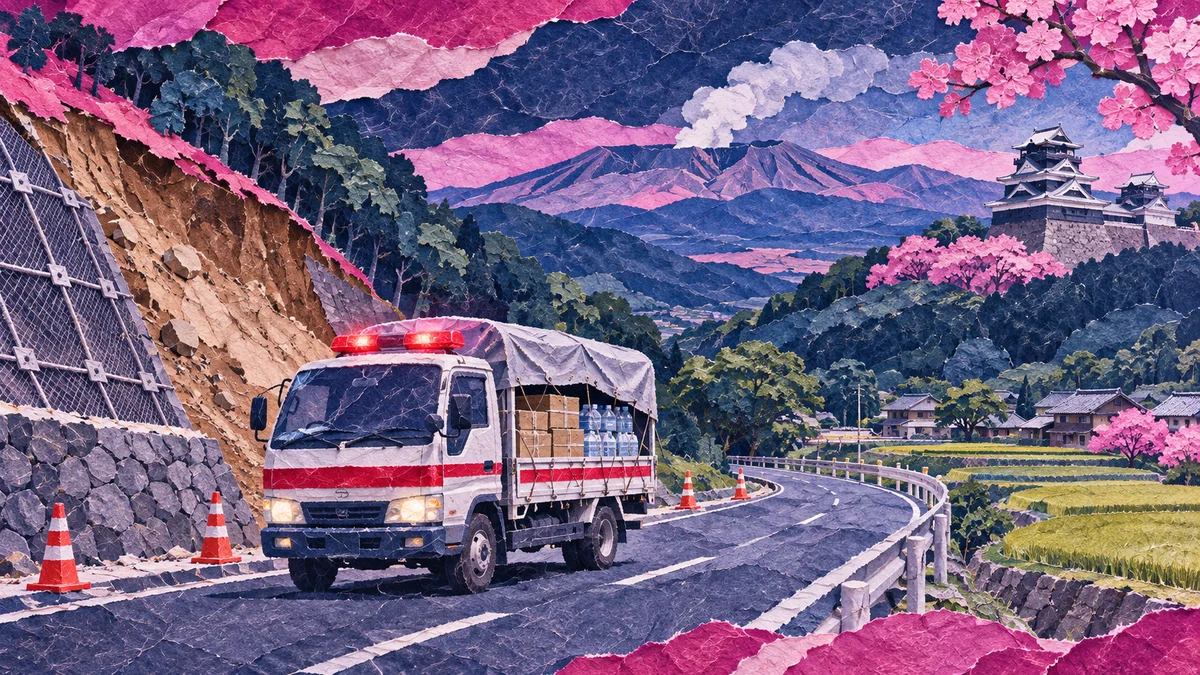
An August 1 road bulletin after the Kumamoto earthquake distinguished closures from sections passable for emergency vehicles. A route reopening to ambulances or relief supplies was good news. Residents wanting to drive home still needed to know which category their road belonged to. The same edition reported how young Vietnamese rescuers had worked through rubble to free a woman.
By the holiday season, the lifting of storm warnings in Okinawa appeared alongside forecasts for another typhoon. On August 22 came a flood danger warning on Tokyo’s Zenpukuji River. Looking back to Noto in January gives those shifts on the map a different perspective: recovery continues in one place long after the weather bulletins have moved somewhere else.
September · February’s election comes back as a bill
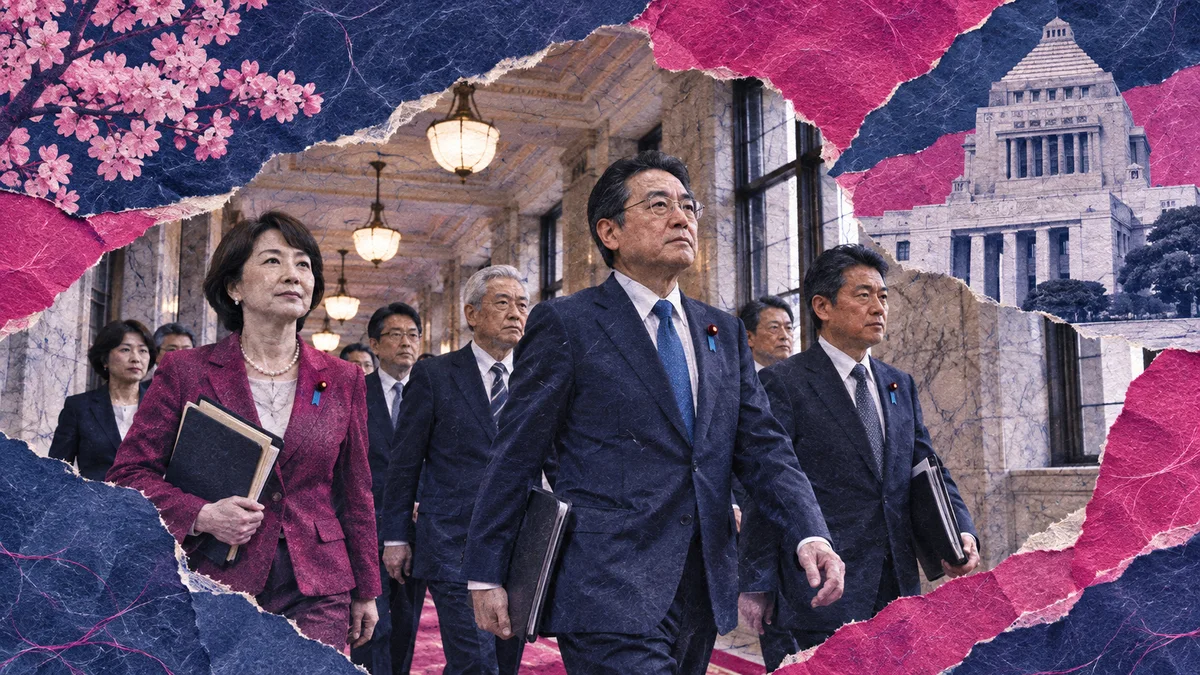
On September 9 the archive reported that a centrist party reduced to a single legislator stood to receive ¥1.17 billion in public party funding. Among the intended uses was paying expenses from February’s lower-house election. The morning after a vote, winners dominate the pictures. Six months later, accounts tell another part of the story: the organisation that ran the campaign still has bills to settle.
On September 17 Takaichi launched a reshuffled cabinet. Key ministers stayed, while the Japan Innovation Party gained its first cabinet representative. A party that appeared in February’s coverage through Osaka polling stations now appeared as a participant in national government. Following the appointments adds something that a list of seats won could never show on its own.
October · Antarctic ice and a Japanese laboratory
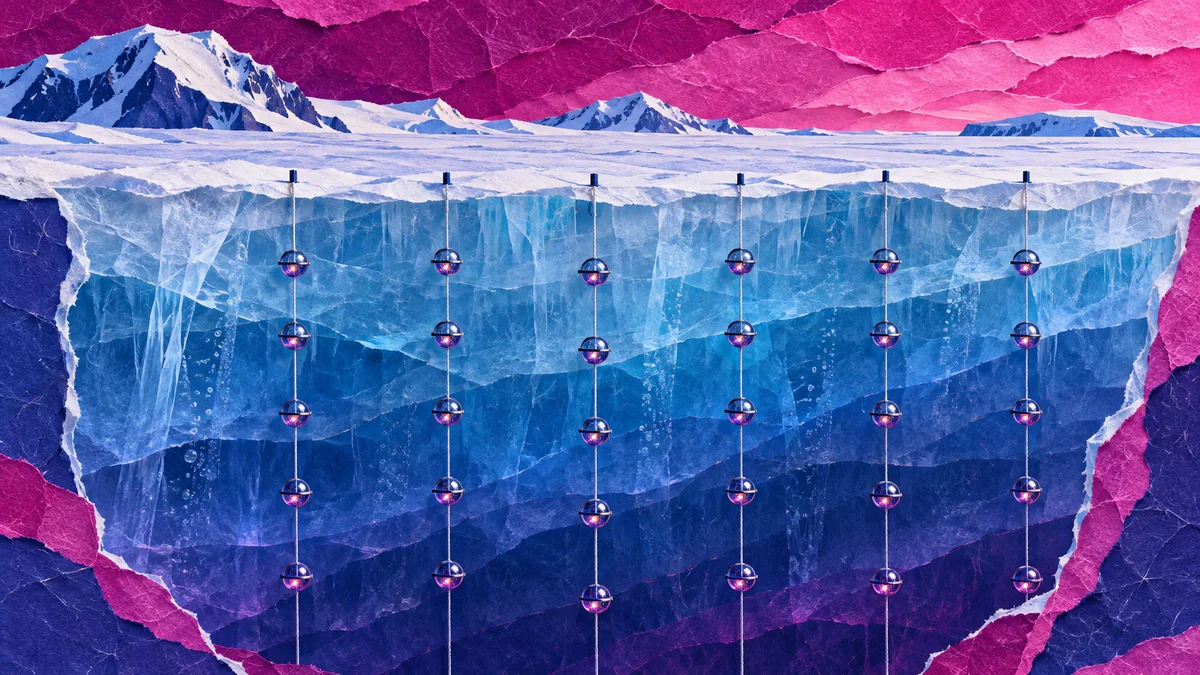
On October 7 our archive heard from researchers at Chiba University involved in IceCube, the Antarctic observatory. Neutrinos pass through most matter. Deep in Antarctic ice, instruments register the light produced following a rare interaction. The detector is in Antarctica, but the people who build equipment and sustain observations work across national borders.
Closer to home, a newcomer won Yokohama’s mayoral election. After a year spent following the combinations that parties could form in parliament, here was a vote much closer to residents’ everyday experience: how had the incumbent done the job of running their own city?
November · Three chairs at a meeting yet to happen
Voting began in the US midterm elections on November 3, giving Americans a chance to change the composition of Congress halfway through a presidential term. The previous day had brought reports of a US strike on an Iranian island. The Middle East story that readers had followed through shipping routes in spring was still unfolding as Americans went to vote.
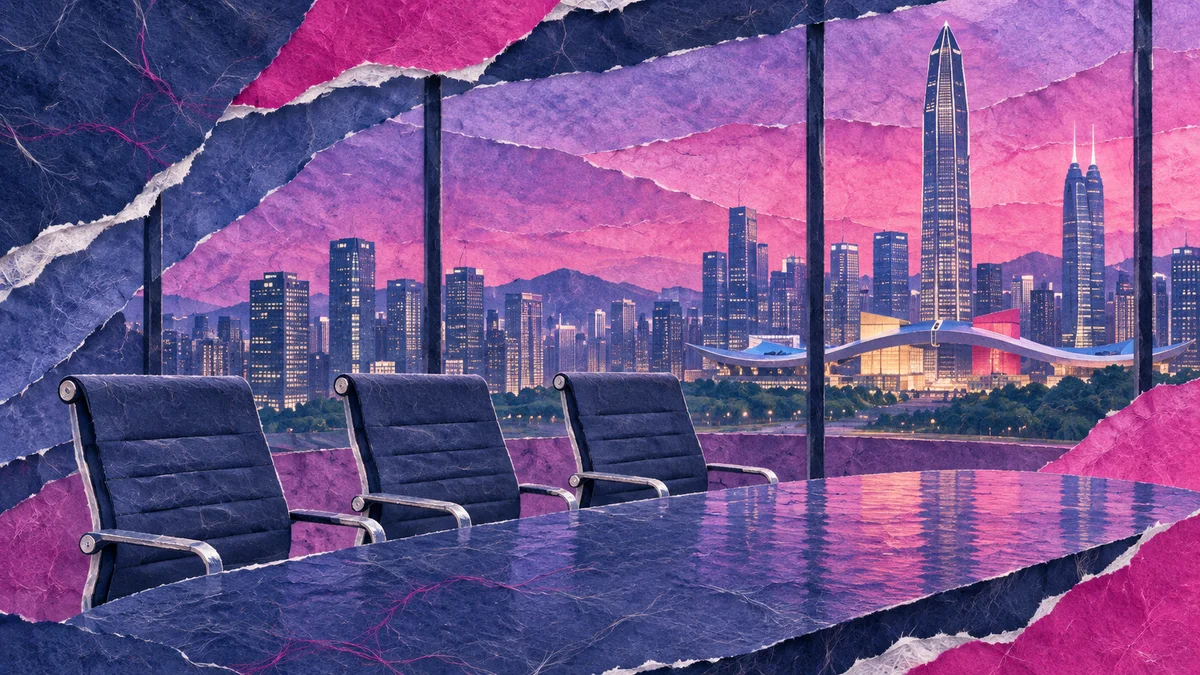
As of November 16 the next date to mark is November 19. The US, Chinese and Russian leaders are due to discuss nuclear arms alongside APEC in Shenzhen. Since the US–Russian New START treaty expired in February, one question has been how to start a conversation that includes China. Arranging the three chairs is a development in its own right. What the people sitting in them will agree on remains unwritten. November 14 summit announcement
In the next update we will pick up the story with what was actually discussed. To revisit a day and see what else shared the headlines, browse the One Minute Today archive.
December · Coming at the end of the month
At the end of December, we’ll return to the daily archive and fill these pages with the month’s major stories, including what became of the events we followed in November.
References
- [1]One Minute Today · 2026-01-01 ↩
- [2]One Minute Today · 2026-02-08 ↩
- [3]One Minute Today · 2026-03-23 ↩
- [4]One Minute Today · 2026-04-08 ↩
- [5]One Minute Today · 2026-05-09 ↩
- [6]One Minute Today · 2026-06-22 ↩
- [7]One Minute Today · 2026-07-25 ↩
- [8]One Minute Today · 2026-08-01 ↩
- [9]One Minute Today · 2026-09-17 ↩
- [10]One Minute Today · 2026-10-07 ↩
- [11]One Minute Today · 2026-11-14 ↩
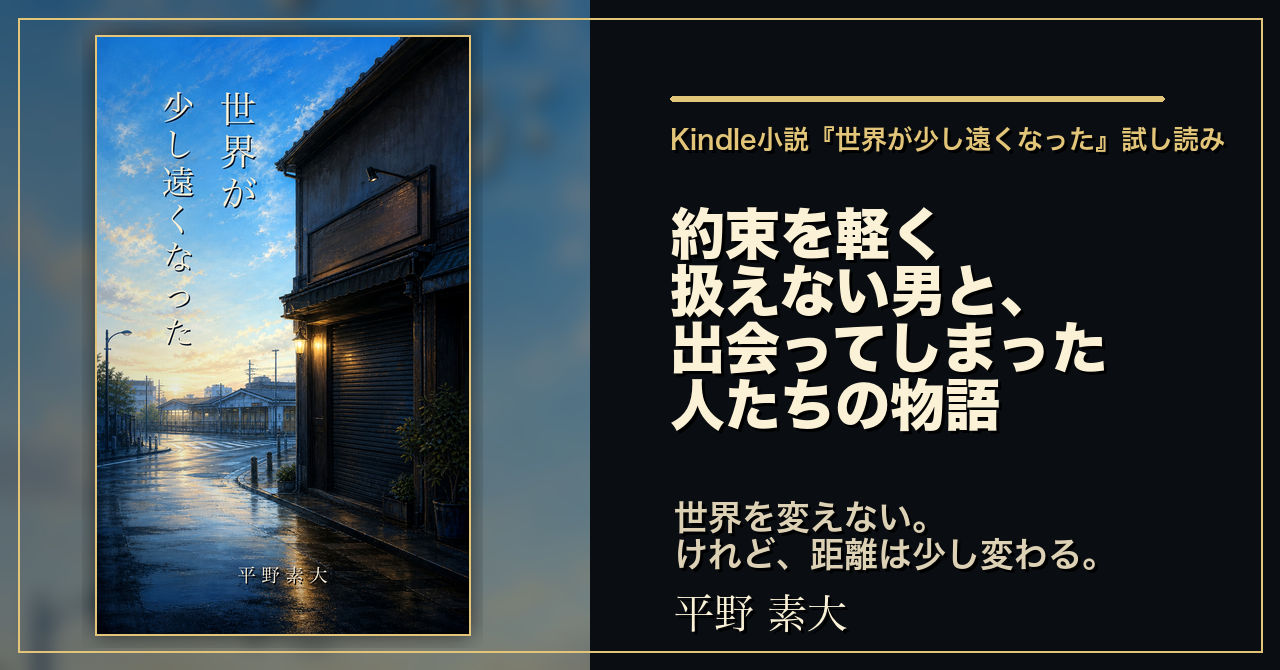
NOVEL SERIES VOL.1
The World Became Slightly Farther Away
The world may not change, but distance can.
A story about a man who cannot treat promises lightly, and the people he meets.The sequel, Clouded Glass, is out too. Start here.
View on Amazon
Jijoden.com
Your life is worth writing.
There is a truer self you can tell only to AI.Gather fragments of memory into a single story.
Take a LookRelated Articles
How Much Global Tragedy Should We Witness? Balancing Awareness, Ethics, and Well-Being
A lecture-style guide that blends history, psychology, and education research to explore how much global tragedy we should witness while protecting mental health and sustaining ethical action.
Where the Hakone Ekiden turns uphill: a spectator’s field guide for January 2027
Follow the sash from Tokyo to Lake Ashi and back. Mountain splits, the first torchlit race, qualifying, Olympic careers, TV audiences and a two-night viewing itinerary.
Send Content-Certified Mail Online in Japan—A Practical Guide to e-Naiyo Shomei
Send content-certified postal mail from your computer in Japan. Learn the cost with delivery certification, how to prepare a letter, a rental-charge example, and when to use other Web Yubin services.
After I Quit Smoking, the Gum Aisle Got Bigger
From cigarettes to vaping to chewing gum. A tour of Japan’s gum shelf, the price of a break, and what a decades-long study can tell us about life five years after quitting.
Which Streaming Subscriptions Should You Keep? A Complete Japan Guide to Prices, Ads and Family Sharing
Compare 15 major streaming services in Japan: prices with and without ads, simultaneous streams, household sharing, Netflix profile emails, bundles, annual costs and when to cancel.
From the Pocho Lab
