
Table of Contents
An evening newsreader describes a navy jacket. Someone on the sofa thinks back to yesterday’s bus ride. Why did this particular missing-person report reach their living room when so many others never do?
Some searches end before the evening news
Japanese police received missing-person reports concerning 80,486 people in 2025. That annual intake tells us how many people were reported over the course of the year. It cannot tell us how many were still missing on New Year’s Eve. [1]
A separate table starts the clock at the time of the report. Of the 67,859 people whose whereabouts were confirmed alive during 2025, 33,322 were located on the day of the report and another 20,180 on days two or three. This group includes people reported in earlier years. A search that starts at breakfast can be over by the time the newsreader goes on air. [1]
Where does a forty-person search party come from?
Japanese police rules identify circumstances calling for special attention. They include suspected crime, a potentially life-threatening accident and an inability to stay safe because of age or illness. Knowing that a middle-school pupil was last seen beside a swollen river gives officers a specific accident risk to consider. The rules prescribe neither a school-grade cutoff nor a forty-officer deployment. Routine police inquiries can also help locate people outside the special category. A headline counting forty searchers describes that particular operation. [2]
Who might remember a navy jacket?

Imagine the passenger who shared a seat with a stranger yesterday. The jacket on the news might turn an otherwise unremarkable journey into a lead.
Article 14 gives police a distinct decision to make. Would publicity help find the person, and is it appropriate in light of the reporting party’s wishes and other circumstances? A police-station noticeboard and the internet are both possible outlets. An appeal can be widely seen in one neighborhood without ever reaching a viewer across the country. [2]
Editors then decide what to cover and how much to disclose. The Japan Newspaper Publishers and Editors Association’s ethics code upholds editorial independence and calls for respect for dignity and privacy. Police rules supply no score that guarantees a national headline. [3][2]
The next time a newsreader describes a jacket, there is a question worth asking before wondering why this case made the news. Was I there at that hour? Somewhere in the audience may be a witness who has yet to realize what they saw.
References
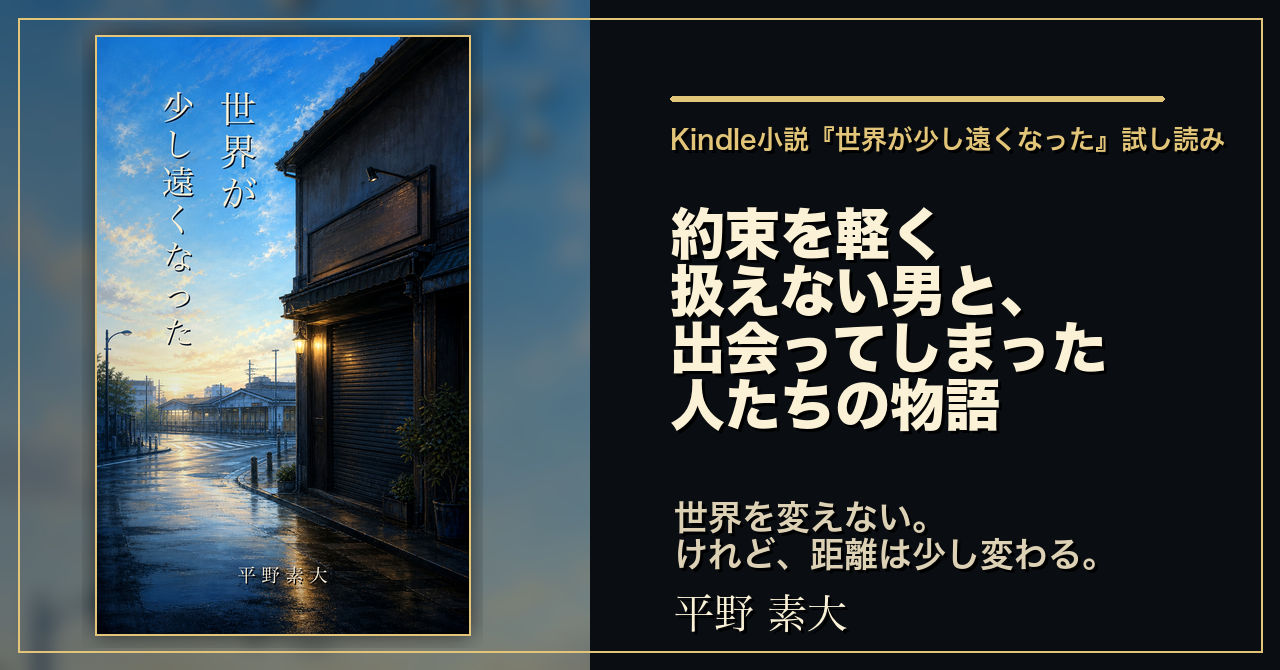
NOVEL SERIES VOL.1
The World Became Slightly Farther Away
The world may not change, but distance can.
A story about a man who cannot treat promises lightly, and the people he meets.The sequel, Clouded Glass, is out too. Start here.
View on Amazon
Jijoden.com
Your life is worth writing.
There is a truer self you can tell only to AI.Gather fragments of memory into a single story.
Take a LookRelated Articles
Catch Up on 2026 in Ten Minutes
From New Year's Day in Noto to November diplomacy, revisit the year month by month through our daily news archive.
Vacant Home Rates by Prefecture in Japan: The Latest Ranking, With Tokushima Highest at 21.3%, Saitama Lowest at 9.3%, and Kagoshima First Once Rental and Second Homes Are Excluded
Using the 2023 Housing and Land Survey from Japan’s Statistics Bureau, this ranks all 47 prefectures by vacant home rate and number of vacant homes. Japan had 9,001,600 vacant homes, a record 13.8% of all dwellings. Tokushima is highest (21.3%) and Saitama lowest (9.3%). Excluding homes for rent, for sale and second homes, Kagoshima comes first and Tokyo last. It also covers how the survey defines a vacant home, trends since 1958, changing regional gaps and the limits of a sample survey.
Total Fertility Rate by Prefecture in Japan: The Latest Ranking, With Okinawa Highest at 1.52, Tokyo Lowest at 0.96 and the Nation at a Record-Low 1.14
Using vital statistics from Japan’s health ministry, this ranks all 47 prefectures by total fertility rate. In 2025 the national rate was a record-low 1.14, with Okinawa highest (1.52) and Tokyo lowest (0.96). Prefectural 2025 figures are provisional, with final figures due in November 2026. It also covers changes from the previous year, trends since 1947, the number of births, how to read Tokyo’s figure and what the numbers cannot show.
Average Age at First Marriage by Prefecture in Japan: The Latest Ranking, With Tokyo Highest and Shimane Lowest for Both Husbands and Wives
Using the latest final vital statistics from Japan’s health ministry (2025 data, published September 2026), this ranks all 47 prefectures by the average age at first marriage for husbands and wives. Nationally it is 31.0 for husbands and 29.7 for wives. Tokyo is highest and Shimane lowest for both. It also covers trends since 1950, how regional gaps have changed, the age gap between spouses and mothers’ age at first birth.
Price Levels by Prefecture in Japan: Latest Ranking as Tokyo Tops at 104.2, Gunma Is Cheapest at 96.2, and Hokkaido Leads Once Rent Is Excluded
Using the latest Regional Difference Index of Consumer Prices from the Statistics Bureau of Japan (2025 results, published September 2026), I ranked all 47 prefectures by price level. Tokyo is highest at 104.2 and Gunma lowest at 96.2, a gap of only 1.08 times. Excluding rent, Hokkaido comes first. Differences by category such as food, housing, utilities and education, changes from the previous year, and average pay and minimum wages adjusted for prices are covered too.
From the Pocho Lab