Table of Contents
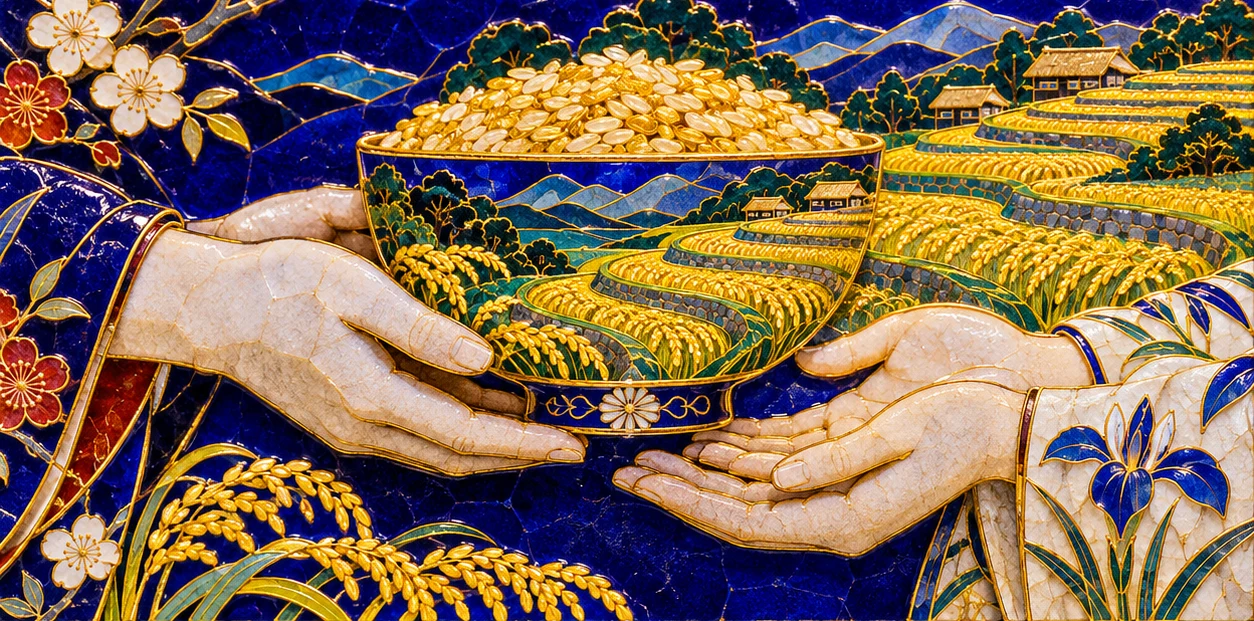
Both hands around the rice bowl
On November 23, someone spoons fresh rice into a bowl. One person at the table is heading to work. Another has the day off. Which one is supposed to thank the other? The English name, Labor Thanksgiving Day, leaves me with much the same puzzle as the Japanese.
The answer is each other. Japan’s Public Holidays Act assigns three actions to the day. Value work. Celebrate what it produces. Give thanks to one another. That middle action disappears from the holiday’s name. Put it back and a bowl of rice becomes a rather good explanation of the whole day. [1]
Consider the farmer who grew it, the driver who brought it to the shop and the person who opened the rice cooker this morning. Nobody needs to produce a payslip to take a place at this table. The contemporary report on the holiday’s creation began with an everyday observation. Each person can get through the day because other people help sustain it. [2]
It was almost a thanksgiving for new grain
November 23 already occupied a place on the prewar calendar as Niinamesai, the first-fruits festival. People gave thanks for the new harvest. When legislators shaped the postwar calendar, proposed names included a festival of new grain and a day of thanksgiving for new grain. Had the second name won, I would have put the rice on the table without a second thought. [2]
Labor Thanksgiving Day became one of the nine original holidays in the 1948 law. The date retained the memory of the harvest, while the words extended gratitude well beyond the fields. The modern name packs those two decisions into six Japanese characters.
A ship behind Marine Day, a day outdoors behind Mountain Day
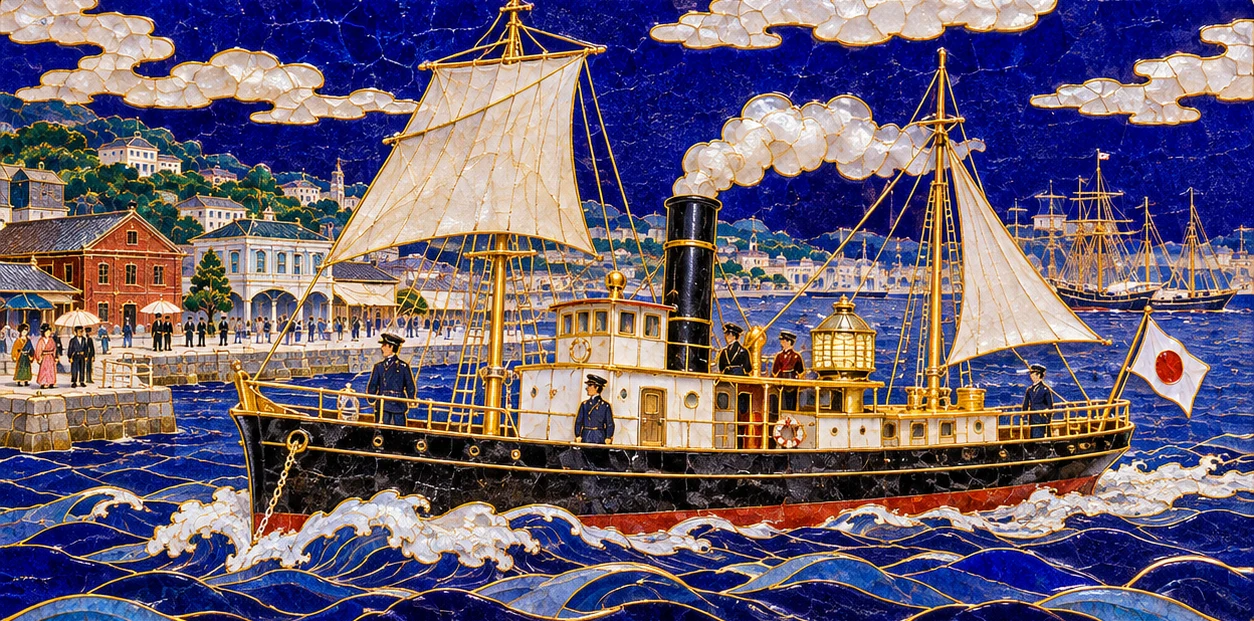
Look up Marine Day in an older calendar and you will find July 20. On that date in 1876 Emperor Meiji returned to Yokohama after touring northern Japan aboard the Meiji Maru, a lighthouse tender. The voyage inspired a maritime anniversary. Japan first observed Marine Day as a national holiday in 1996. It now falls on the third Monday of July, so the original date has largely slipped out of view. [3]
Mountain Day falls on August 11 and was first observed in 2016. After hearing the story of the ship, it is tempting to look for an equally famous summit expedition. The official account instead records a movement by people connected with the mountains to establish a holiday. The law speaks of spending time with mountains and appreciating what they provide. Even in a kitchen far from a trail, water from a forested watershed gives those words a tangible meaning. [2]
Was Sports Day chosen for blue skies?
October 10 was the opening day of the 1964 Tokyo Olympics. The national holiday celebrating physical education began in 1966 to commemorate that occasion. In 2000 it moved to the second Monday of October. People remember sunny school sports festivals, but the historical event behind this date was the opening ceremony. [2]
When the holiday became Sports Day in 2020, its purpose explicitly embraced enjoyment and cultivating respect for others. Physical education brings my school gym class to mind. Enjoying sport also leaves room for the child cheering from the sidelines.
Three names for April 29, two dates for one constitution
Different generations can remember April 29 as the Emperor’s Birthday, Greenery Day or Shōwa Day. Each is remembering the calendar correctly. Emperor Shōwa’s birthday became Greenery Day in 1989. In 2007 April 29 became Shōwa Day and Greenery Day moved to May 4. At a family gathering, the name someone uses can give away the decade of their childhood. [2]
Two other holidays make a revealing pair. The Constitution of Japan was promulgated on November 3, 1946, and took effect on May 3, 1947. The second date became Constitution Memorial Day. November 3 had previously been a holiday honoring Emperor Meiji’s birthday. During the creation of the new calendar, the peace declaration embodied in the constitution and its cultural significance helped explain the choice of Culture Day. A school arts festival shares the season with a remarkable piece of constitutional history. [2]
Reading the calendar a little more slowly
Respect for the Aged Day honors years spent sustaining society as well as longevity. Children’s Day pairs children’s happiness with gratitude toward mothers. The spring equinox turns our attention to nature and living things, while the autumn equinox recalls ancestors and the people we have lost. Even the two days that look most alike on the calendar have different people and things in view. [1]
The origin of Respect for the Aged Day adds another direction to the exchange. In 1947 Nomadani, now part of Taka in Hyogo, held a village gathering on September 15. It honored older residents and invited them to pass on knowledge and experience. The guests of honor were also the people with something to give. It makes me want to ask someone who remembers the September 15 holiday for a story about the town where they grew up. [4]
The equinox holidays give calendar makers a different problem. The law specifies neither a March date nor a September date. The National Astronomical Observatory calculates the dates, announced in the official gazette the preceding February. In 2026 the spring equinox occurred at 11:46 p.m. Japan time on March 20, just fourteen minutes before midnight. The autumn equinox occurred at 9:05 a.m. on September 23. A whole day of red ink conceals an astronomical instant. [5][6]
That produced a small calendar puzzle this September. Monday the 21st was Respect for the Aged Day and Wednesday the 23rd was the autumn equinox. Tuesday the 22nd also became a holiday. Article 3 makes a weekday lying between two national holidays a day off. A substitute holiday after a Sunday follows a different rule. Anyone searching for Tuesday’s holiday name was looking for something the law never gave it. [1]
New Year’s Day opens the year. Coming of Age Day welcomes young adults. National Foundation Day invites reflection on the nation’s beginnings, and the Emperor’s Birthday marks the reigning emperor’s birth. I will be happy to come away from this year’s calendar remembering just one extra phrase. When the steam rises from tonight’s rice, there is something on the table that we can already celebrate together.
References
NOVEL SERIES VOL.1
The World Became Slightly Farther Away
The world may not change, but distance can.
A story about a man who cannot treat promises lightly, and the people he meets.The sequel, Clouded Glass, is out too. Start here.
View on Amazon
Jijoden.com
Your life is worth writing.
There is a truer self you can tell only to AI.Gather fragments of memory into a single story.
Take a LookRelated Articles
Japan’s 2027 Public Holidays and Long Weekends: Seven Three-Day Weekends and an 11-Day Golden Week With Three Days Off
All 17 of Japan’s 2027 public holidays and substitute holidays from the Cabinet Office, with weekdays. There are seven breaks of three days or more and 120 days off in total, one fewer than 2026. Golden Week becomes seven days with one day of leave and eleven with three; there is no five-day Silver Week. We calculated how many paid days off turn into how long a break.
What Did Philosophers Earn? Translating 100 Thinkers into Modern Japanese Jobs Reveals a Bias of Birth
From Plato to Žižek, I translated the jobs and social standing of 100 famous philosophers into modern Japanese occupations and estimated their annual incomes. The median came to ¥15 million, but the clearest skew was not in what they earned. It was in the families they were born into.
So, What Is Tobacco Really About? A Smoker’s Evidence-Based Guide to Its History, Health Risks, Taxes, and Politics
Why did tobacco spread worldwide, and why has smoking moved to society’s margins over the past two decades? A smoking author examines history, global prevalence, relative and absolute health risks, vaping, taxation, and competing interests without cheerleading or condemnation.
Are Japanese People Really Strict About Time?
A data-informed look at Japanese punctuality through international pace-of-life comparisons, railway infrastructure, education, workplace norms, and the psychology of meeting lateness.
What are the Northern Territories? A Comprehensive Overview of History, Present, and Future
A systematic explanation of the Northern Territories' four islands, from their origins to international context and current status, analyzed from multiple perspectives including geography, history, international law, diplomacy, resources, and security.
From the Pocho Lab