
Table of Contents
1. The conclusion: tobacco did not retreat simply because it was “evil”
Let me disclose my bias first: the director of Pocho Laboratory is a smoker. I value the few minutes in which smoke marks a break, the conversations outside a bar, and the ritual of closing one task before beginning another. A nonsmoker cannot make those subjective benefits disappear by calling them imaginary.
Attachment, however, is not the same as safety. After reviewing material from the World Health Organization (WHO), Japan’s Ministry of Health, the National Cancer Center Japan, the OECD, medical journals, Japan’s Ministry of Finance, and the Singapore government, the answer is less dramatic than either side of the culture war would prefer.
Combustible cigarettes damage health, and not only through lung cancer. That does not make smokers bad people. The rapid move toward smoke-free societies over the past two decades is neither pure benevolence nor a single hidden plot. Science, second-hand exposure, healthcare costs, workplace duties, taxation, international treaties, and corporate risk all began pointing in the same direction.
Alcohol, sugar, and junk food can also cause harm. Tobacco receives exceptional treatment because ordinary use simultaneously creates dependence, sends combustion products into the lungs, and exposes people sharing the air. A drinker’s liver does not enter the person sitting at the next table; smoke crosses that boundary. At that point, private liberty becomes an externality.
This is not an order to quit. It is an attempt to give smokers and nonsmokers enough evidence to decide what may fairly be called personal freedom—and where that freedom ends.
2. When did humans begin smoking? From ceremonial plant to mass product
Tobacco is a nightshade plant native to the Americas. The history reviewed by the International Agency for Research on Cancer (IARC) shows that Indigenous societies cultivated and used it for thousands of years before European contact. It was smoked, chewed, inhaled as snuff, exchanged, and used in ceremony. Columbus’s party received dried leaves in 1492; during the sixteenth century, sailors and trade routes carried tobacco to Europe, Africa, and Asia. The twenty-cigarette packet did not come first. Plant, medicine, prayer, gift, and social ritual preceded the industrial commodity. [3]
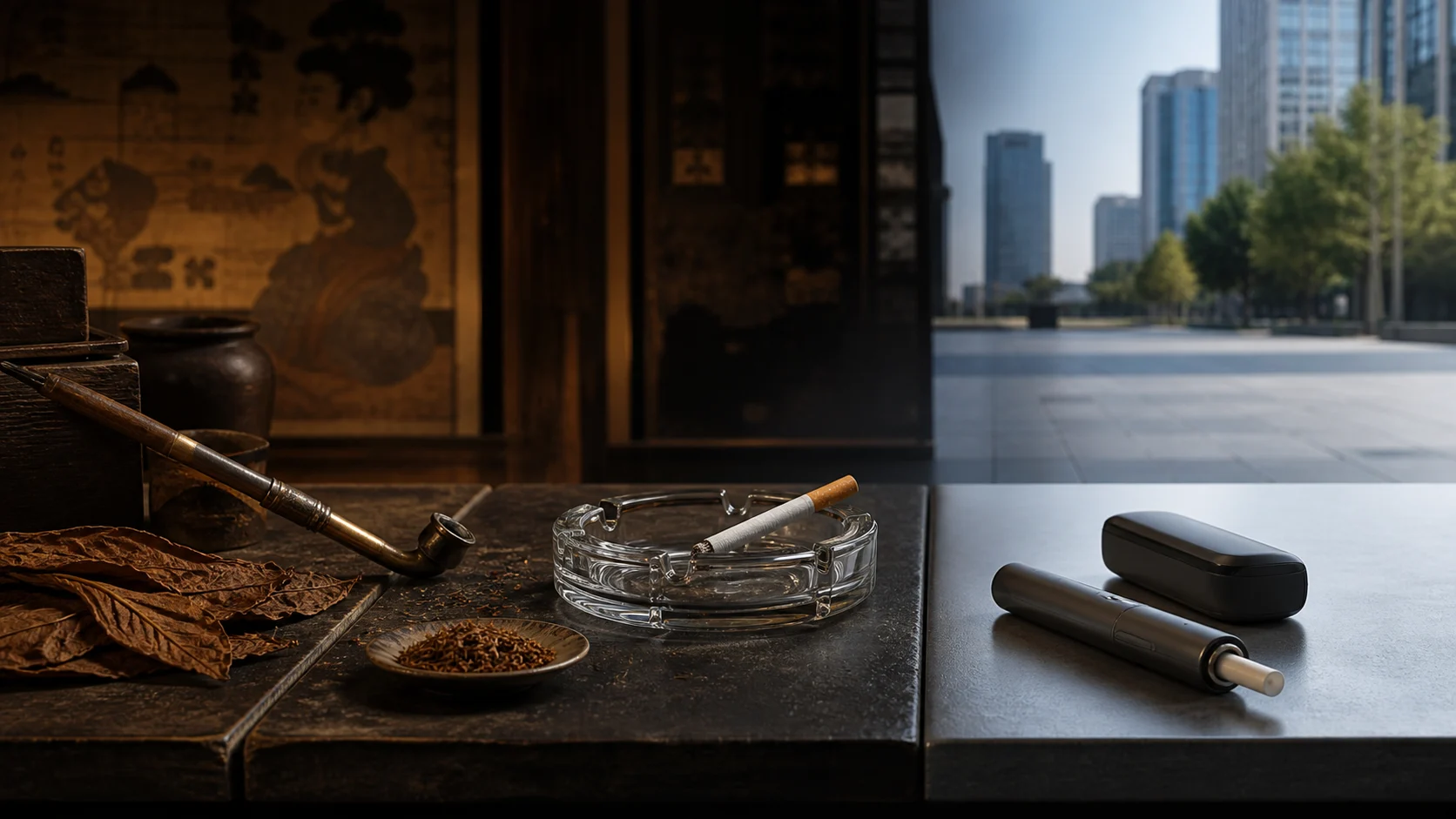
Tobacco probably reached Japan near the end of the sixteenth century, although surviving evidence does not justify one exact year. During the Edo period, the dominant tool was the kiseru: finely cut leaf placed in a tiny bowl and smoked one serving at a time. Specialist tobacco shops were visible by the 1655–58 Meireki era, and Japan developed its unusually fine-cut tobacco by the mid-eighteenth century. A samurai was not chain-smoking a modern cigarette. The older practice joined a small dose to a crafted object and a prescribed gesture. [4]
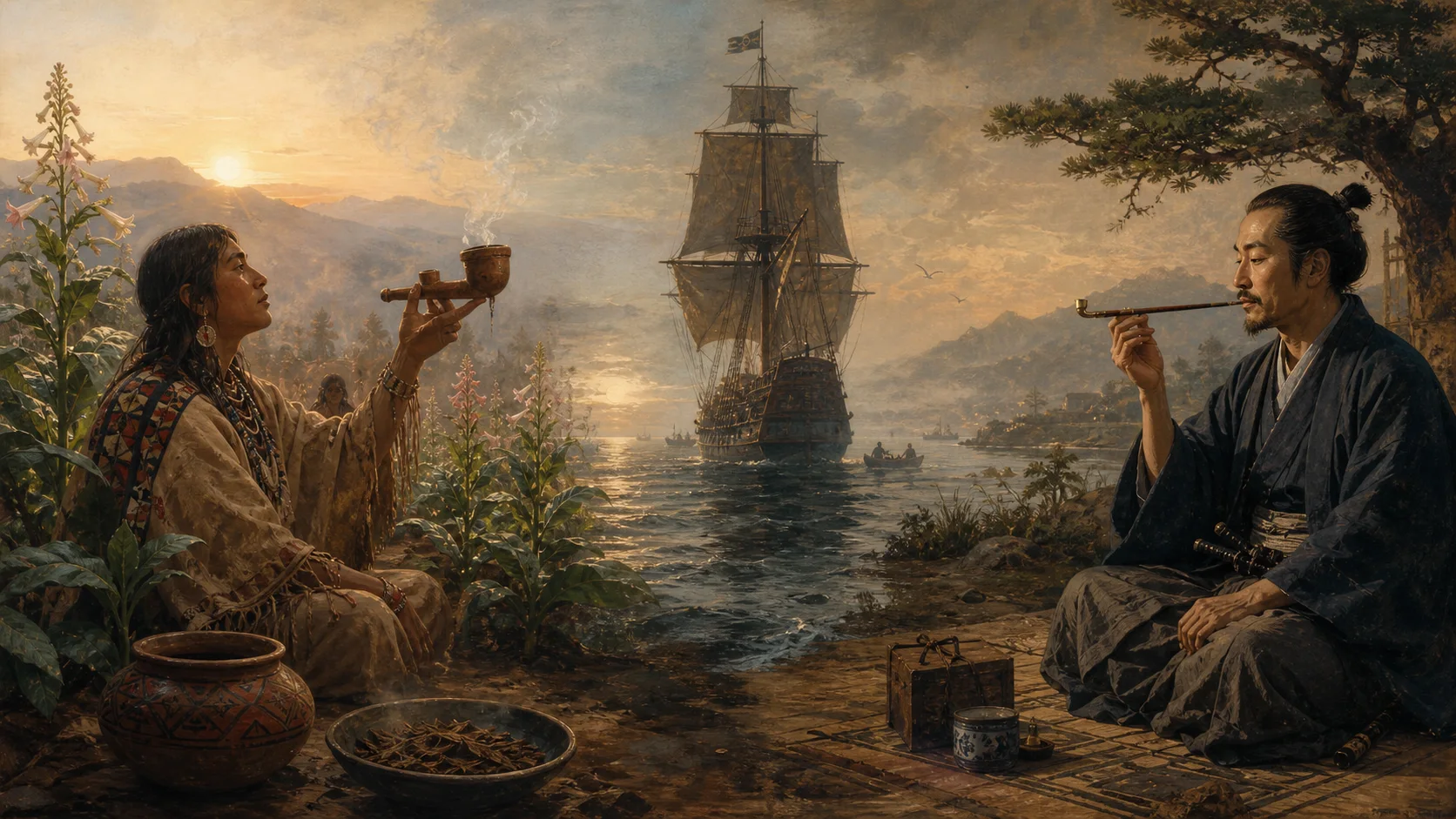
From plant and ceremony to a pleasure carried across oceans. This is a symbolic AI illustration of the transition, not a reconstruction of one voyage or person.
The decisive change came in the late nineteenth century. James Bonsack patented a cigarette-making machine in 1880, allowing a standardized product to be produced at a radically different scale from hand rolling. Matches, railways, advertising, and military supply followed. By the 1920s, cigarettes had become the dominant form of tobacco consumption. An ancient habit did not suddenly become harmful; rather, a small serving of a plant scaled into an industrial product that could deliver repeatable doses all day. [3]
In Japan, cigarettes arrived in the Meiji period as a fashionable Western product. The government imposed tobacco taxes in 1876, monopolized leaf tobacco in 1898, and extended the monopoly to manufacture and sales in 1904. Revenue, anxiety about foreign capital, and financing the Russo-Japanese War all mattered. Production of plain-ended cigarettes exceeded mouthpiece cigarettes by 1930. In wartime tobacco was comfort, controlled material, and revenue source at once. Shortage brought rationing in 1944 and even the mixing of substitute leaves. The state did not simply distribute a “health product”; military finance, morale, scarcity, and control intersected. [5]
3. A global smoking ranking lies unless its definitions match
The world is using less tobacco. WHO’s 2025 report estimates that the number of users aged 15 and older fell from 1.38 billion in 2000 to 1.2 billion in 2024—about one adult in five. Women’s prevalence fell from 11.0% in 2010 to 6.6% in 2024; men’s fell from 41.4% to 32.5%. More than four in five users are still men. [1]
“Poor countries smoke more” is not an adequate summary. Roughly 80% of users live in low- and middle-income countries, yet Europe had the highest regional prevalence in 2024 at 24.1%, while Africa had the lowest at 9.5%. Population size, prevalence, cigarettes versus all tobacco, and the male-female gap answer different questions. [2][1]
The cards below use one definition throughout: WHO’s age-standardized estimate for current use of any tobacco product among people aged 15 and older in 2024. This is a deliberately diverse selection in descending order, not a claim to reproduce the entire world league table.
GDP alone cannot explain this ordering. Türkiye and Germany are relatively high within the European region, while Nigeria is low. China, Indonesia, Japan, and South Korea have enormous gender gaps. OECD’s 2025 report similarly put average daily smoking across its members at 14.8%, while at least one in four smoked daily in Türkiye, Hungary, Greece, Indonesia, and China. Gender norms, prices, smokeless products, advertising history, enforcement, and urbanization all matter. [6]
Singapore’s strict system has not eliminated smoking. It prohibits smoking in most buildings, food premises, transport nodes, areas around bus stops and schools, and many parks, channeling it toward designated locations. A violation commonly attracts a S$200 composition fine and can reach S$1,000 upon conviction. Regulation is not magic that erases smokers; it is administration that specifies where emissions may occur. [7]
4. Why did Japan become so much less tolerant in only two decades?
The change is measurable. Japanese health-ministry material put adult male smoking prevalence at 46.8% in 2003. The 2023 National Health and Nutrition Survey found habitual smoking among 15.7% of all adults, 25.6% of men, and 6.9% of women, with significant declines for both sexes over the preceding decade. Changes in survey definitions prevent a perfectly seamless long-run series, but the movement from “nearly one man in two” toward “roughly one in four” is unmistakable. [8][9]
In Showa-era living rooms, meeting rooms, trains, cinemas, and pubs, the ashtray was infrastructure. Nonsmokers bore responsibility for avoiding smoke; smoking was the default. Four developments reversed that default:
- From the 1960s onward, large epidemiological studies accumulated causal evidence linking smoking to disease.
- WHO’s Framework Convention on Tobacco Control was adopted in 2003, and Japan ratified it in 2004.
- Second-hand smoke became an occupational and public-health issue rather than merely a dispute over smell.
- Japan’s amended Health Promotion Act took full effect in April 2020, making most indoor spaces smoke-free in principle, with stricter rules for schools, hospitals, and government buildings and transitional exceptions for some small existing restaurants. [10]
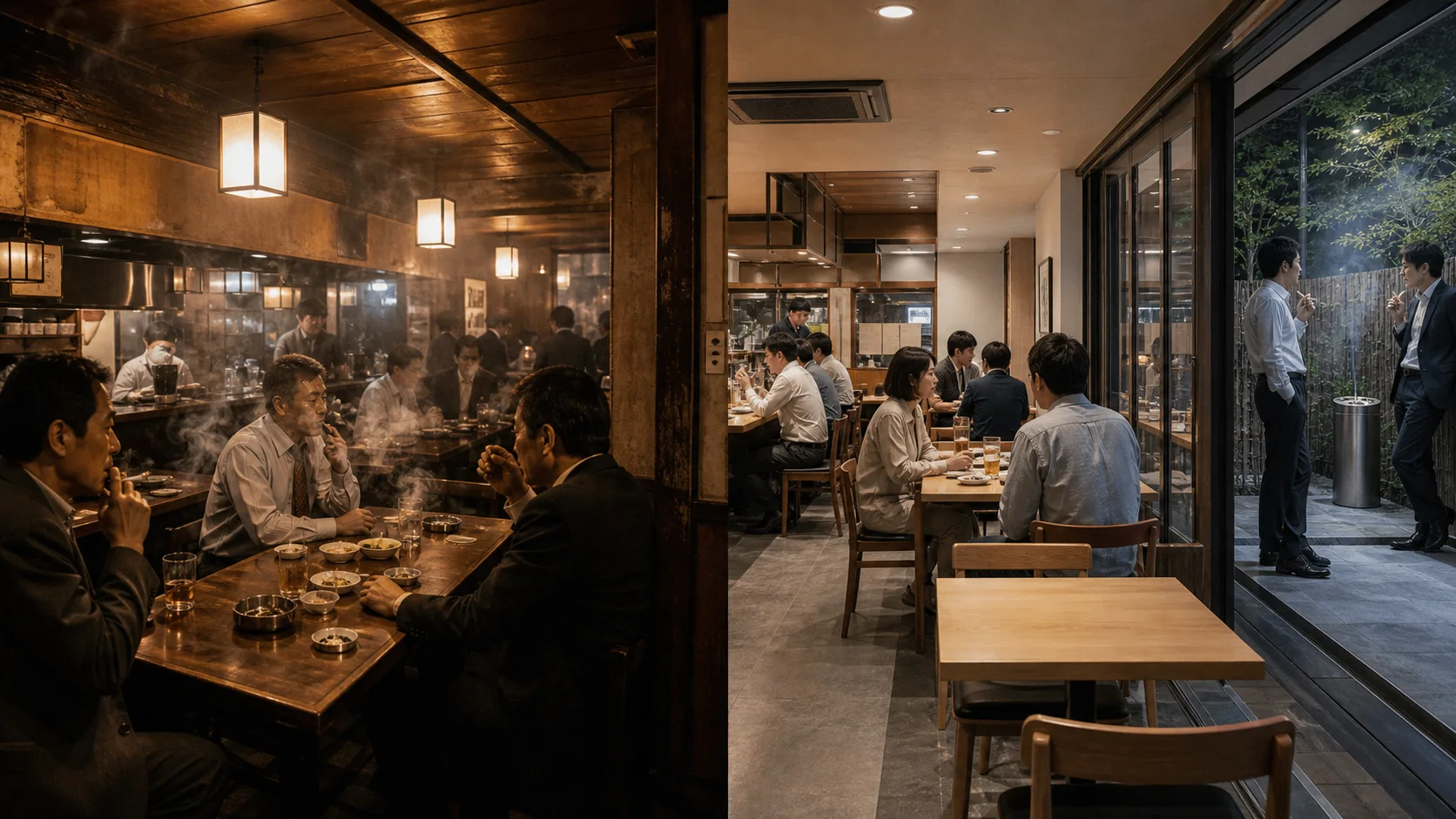
Japan moved from ashtrays as standard equipment to smoke confined to designated space. What changed was not only medical knowledge, but ownership of shared air.
What about a guest who enters a clearly marked smoking izakaya and then attacks a smoker at the edge of the room for the smell? My instinct as a smoker is: choose a smoke-free restaurant. But fair rules require more precision.
If a business complies with the law, discloses that smoking is permitted, and the customer enters knowingly, turning the smoker into a villain at the table is unreasonable. Yet smoke resembles perfume, noise, or a durian on public transport: it travels beyond the person who produces it. Permission to smoke is not an unlimited right to expose children, employees, the next table, or people beside a ventilation outlet. Between “legal, so consideration is unnecessary” and “I dislike it, so exclude the person” lie distance and rules.
Part of the harsher tone is the sociology of becoming a minority. Once smokers are fewer, they move from the default setting into special rooms, outdoor edges, and limited times. After norms reverse, clothing odor, break time, hiring, and friendships can become moral judgments too. Successful smoke-free policy and stigma against smokers are not identical. Supporting the former does not require endorsing the latter.
5. Nicotine, tar, and lung cancer: how should we read “four times the risk”?
The terms matter. Nicotine is the principal alkaloid sustaining dependence. It acts on nicotinic acetylcholine receptors, reshapes reward circuitry, and affects heart rate and blood pressure. Tar is not one chemical. It is a measurement category for particulate matter remaining after nicotine and water are removed from smoke, and it contains many combustion-generated carcinogens. Carbon monoxide binds to hemoglobin and impairs oxygen transport. The central driver of dependence and the main mixture responsible for cancer are related but not synonymous. [11]
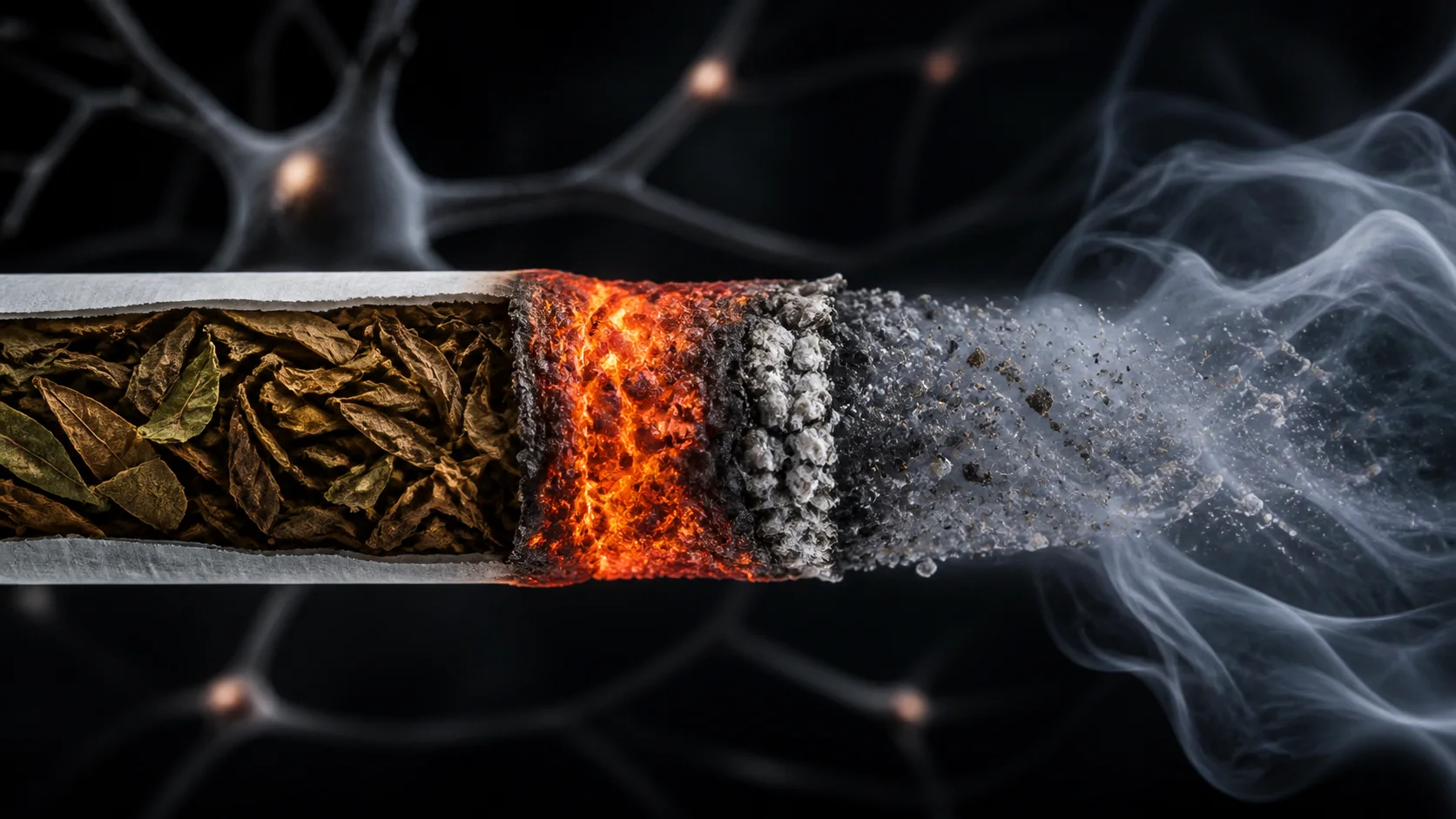
The problem is not simply “the leaf.” It is the combination of nicotine-supported repetition and the complex chemical mixture created by combustion.
The National Cancer Center Japan says tobacco smoke contains about 5,300 chemicals, including roughly 70 carcinogens. Japanese estimates attribute about 30% of male cancer deaths and 5% of female cancer deaths to smoking. Evidence of causation extends beyond lung cancer to cancers of the mouth and pharynx, larynx, esophagus, stomach, liver, pancreas, and bladder, as well as ischemic heart disease, stroke, and chronic obstructive pulmonary disease. [12]
A statement such as “four times the risk of lung-cancer death” is impossible to interpret without a baseline. If a nonsmoker’s probability over a defined period were 1%, fourfold risk would be 4%—an increase of three percentage points. If baseline risk were 0.1%, it would become 0.4%. Demanding both relative and absolute risk is valid.
Japan nevertheless recorded 75,569 lung-cancer deaths in 2024, a crude annual mortality rate of 62.8 per 100,000 people. That annual population rate combines ages and smoking histories; it is not lifetime risk. It supports neither “almost nobody dies” nor “every smoker will die.” In the JACC cohort, 52.2% of male lung-cancer deaths were attributed to current smoking and 14.8% to former smoking. Lung cancer occurs among never-smokers; that does not make smoking’s contribution small. [13][14]
Lung cancer alone also hides the wider outcome. A large U.S. study found all-cause mortality among current smokers to be roughly three times that of never-smokers, with more than ten years of life expectancy lost on average. Quitting by age 40 avoided about 90% of the excess mortality associated with continuing. The values differ across countries, eras, and smoking patterns, but tobacco is not a single lottery ticket marked “lung cancer.” It adds disadvantages across cardiovascular disease, respiratory disease, and several cancers at once. [15]
Second-hand smoke is neither harmless nor instant catastrophe. The U.S. Surgeon General’s review estimated that nonsmokers exposed at home or work had 25–30% higher coronary heart disease risk and 20–30% higher lung-cancer risk; ventilation or merely separating seating could not fully remove exposure. The absolute risk from one encounter may be tiny, yet involuntary daily exposure in a workplace becomes a legitimate target for regulation. [16]
6. E-cigarettes and heated tobacco: “less harmful” does not mean safe
Japanese discussion often collapses different products. E-cigarettes heat a liquid into an aerosol. Heated-tobacco products such as IQOS heat processed tobacco leaf without conventional combustion. Selling nicotine-containing e-liquid in Japan requires pharmaceutical authorization, and no such approved consumer product is on the market. Nicotine-free vapes are not tobacco products under the Tobacco Business Act. Heated tobacco contains leaf and is regulated separately. [17]
For an adult smoker who switches completely, exposure to some toxicants may fall. “Lower” is not “none,” and long-term disease estimates remain uncertain because the products are relatively new. Dual use makes the size of any reduction harder to infer. WHO notes that e-cigarettes generate toxic substances, their long-term effects are not completely known, and uptake among young nonsmokers is a serious concern. [18]
In the school surveys compiled by WHO, current cigarette smoking among Japanese junior-high students was down to 0.4% in 2021. Yet the same report estimates at least 15 million e-cigarette users aged 13–15 worldwide, alongside 86 million adult users. It would be wrong to claim Japanese teen smoking remains as common as it once was, but equally wrong to say the nicotine issue ended when cigarettes declined. Flavors, devices, and social media have redesigned the entry point. [1]
My blunt view is that beginning a habit while already worrying about its health effects offers little value. But complete substitution by an already dependent adult and initiation by a never-smoking teenager are not the same decision. The former is a harm-reduction comparison; the latter adds a new dependence from zero. The relevant question is who is moving from what to what, not merely the product name.
7. Who benefits from a smoke-free society? Look at interests, not conspiracies
Some parties clearly benefit from tobacco control. Health insurers seek lower future treatment and absence costs. Employers must manage second-hand exposure, workplace safety, cleaning, fire risk, and smoking breaks. Municipalities want fewer discarded butts and complaints. Companies selling cessation medicines have a market. Landlords and restaurants may reach more families and employees by going smoke-free.
Interests exist on the other side too: farmers, manufacturers, logistics, retailers, hospitality businesses, tobacco companies, shareholders, and the governments receiving tax. Article 5.3 of the FCTC unusually tells governments to protect public-health policy from the tobacco industry’s commercial and vested interests because documented interference has delayed policy. This is not evidence that a secret anti-smoking group controls the world; it is evidence that policymakers explicitly treat industry influence as a conflict to manage. [19]

It is not only health, and not only tax. Several rational interests pull on the same legal, addictive product.
Tax exposes the contradiction. In Japan in April 2025, a ¥580 packet of 20 cigarettes contained ¥304.88 in tobacco taxes and ¥52.73 in consumption tax: ¥357.61, or 61.7% of the price. National and local tobacco-tax receipts are each roughly ¥1 trillion annually, about ¥2 trillion combined. The state seeks lower consumption while accepting a valuable revenue stream. WHO recommends tax reaching at least 75% of retail price; in 2024, the average share was 67.3% in high-income countries and 43.5% in low-income countries. Tax is less a moral punishment than a tool to reduce demand and recover part of an external cost. [20][21]
If revenue exceeded healthcare costs, would smoking then be beneficial? The comparison is not that simple. The worldwide 2012 estimate cited by WHO put smoking-related healthcare and productivity losses at US$1.436 trillion, or 1.8% of global GDP. Values depend on what medical spending is included and how disability and early death are valued. Subtracting Japan’s current ¥2 trillion tax receipts from an old social-cost model would create false precision. Taxes enter government accounts, while illness, household spending, caregiving, absence, and premature death fall on different people. The ledgers do not match. [22]
The argument that alcohol and sugar should also be taxed is consistent rather than fatal to tobacco policy. In 2025, WHO launched “3 by 35,” seeking at least a 50% real-price increase by 2035 for tobacco, alcohol, and sugary drinks. The history of U.S. Prohibition illustrates how outright bans on desired substances can create black markets and additional harm. Modern tobacco control therefore usually combines age limits, advertising controls, prices, packaging, place restrictions, and cessation support instead of banning possession. Tobacco is not the only harmful pleasure; its dependence and involuntary exposure made it an early and forceful test case. [23]
8. Conclusion: protecting the freedom to smoke requires protecting the freedom not to inhale it
Tobacco has real subjective benefits: a rhythm for breaks, a shift in attention, conversation, taste, and beauty in historical implements. Ritual can calm a person independently of relief from nicotine withdrawal. Nonsmokers cannot set that value to zero on someone else’s behalf.
But subjective utility is not a health benefit. Part of “a cigarette calms me” is the temporary relief of discomfort produced during the period without nicotine. Combustion smoke raises risks across organs and travels to others. Criticizing exaggerated communication of relative risk while ignoring a nonzero absolute risk are two versions of closing one eye.
A fair settlement is not to erase smokers from society:
- Do not pass unwanted smoke or nicotine marketing to nonsmokers and minors.
- Disclose smoking rules at the entrance, while refusing to treat employee exposure as pure contractual freedom.
- Outdoors, avoid entrances, queues, children, and ventilation intakes, and leave no butt behind.
- Present relative and absolute risks together, and distinguish cigarettes, heated tobacco, and vapes.
- Offer treatment rather than sermons to people who want to stop.
- For adults who continue, specify boundaries without attacking their character.
What felt normal twenty years ago now lives at society’s edge. No single beneficiary produced that shift. Epidemiology, treaty obligations, taxation, industry power, urban design, employer duties, and the right not to breathe air one did not choose gradually aligned.
As a smoker, I do feel the shrinking space. That is no reason to reject science. Nonsmokers need not use science to strip dignity from people. A mature tobacco policy is not one in which everyone shares the same taste. It is one in which preference, risk, and rights are no longer crushed together in the same ashtray.
Health note: This article provides general information and does not replace diagnosis, treatment, or individualized cessation advice. Consult a physician or pharmacist regarding medical conditions, pregnancy, medication, or cessation aids. Population statistics do not determine any one person’s future.
References
- [1]WHO, Global report on trends in prevalence of tobacco use 2000–2024 and projections 2025–2030 (2025). Based on 2,034 national surveys covering 97% of the world population. Country cards use age-standardized estimates in Table A1.1. ↩
- [2]WHO, “Tobacco and nicotine”, updated June 26, 2026. ↩
- [3]IARC, Tobacco Smoke and Involuntary Smoking, Chapter 1 (2004). ↩
- [4]Tobacco & Salt Museum / JT, “Tobacco’s distinctive evolution in Japan”. ↩
- [5]Tobacco & Salt Museum, “The monopoly era before World War II”. ↩
- [6]OECD, Health at a Glance 2025: Smoking and vaping. ↩
- [7]Singapore National Environment Agency, “Smoking Prohibition”. ↩
- [8]Japan Ministry of Health council minutes citing 2003 prevalence. Long-run comparisons require care because survey definitions changed. ↩
- [9]Japan Ministry of Health, 2023 National Health and Nutrition Survey, released 2025. ↩
- [10]Japan Ministry of Health, outline of the amended Health Promotion Act. ↩
- [11]Japan Ministry of Health, Smoking and Health (2016). ↩
- [12]National Cancer Center Japan, “How tobacco affects cancer development and treatment”. ↩
- [13]National Cancer Center Japan, lung-cancer statistics, 2024 mortality data. ↩
- [14]Ando et al., “Attributable and absolute risk of lung cancer death by smoking status”, International Journal of Cancer 105 (2003). ↩
- [15]Jha et al., “21st-Century Hazards of Smoking and Benefits of Cessation in the United States”, NEJM 368 (2013). ↩
- [16]U.S. Surgeon General, The Health Consequences of Involuntary Exposure to Tobacco Smoke (2006). ↩
- [17]Japan Ministry of Health e-Health Net, “Electronic cigarettes”. ↩
- [18]WHO, “Tobacco: E-cigarettes”. ↩
- [19]WHO FCTC, “Article 5.3”. ↩
- [20]Japan Ministry of Finance tobacco-tax Q&A and April 2025 tax breakdown. ↩
- [21]WHO, “Raise taxes on tobacco”. ↩
- [22]WHO, “Tobacco control economics”. ↩
- [23]WHO announcement of the “3 by 35” initiative (2025). ↩

NEW NOVEL 2026/08/01
Clouded Glass
Polishing is not about force.
Volume two of The World Became Slightly Farther Away.Five stories that can also be read as a starting point.
View on Amazon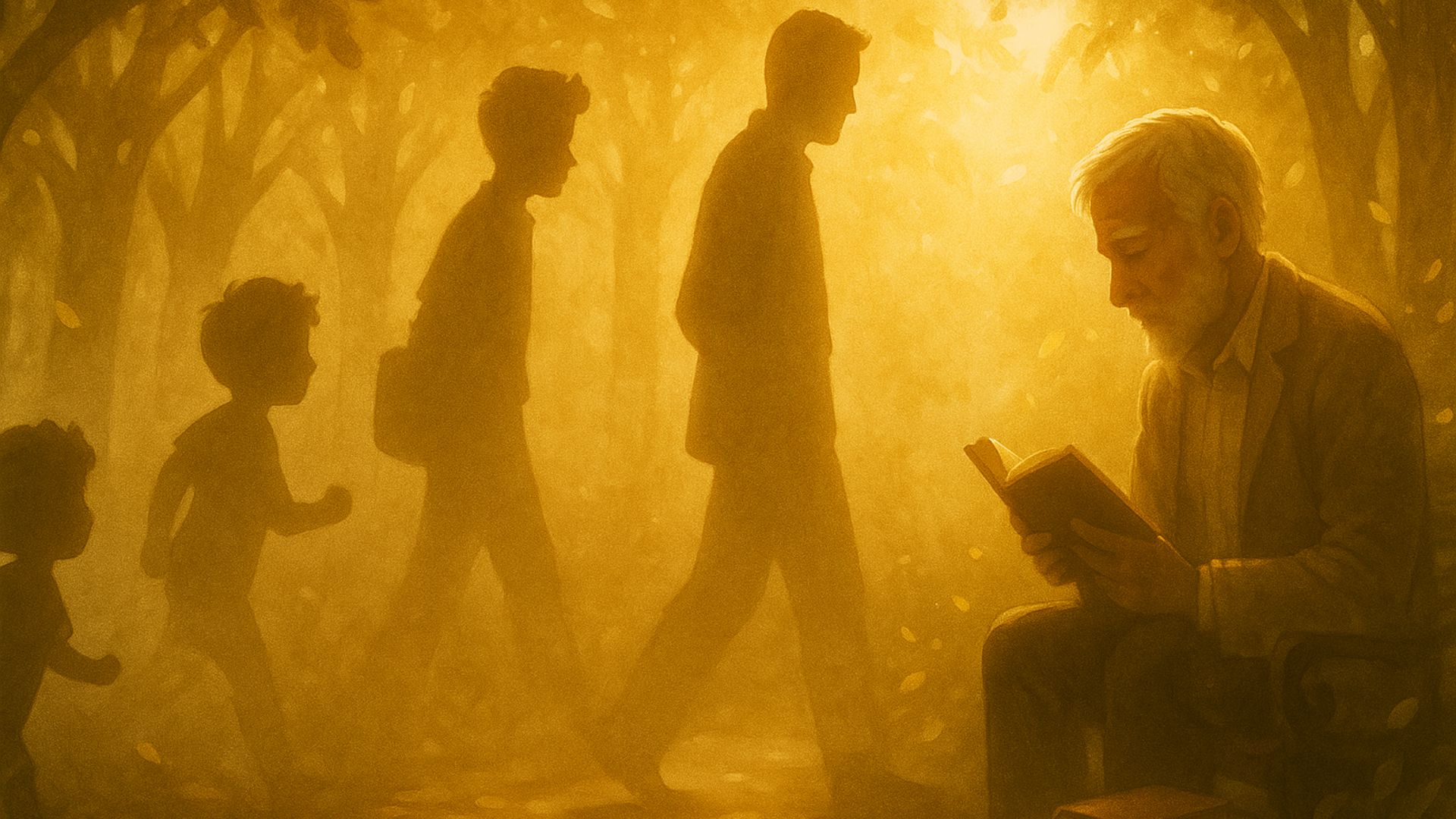
Jijoden.com
Your life is worth writing.
There is a truer self you can tell only to AI.Gather fragments of memory into a single story.
Take a LookRelated Articles
The Secret Behind the Sauna Boom and Future Predictions: Why Saunas Are Gaining Attention Now
We analyze the background behind the growing popularity of saunas and provide detailed insights into the future prospects of the sauna market in Japan and worldwide, exploring sauna's appeal from multiple perspectives including health consciousness, experiential value, and community building.
Is "Alcohol is the Best Medicine" Really True? A Comprehensive Review of Latest Evidence
A comprehensive analysis of alcohol and health relationships covering history, latest research, statistics, policies, and culture. Detailed explanation of modern scientific views where WHO states "no safe level of alcohol consumption."
Why Do Some People Gain Weight Easily While Others Don't? – Detailed Explanation from Body Type to Environment
A detailed explanation of differences in weight gain tendencies. We introduce various factors affecting weight in an easy-to-understand way for beginners, including basal metabolism, genetics and body type, gut bacteria, muscle mass, hormones, and lifestyle habits.
"Play Outside and the Myopia Goes Away" Is Only Half Right: Preventing Onset vs Slowing Progression
Time outdoors has evidence for preventing myopia onset in children, but the evidence for slowing progression once myopic is unclear. Starting from the 2024 Cochrane review: the projection that 49.8% of the world will be myopic by 2050, why axial elongation is irreversible, the myopia control options, and how contact lenses are regulated in Japan.
The Psychology of Boasting and Lies in Japanese Izakaya
Explore the psychological background of boasting commonly heard at drinking parties. Learn why people tell lies and exaggerations, their impact on listeners, and the differences from genuine successful people, backed by research data.