
Table of Contents
Why I Let the Latest AI Predict Horse Races
I normally use Claude Fable 5 and Claude Code as partners for development work and writing. This time, I stepped away from "real work" and decided to test Fable 5 in a completely different arena: horse racing, one of Japan's biggest entertainment gambling markets.
The reason was simple. I wanted to see the latest AI take on a bet where nobody knows if it will win, but where watching it try is genuinely fun. I never intended to profit from this. The entire point was to observe how far AI can get when predicting something as uncertain as gambling. My honest motivation split was roughly 90% engineering curiosity and 10% quiet hope for a long-shot payout.
The stage was Sunday, July 12, 2026, at Fukushima Racecourse — an ordinary weekend meet. I deliberately skipped the glamorous G1 and G2 races and instead picked a maiden race for 3-year-olds with very little public information, paired with the Tanabata Sho, a handicapped G3 stakes race. Graded stakes races come with rich head-to-head records and training reports, making them easier for both AI and humans to read. Maiden races, by contrast, are full of horses that "haven't proven anything yet," so the market itself (the odds) tends to be rougher. I wanted to see how much of that roughness Fable 5 could actually exploit.
The Rules of the Experiment: A ¥10,000 Budget, Two Races, Purely for Fun
Before starting, I told Fable 5 clearly that the goal was entertainment, not a quick profit, and set the following ground rules.
| Item | Details |
|---|---|
| Total budget | ¥10,000 (for this day only) |
| Number of races | 2 |
| Bet type | Quinella (flow bets and box bets) |
| Base unit per combination | ¥500 (the minimum amount that still feels rewarding if a long shot hits) |
| Goal | Design tickets where a hit pays big, but a miss stays within "fun money" |
| Paddock / training footage | Assumed unavailable in real time |
That last line is the single most important constraint of this whole experiment. Professional racing tipsters watch the paddock right before post time, reading a horse's gait, sweat, and general demeanor to adjust their picks up or down. Fable 5 had zero access to any of that. It had to work purely from online pedigree data, recent race records, the day's weather and track condition, and track bias (whether the going favors front-runners or closers that day).
Race 1: What Happened in Fukushima Race 6, a 3-Year-Old Maiden (Dirt, 1150m)
The first test subject was a 3-year-old maiden race with a 1:01 PM post time. Dirt, 1150 meters, light rain, soft-to-heavy ("yayaomo") going. Publicly available track-bias data for the day pointed to an advantage for front-runners, and Fable 5 built its pick around that read.
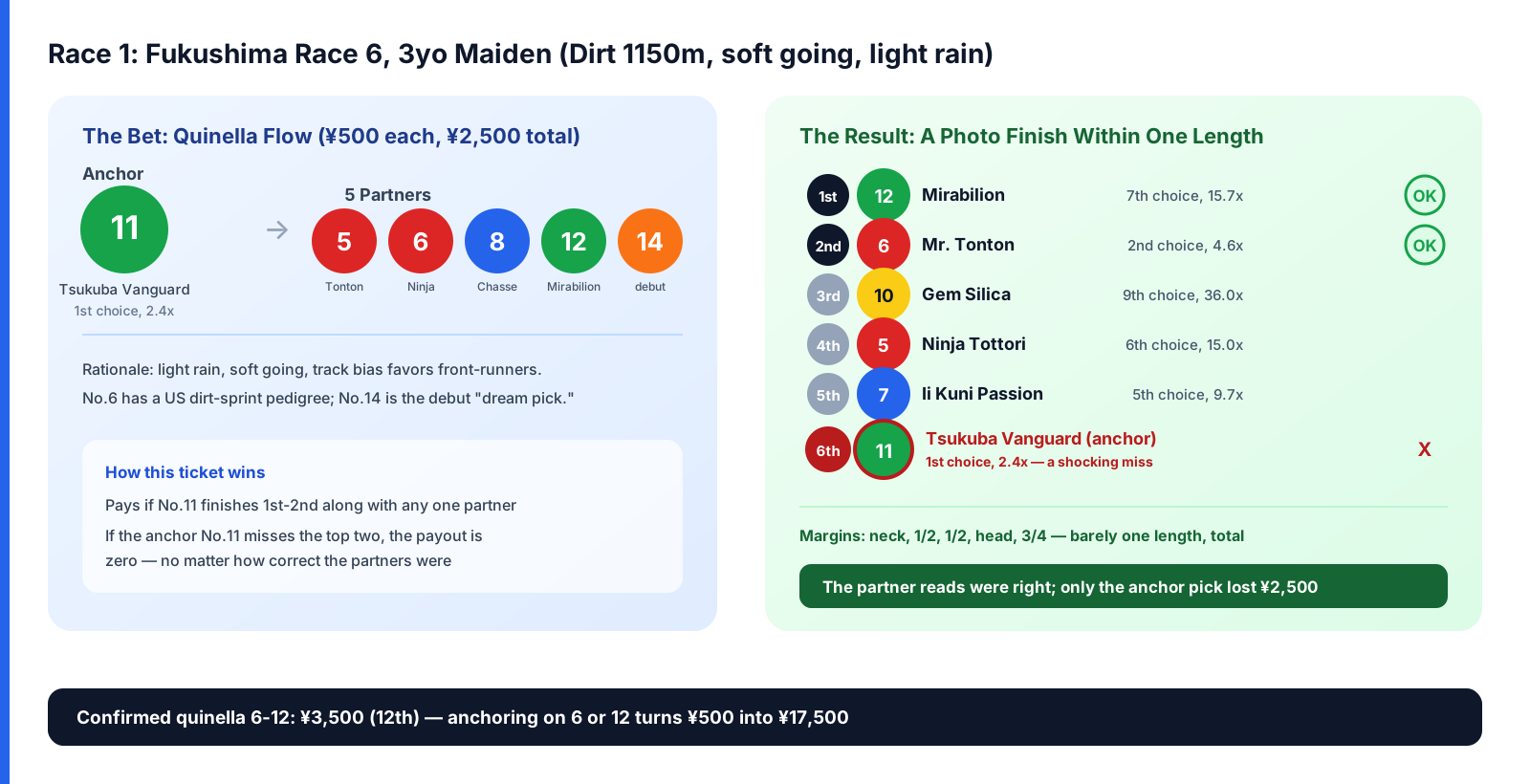
Figure 1: The ticket and actual finish for Race 1 (Fukushima Race 6). The favorite chosen as the anchor horse finished 6th, while two of the "partner" picks pulled off an unexpected 1-2 finish.
The Bet
Fable 5 built a "quinella flow" (uma-ren nagashi) bet. For the anchor, it chose No. 11 Tsukuba Vanguard (win odds 2.4, the betting favorite), a horse that had run consistently without a bad race in its last four starts. For partners, it named five horses, led by No. 6 Mr. Tonton, judged to suit wet, sloppy dirt based on its American dirt-sprint pedigree (Mo Town × City Zip).
| Bet type | Details | Amount |
|---|---|---|
| Quinella flow | Anchor: No. 11 Tsukuba Vanguard → Partners: Nos. 5, 6, 8, 12, 14 | ¥500 each (¥2,500 total) |
No. 14 Union Jack, making its debut with an unknown ceiling, was included lightly as the "dream pick" of the group.
The Result: A Photo-Finish Pileup Within One Length
| Finish | No. | Horse | Popularity | Win Odds | Margin |
|---|---|---|---|---|---|
| 1st | 12 | Mirabilion | 7th choice | 15.7x | - |
| 2nd | 6 | Mr. Tonton | 2nd choice | 4.6x | Neck |
| 3rd | 10 | Gem Silica | 9th choice | 36.0x | 1/2 length |
| 4th | 5 | Ninja Tottori | 6th choice | 15.0x | 1/2 length |
| 5th | 7 | Ii Kuni Passion | 5th choice | 9.7x | Head |
| 6th | 11 | Tsukuba Vanguard (anchor) | 1st choice | 2.4x | 3/4 length |
The margins from 1st to 6th were "neck, 1/2 length, 1/2 length, head, 3/4 length" — added together, barely more than a single length. It was a genuine pileup finish. The confirmed quinella payout for the 6-12 combination was ¥3,500 (the 12th most popular combination). Our anchor, No. 11, finished 6th, so the ticket missed entirely. The full ¥2,500 was gone.
What Went Right, and What Went Wrong
This is the most interesting part of the whole experiment. The two horses Fable 5 named as "partners," No. 6 and No. 12, crossed the line 1st and 2nd. The pedigree read on No. 6 Mr. Tonton and the process-of-elimination pick on No. 12 Mirabilion were both correct in the sense that mattered most.
The failure came from somewhere else entirely. A quinella flow bet pays out only if the anchor horse finishes in the top two — no matter how correct the reasoning on the partner horses turns out to be. Had the anchor been No. 6 or No. 12 instead of No. 11, that same ¥500 combination would have returned ¥3,500 — a 7x return on that single ticket. The honest conclusion is that the bottleneck wasn't prediction accuracy, it was ticket construction (bet-type design).
Race 2: Taking On a Handicap Stakes Race — the Tanabata Sho (G3)
Later the same day, at 3:45 PM, came the main event: the Tanabata Sho, a G3 handicap stakes race. Turf, 2000 meters, cloudy skies, soft-to-heavy going. Handicap races equalize the weight each horse carries, which tends to even out the field and produce more unpredictable, "upset-prone" results.
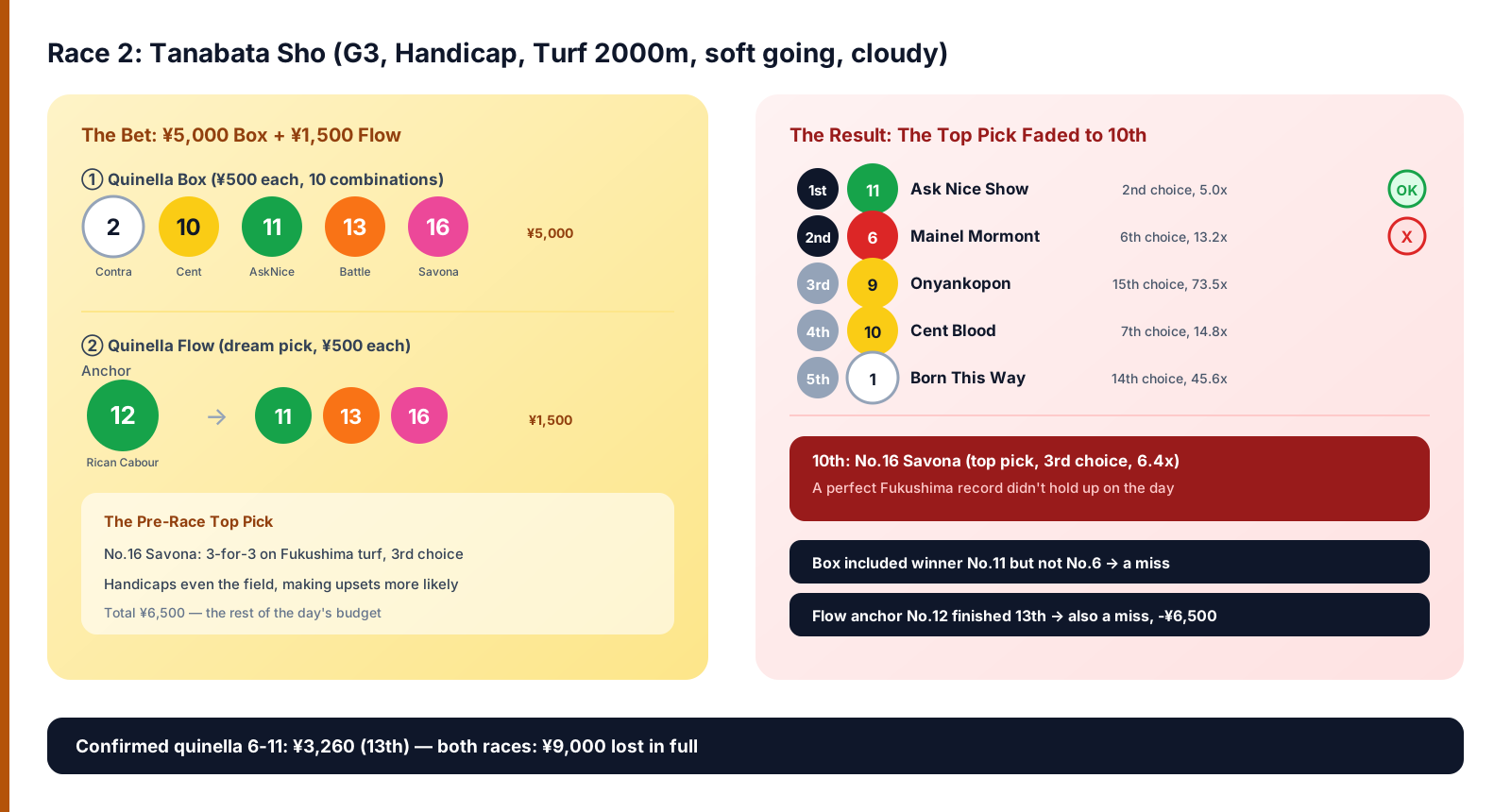
Figure 2: The ticket and actual finish for the Tanabata Sho (G3). The pre-race favorite pick faded to 10th, and the box bet included the winner but missed its partner, ending in a miss.
During earlier research, Fable 5 had flagged No. 16 Savona, a horse with a perfect 3-for-3 record on Fukushima's turf course, as its top pick. Trainer commentary also pointed to the horse being in excellent condition, and the betting public made it the 3rd choice.
The Bet
The final ticket combined several promising horses surfaced during research into a quinella box, plus a quinella flow built around one anchor as a higher-payout "dream" side bet.
| Bet type | Details | Amount |
|---|---|---|
| Quinella box | 5 horses: Nos. 2, 10, 11, 13, 16 | ¥500 each × 10 combinations (¥5,000 total) |
| Quinella flow (dream pick) | Anchor: No. 12 Rican Cabour → Partners: Nos. 11, 13, 16 | ¥500 each × 3 combinations (¥1,500 total) |
| Total | ¥6,500 |
Out of the day's ¥10,000 budget, the plan spent ¥2,500 on Race 1 and the full remaining ¥6,500 on Race 2.
The Result: The Top Pick Faded to 10th
| Finish | No. | Horse | Popularity | Win Odds |
|---|---|---|---|---|
| 1st | 11 | Ask Nice Show | 2nd choice | 5.0x |
| 2nd | 6 | Mainel Mormont | 6th choice | 13.2x |
| 3rd | 9 | Onyankopon | 15th choice | 73.5x |
| 4th | 10 | Cent Blood | 7th choice | 14.8x |
| 5th | 1 | Born This Way | 14th choice | 45.6x |
| 10th | 16 | Savona (top pick) | 3rd choice | 6.4x |
No. 16 Savona, carrying its perfect 3-for-3 record at Fukushima into the race as the flagged top pick, finished a shocking 10th. A "strength on paper" built from pedigree and course history was not enough to account for the horse's condition on the day or the flow of the race — a fittingly mean lesson in how horse racing works.
The confirmed quinella payout for the 6-11 combination was ¥3,260 (the 13th most popular combination). The box bet (Nos. 2, 10, 11, 13, 16) did include the winner, No. 11, but not the runner-up, No. 6 — a miss. The flow bet's anchor, No. 12 Rican Cabour, finished 13th, also a miss. The entire ¥6,500 was gone.
Tallying the Results: ¥9,000 of the ¥10,000 Disappeared
Across two races, the honest final tally was a clean loss.
| Race | Wagered | Payout | Net |
|---|---|---|---|
| Race 1 (Fukushima Race 6) | ¥2,500 | ¥0 | -¥2,500 |
| Race 2 (Tanabata Sho) | ¥6,500 | ¥0 | -¥6,500 |
| Total | ¥9,000 | ¥0 | -¥9,000 |
| Unspent (of the ¥10,000 budget) | ¥1,000 |
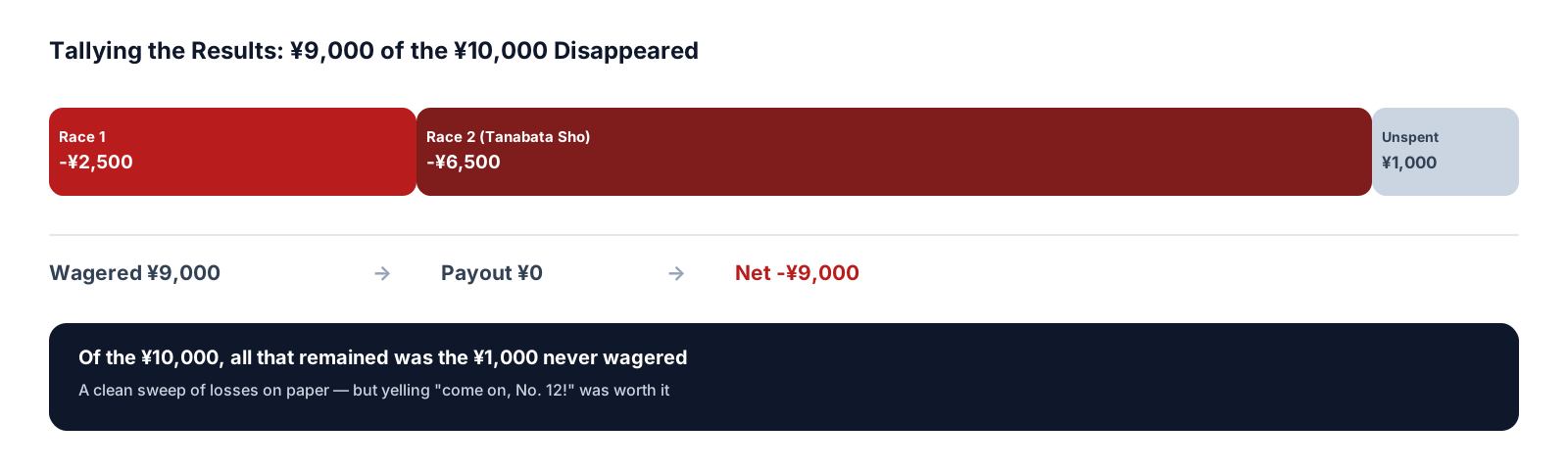
Figure 4: The ¥10,000 breakdown. The ¥9,000 actually wagered returned zero; only the unspent ¥1,000 remained.
Every yen actually wagered — ¥9,000 out of the ¥10,000 budget — came back as zero. What was left in my pocket was just the ¥1,000 that never got bet. On paper, that's a clean sweep of losses. And yet, from the photo-finish pileup in Race 1 to watching the favorite fade down the stretch in the Tanabata Sho, the time spent yelling at the screen was worth more than the money I lost[1].
What Fable 5 Was Good At, and What It Wasn't
Even from a sample of just two races, the AI's strengths and weaknesses came through clearly.
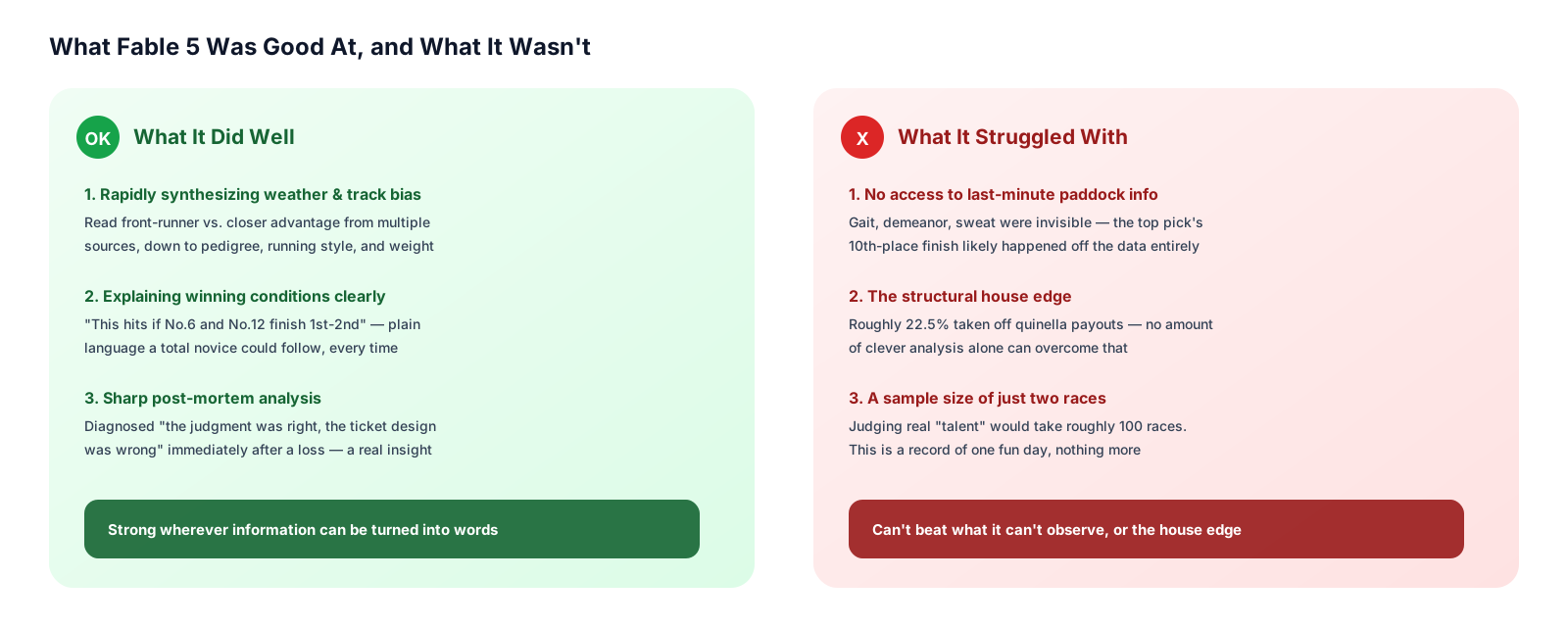
Figure 5: Strong at research and articulation, but unable to reach paddock-side information or overcome the structural house edge.
What it did well
- It quickly synthesized the day's weather, track condition, and track bias (front-runner vs. closer advantage) from multiple sources, and could articulate why a specific horse was worth backing down to pedigree, running style, and weight carried
- It could explain the winning conditions for each ticket type ("this hits if No. 6 and No. 12 finish 1st and 2nd") in plain language a complete novice could follow
- Its post-mortem analysis after a loss was genuinely sharp. For Race 1, it correctly diagnosed that "the underlying judgment about which horses were strong was right, but the ticket design — specifically, which horse to anchor — was the actual mistake." That's a structural insight a beginner bettor rarely reaches on their own
What it struggled with, or simply had no access to
- Last-minute paddock information — a horse's demeanor, gait, and sweating — was completely off-limits. The 10th-place finish of Race 2's top pick, No. 16 Savona, may well be a failure that happened entirely outside the data Fable 5 could see
- The structural house edge built into the payout system (roughly 22.5% for quinella bets) is a handicap that no amount of clever information analysis alone can overcome
- And above all: two races are nowhere near enough to say anything statistically meaningful about whether Fable 5 "has talent" for horse racing. It would likely take on the order of 100 races before an average return rate — positive or negative — became visible. What we have here is a record of "one fun day," nothing more[2]
Would a Different Kind of Prediction Have Gone Better?
This part is pure speculation, but an AI's predictive accuracy depends heavily on two things: how complete the available information is, and how efficient the market is. In closed, perfect-information games like shogi or Go, AI has long since surpassed humans. Horse racing sits at the opposite extreme — the outcome hinges on hard-to-observe, non-verbal variables: a living animal's physical condition, the flow of the race, split-second jockey decisions. Prediction here is a fundamentally harder problem than prediction in a closed game.
The same logic applies, to some degree, to markets like foreign exchange or equities. I happen to be running a small personal experiment of my own: an AI-assisted automated FX trading system, wagering modest amounts over the past several months. But FX markets are far more information-rich and efficient than horse racing, and if there's an edge to be found there, it isn't showing itself easily. If I can eventually make a solid, evidence-based case about its performance six months from now, I might write about it. And if that article never shows up, feel free to assume, with a warm and knowing smile, that I quietly lost a bit of money there too.
What the Future Might Look Like: Paddock Footage and Playwright
The most frustrating part of this whole experiment was watching the Tanabata Sho's top pick, No. 16 Savona, sink for reasons entirely outside the available data. That naturally sent my engineer brain wandering toward a speculative architecture.
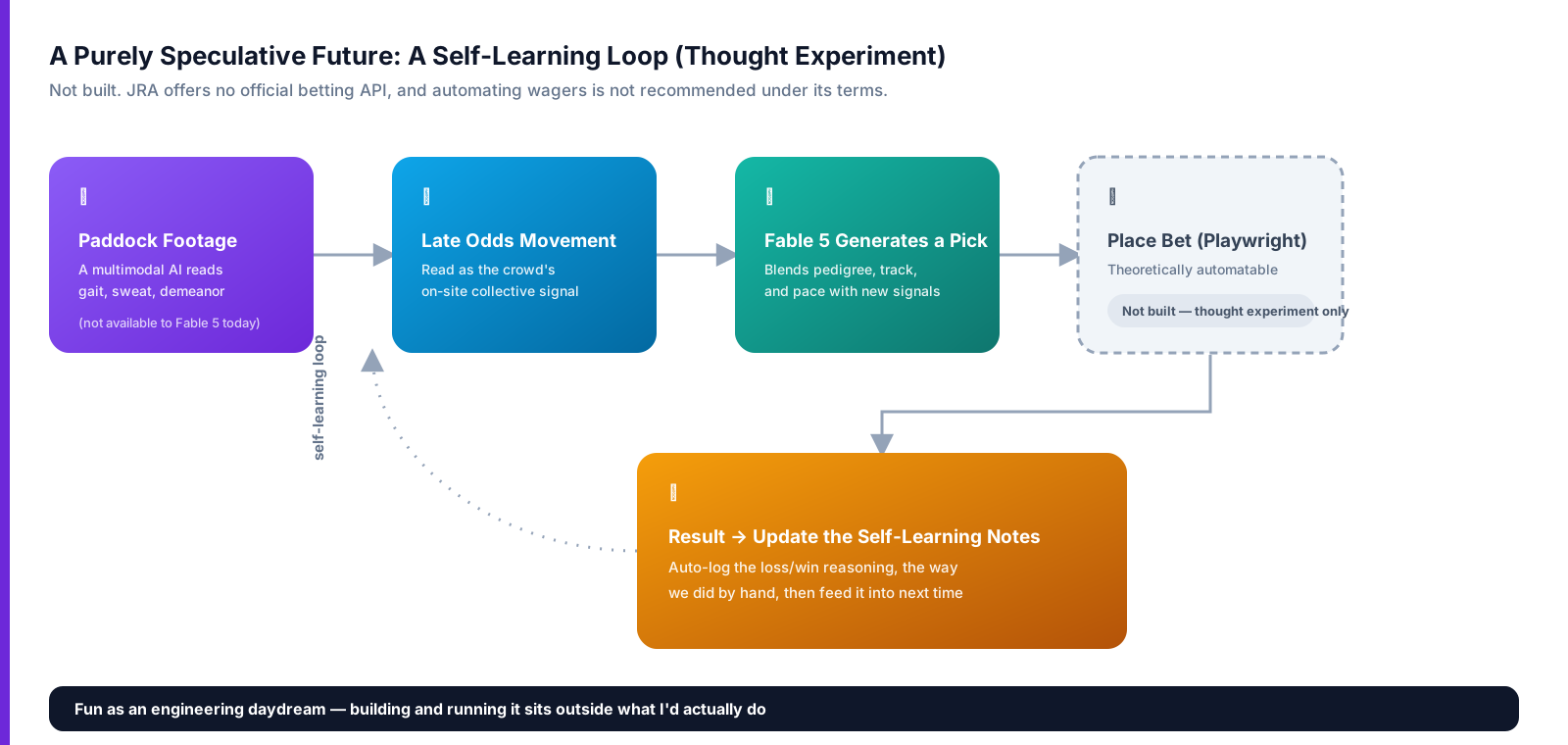
Figure 3: A purely speculative future concept — combining real-time paddock video analysis, last-minute odds shifts, and a self-learning feedback loop.
Idea one: have a multimodal AI analyze paddock video in real time. Stiffness in a horse's gait, how much it's sweating, its general demeanor — none of this is visible to Fable 5 today, but as video analysis technology advances, these signals could theoretically become quantifiable data points.
Idea two: treat last-minute odds movement as the "collective wisdom" of people who actually saw the paddock. A horse whose odds suddenly drop right before betting closes is a signal that people on-site, having seen the real thing, are backing it. This is information today's AI could already incorporate, simply by watching odds up to the very last moment before the window closes.
Idea three goes further still: an architecture where browser automation tools like Playwright could, in theory, handle everything from pulling the race card, to generating a prediction, to placing the bet, to updating a self-learning notes file based on the outcome. A "self-learning loop" that automatically logs the reason for each loss and feeds it back into the next prediction prompt is technically well within reach.
I want to be clear that this is written purely as a thought experiment. JRA does not provide an official API for placing bets, and automating the act of wagering itself would likely run afoul of its terms of service — this isn't something I believe should actually be built or operated[3]. Take it purely as "here's an architecture that would theoretically be possible," the kind of harmless daydream any engineer has after a long day of losing at the races.
Conclusion: I'll Probably Lose Again, But I'll Probably Do This Again Too
The final result: a loss of ¥9,000 out of a ¥10,000 budget. Even Claude Fable 5 could not find a reliable way to beat horse racing. That's a disappointing outcome, but also, in a strange way, a slightly reassuring one. If AI could reliably predict horse racing too, that would honestly be a little depressing. The fact that "not everything can be predicted" might, in its own way, be good news.
Losing ¥10,000 every week would genuinely hurt my wallet, so I don't plan to make this a regular habit for a while. Still, the hours spent researching pedigrees alongside an AI, watching the odds shift, and yelling "come on, No. 12!" mid-race were worth it, money lost and all. Next time the mood strikes, I'd happily team up with Fable 5 again to chase the next long shot.
References
- Tanabata Sho (G3) Results and Payouts — netkeiba
- 3-Year-Old Maiden Race Results and Payouts — netkeiba
- Tanabata Sho (G3) Entry List — netkeiba
- Weather at Fukushima Racecourse — tenki.jp
- Track Bias Forecast (Fukushima, Kokura, Hakodate) — Bloodline & Track Bias Research
References
- [1]All wagers in this article were placed through JRA's official IPAT online betting system. Payout rates (the deduction/takeout rate) vary by bet type — roughly 22.5% for quinella and wide bets, and around 27.5% for trifecta bets — meaning the structure tends to return less than what is wagered over the long run. ↩
- [2]Separately from this article, we ran a simplified simulation over the past three months of JRA data (279 races), using mechanical betting rules based purely on public popularity rankings. Return rates landed roughly in the 58%–97% range. This is not a validation of Fable 5's actual judgment — it is a rough reference point for how the bet-type structure itself tends to behave. ↩
- [3]Placing bets through Japan's Central Racing Association (JRA) is designed around an individual's own decisions made through the official JRA website or IPAT system. Automating the act of voting/betting could conflict with its terms of service and relevant regulations. The architecture discussed in this article is presented purely as a technical thought experiment, not as a recommendation to build or operate such a system. ↩

NEW NOVEL 2026/08/01
Clouded Glass
Polishing is not about force.
Volume two of The World Became Slightly Farther Away.Five stories that can also be read as a starting point.
View on Amazon
Jijoden.com
Your life is worth writing.
There is a truer self you can tell only to AI.Gather fragments of memory into a single story.
Take a LookRelated Articles
Claude Opus 5 In-Depth Review: What Really Changed vs Opus 4.8, Fable 5, and GPT-5.6 Sol
A deep review of Claude Opus 5, released July 24, 2026, covering official system-card benchmarks, comparisons with Opus 4.8, Fable 5 and GPT-5.6 Sol, pricing, early user reports, practical usability, and safety.
GPT-5.6 Sol Explained: The Sol/Terra/Luna Tiers and When to Use Pro, Max and Ultra (as of July 2026)
A figure-rich breakdown of GPT-5.6, generally available since July 9 2026: the Sol/Terra/Luna tiers, the new reasoning controls, how Pro/Max/Ultra differ, a comparison with Claude Fable 5 and Opus 4.8, and where the new ChatGPT desktop app is still not unified. The point is how you allocate compute to the work, not always picking the top tier.
Claude Fable 5 vs Claude Opus 4.8: Is the Model 'Above Opus' Actually Worth Using? (As of July 8, 2026)
A thorough comparison of Claude Fable 5 — released in June 2026 and briefly suspended under US export controls — against the workhorse Claude Opus 4.8, covering pricing, benchmarks, safety classifiers, and when to use each, based on public information as of July 8, 2026.
Moving Out of a Rental in Japan: A Practical Guide to a Fair Settlement
Separate renovation estimates from tenant liability. Check lease clauses, wallpaper depreciation, inspection signatures, AI-assisted review, certified mail, direct debits and Japan's updated small-claims procedure.
Why Some People Never Forget a Face—and Others Need Five Meetings: What Face Recognition Reveals About Human Difference
Some people recognize an actor through any costume; others need several meetings to remember a face. Research on face tests, prosopagnosia, super-recognizers, AI, and diagnostic thresholds reveals why a person cannot be reduced to one score.