
Table of Contents
Understanding the Strait of Hormuz from the Ground Up
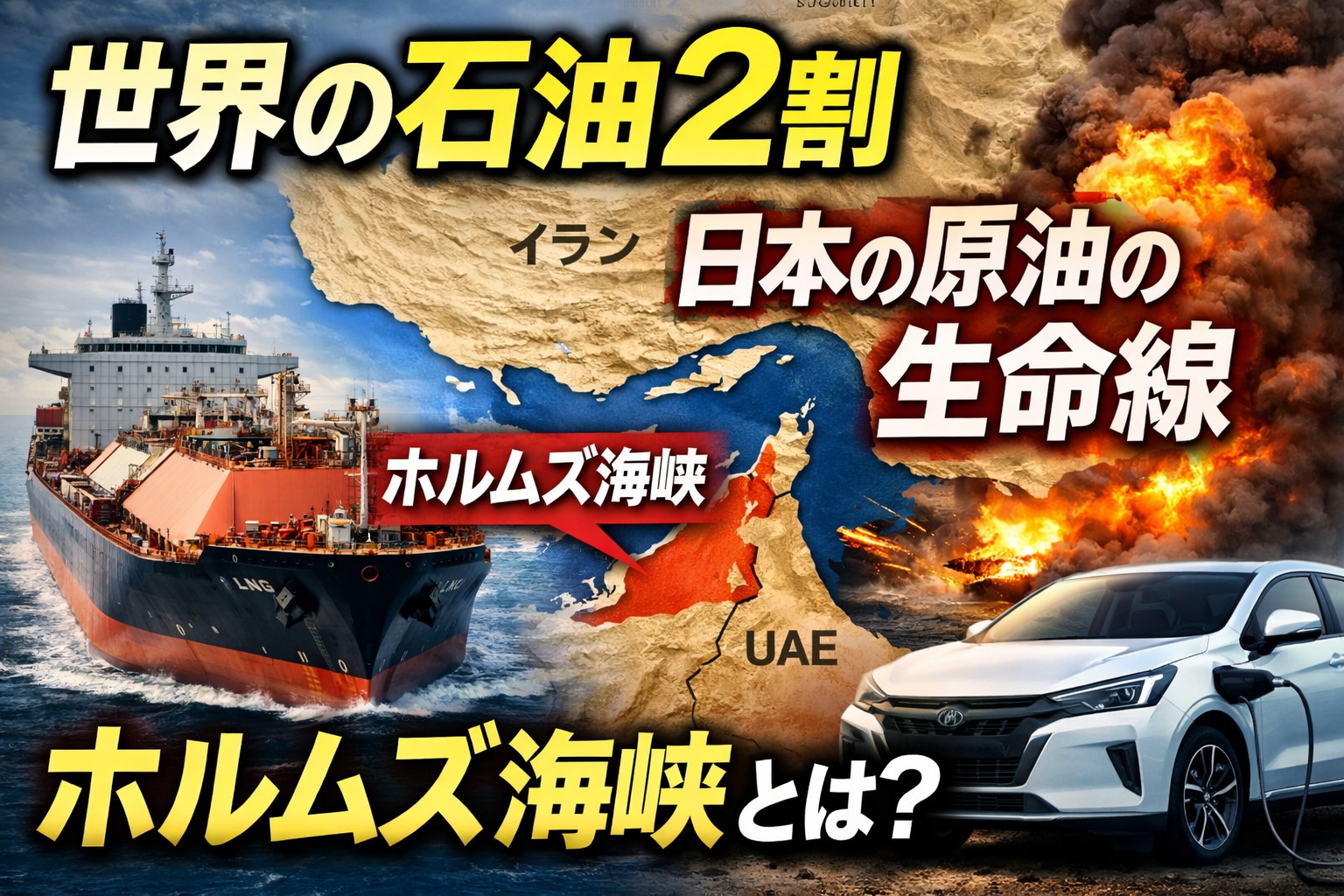
In March 2026, the term "Strait of Hormuz" returned to daily headlines after US-Israeli military action against Iran and Iranian retaliation. Many people know the name, but fewer can explain where it is and why it has such a large impact on the global economy in terms of hard numbers and logistics. If we discuss this at Pocholab, the first thing to correct is a common misunderstanding. The Strait of Hormuz is not a place where all of the world's oil passes. But it is not a minor route either. It is a major artery in global energy supply, used in ways that are difficult to replace quickly. That is why headlines about Hormuz risk cascade into gasoline prices, electricity costs, inflation, FX markets, and equities.
Where It Is: Wider on the Map, Narrower in Practice
The Strait of Hormuz is the only maritime outlet that connects the Persian Gulf to the Gulf of Oman and then to the Arabian Sea. Iran is on the north side, and Oman's Musandam Peninsula is on the south side. Geographically, this is the export gate for major Gulf producers. The strait itself is roughly 55 to 95 kilometers wide, but safe navigation lanes are much narrower. Large vessels use a traffic separation scheme with a 2-mile outbound lane, a 2-mile inbound lane, and a 2-mile buffer between them. So even if the map looks wide, the practical throat used by VLCCs and LNG carriers is very tight. That is why Hormuz is treated as a textbook chokepoint. The risk is not only full legal closure. The harder reality is that mines, anti-ship missiles, drones, seizures, insurance spikes, and crew-safety concerns can sharply degrade throughput even when passage is not fully blocked. In March 2026, the market is facing exactly this gray zone: technically passable, functionally disrupted.
Why This Is an Oil Lifeline: Exports, Not Just Reserves
The key variable is not just where oil is underground. It is where, through which route, to which market, and in what daily volume oil can actually move. Around 20 million barrels per day of oil transited Hormuz in 2024. That is about one-fifth of global oil and petroleum-product consumption and more than one-quarter of seaborne oil trade. For LNG as well, roughly one-fifth of global trade passes this route. So Hormuz is not "everything," but it is well beyond a "manageable minor share." The main exporters are Gulf producers such as Saudi Arabia, Iraq, the UAE, Kuwait, Qatar, and Iran. These countries are not only reserve-heavy but also export-heavy. OPEC data places world proved reserves at about 1.567 trillion barrels at end-2024, with OPEC members holding about 1.241 trillion barrels. When reserve weight and export weight are both concentrated in this region, Hormuz becomes structurally central. Another important point: Hormuz is not an oil field. Oil in the ground has no market value unless it can move to open sea. Prices react less to geological stock and more to flow that is actually deliverable. This is why Hormuz headlines repeatedly trigger price jumps.
Global Share vs Japan Exposure: 20% for the World, Near-Lifeline for Japan
At global level, Hormuz-related flows are roughly one-fifth of oil consumption. That means the other four-fifths come from other regions, routes, and stocks. So this is not a story where all oil disappears overnight. For Japan, the structure is very different. Japan has low energy self-sufficiency and has long relied heavily on Middle Eastern crude. METI data for January 2026 indicates 95.1% of Japan's crude imports came from the Middle East, including Saudi Arabia at 54.1%, UAE 34.2%, Kuwait 3.7%, and Qatar 1.9%. Reuters reporting in March 2026 also described around 95% of Japan's oil supply as Middle East-linked, with about 90% of that moving through Hormuz. That asymmetry is the core point for Japanese households and businesses. For the world, this is about 20%. For Japan, it is close to an infrastructure inlet. Also, China, India, Japan, and South Korea together account for 69% of crude and condensate flows moving from Hormuz toward Asia. The region most exposed to disruption is Asia, and Japan is central within that exposure set. Japan also has LNG exposure, though lower than crude. Reuters reporting in March 2026 put Japan's LNG share from the Middle East at around 11%, with about 6% moving through Hormuz. In short, crude is the main risk channel, and LNG is an additional stressor.
How Oil Actually Moves: By Ship
It is easy to imagine oil trade as if someone turns a pipeline valve and fuel appears globally. In reality, seaborne transport remains the core mechanism for international trade. Gulf crude is loaded at export terminals, shipped through Hormuz, and carried across the Indian Ocean toward Asia and Europe. So a "Hormuz crisis" is not abstract geopolitics. It is a physical shipping problem: vessels delayed, insurance unavailable or expensive, freight rates spiking, and cargo decisions deferred. Japan will not run out of gasoline or kerosene in a day. But prices can still rise quickly because transport and insurance costs increase, replacement procurement becomes necessary, and futures markets price in supply-risk premia. On March 19, 2026, Brent briefly traded in the 115-dollar range and the Nikkei fell more than 3%. The Bank of Japan has also flagged the risk that Middle East-driven oil increases can reinforce underlying inflation. For households, the practical risk is less "empty stations tomorrow" and more "persistent price pressure and growth drag."
Are There Bypass Routes? Yes, but Not Enough
A standard rebuttal is that pipelines can bypass Hormuz. This is only partly correct. Saudi Arabia has the East-West pipeline from the Gulf side to Yanbu on the Red Sea, with around 5 million bpd under normal conditions and about 7 million bpd at expanded use. The UAE also has a roughly 1.8 million bpd line to Fujairah that avoids Hormuz. In March 2026, Saudi exports via the Red Sea have reportedly increased. But EIA estimates suggest Saudi and UAE additional bypass capacity available for diversion is around 2.6 million bpd. Compared with roughly 20 million bpd that passed Hormuz in 2024, this cannot close the gap. Iran also has a Goreh-Jask bypass route, but effective capacity remains limited. That is the core vulnerability: bypass exists, but it cannot replace the main artery. In road terms, when an expressway shuts, local roads remain, but total throughput collapses. Here, the macro spillover reaches fuel prices, power-generation costs, FX, and rate expectations.
Has Hormuz Been Closed Before? Mostly Threatened, Rarely Fully Closed
Historically, Hormuz has been repeatedly threatened, while long full closure has been rare. The first oil shock of 1973-74 was not primarily a Hormuz closure story. It was driven by Arab embargo and production cuts. But that crisis embedded the logic of energy security in advanced economies and helped lead to the 1974 creation of the IEA. During the 1980s Iran-Iraq war, the so-called tanker war saw attacks on tankers and merchant ships, including mine use. The strait was not fully shut, but shipping risk became severe. The US began Operation Earnest Will in 1987 to escort Kuwaiti tankers, and in 1988 launched Operation Praying Mantis after mine-related incidents. In the same year, a US misidentification led to the downing of an Iranian civilian airliner and 290 deaths. In 2011-2012, Iran signaled possible closure in response to sanctions pressure, and Brent rose above 126 dollars in March 2012. After US withdrawal from the nuclear deal in 2018, closure threats intensified again, and since 2019 repeated seizure and mine incidents have occurred. Still, before 2026, the dominant pattern was often not total closure but threat-driven risk pricing and insurance shock. This context changes how to read headlines. When "closure" appears, the real analytical question is whether it means legal full blockade or operational dysfunction under military threat.
Why Markets Are So Tense in March 2026
This episode appears more severe than prior threat cycles. At the IMO, safety-corridor ideas are under discussion, and roughly 20,000 seafarers are reportedly stranded in Gulf waters. AP has noted that some vessels are still transiting but also that overall movement is close to paralysis. The IEA has estimated a March 2026 global supply reduction around 8 million bpd, roughly 8% of world demand, describing it as a shock on a historic scale. That is why IEA members have moved toward a coordinated release totaling about 400 million barrels, and Japan has proceeded with an approximately 80 million barrel release, roughly equal to 45 days. This helps buy time, but it does not reopen Hormuz itself. Strategic stocks are a buffer, not a substitute for the strait.
Will the EV Era Make Hormuz Less Important?
This question is often discussed too loosely. The best answer is: partly yes, but not yet. The yes side is clear. EV adoption does reduce oil dependence. IEA's 2025 outlook described global EV sales above 17 million in 2024 and above 20 million in 2025, implying about one in four new cars sold could be electric. By 2030, EV expansion is projected to displace about 5.4 million bpd of oil demand. Overall oil demand is also expected to approach a plateau around 105.5 million bpd near 2030. But the no side remains substantial. First, power systems are still not fully clean. The IEA notes that around 80% of 2024 global electricity-demand growth was met by renewables and nuclear, yet gas-fired generation also increased. Oil-fired power is a small global share, but fossil generation remains significant overall, and some regions still rely on oil or diesel generation. Second, oil demand is not only road transport. Aviation fuel, marine fuel, petrochemical feedstock, and industrial use remain large. IEA expects petrochemicals to be a major driver of oil demand growth from 2026 onward. So more EVs reduce gasoline sensitivity, but they do not eliminate oil relevance. Third, in countries like Japan, crude spikes transmit beyond pump prices into import costs, power fuel costs, FX, and monetary policy. EV adoption lowers direct household gasoline sensitivity, but it does not instantly remove macroeconomic sensitivity.
What We Should Understand Now
Four points matter most. First, this is not just "somewhere in the Middle East." It is the only maritime exit that connects Persian Gulf resources to the global market. Second, while the world-level share is around 20% for oil and LNG, for Japan crude imports are close to a lifeline. The impact intensity is far above the world average. Third, the word "closure" is often oversimplified. Real crises are composite events: mines and attacks, insurance spikes, transport disruption, stock releases, and hard bypass limits. Fourth, EVs and renewables can reduce this vulnerability over time, but not enough yet in 2026. As electrification deepens, the next focal point becomes grid stability and fuel mix resilience. When you hear "Hormuz is at risk," the key variable is not underground reserves. It is logistics reality: how much energy was moving daily, through which routes, to which destinations. Once that structure is visible, Hormuz is no longer just a place name. It is a live bottleneck in the world economy.

NEW NOVEL 2026/08/01
Clouded Glass
Polishing is not about force.
Volume two of The World Became Slightly Farther Away.Five stories that can also be read as a starting point.
View on Amazon
Jijoden.com
Your life is worth writing.
There is a truer self you can tell only to AI.Gather fragments of memory into a single story.
Take a LookRelated Articles
Iran After Defeat: 10-, 20-, and 30-Year Scenarios for the Postwar Order
Based on public information available on March 10, 2026, this scenario analysis examines a pathway in which Iran accepts coercive terms under military pressure, and traces spillover effects on Russia, China, North Korea, Japan, and the global order across 10, 20, and 30 years.
Reading the BOJ's 1 Percent Era: Yen, Prices, Mortgages, and JGBs as One Causal Chain
A causal reading of the BOJ's June 2026 move to 1 percent, linking yen weakness, import prices, mortgages, housing, and JGB interest costs.
Why Do Japanese People Buy Expensive iPhones Despite Being a "Poor Country"?
Analysis of why Japan maintains 60-70% iPhone market share despite economic stagnation, examining economic, psychological, and cultural factors including installment sales strategies and social conformity.
What Is the ICC? Understanding the Trump Administration’s Sanctions from Both Sides
A neutral guide to the ICC’s origins, jurisdiction and complementarity, the legal and political reasons behind U.S. opposition, sanctions on President Tomoko Akane, public opinion, and differences from the ICJ and other tribunals.
Everything to Know Before Starting FX: What 25x Really Means, Why People Lose, Taxes, and a Rule for Not Dying
What does 25x leverage actually multiply? Is a stop-out really a safety net? Terminology, trading hours, rate differentials, order books, position sizing, APIs, AI, and taxes — a complete walkthrough of the survival system a beginner should build first.