

Table of Contents
1. The conclusion: knowing your details does not remove the need to verify
Losing a house key creates an understandable fear: someone might find it, discover your address and open the door. A notice saying your name, address and telephone number have leaked is harder to translate into consequences. Will someone call? Turn up at home? If nothing happens, when can you stop worrying?
The danger goes beyond someone knowing a secret. True information about you can make a false claim about the other person more convincing. Your name, apartment number and reservation date can all be correct. The only invented part may be the request to send money or complete identity verification on a particular page.
This article makes one practical proposal. Before moving money, authorizing access, entering an important agreement or sharing sensitive information, verify through a contact route you choose independently and a procedure agreed in advance. Ordinary conversation does not need to become an interrogation. Place the checkpoint where a consequential action begins.
The discussion draws on Japanese and international public sources checked through November 18, 2026. It separates documented use of compromised information, official warnings about techniques, and the author's analysis or hypothetical examples. Linking a particular breach to a particular victim requires evidence. Events in 2027 are not treated as established facts; the aim is to develop practices that remain useful beyond the current news cycle.
2. A mailing list is not the endpoint: how information becomes material for crime
Thinking of leaked information as a single list can obscure what happens next. A useful analytical sequence is acquisition, organization and matching, sale or sharing, contact, and acquisition of money or account access. Not every incident follows that order, and the same offender need not perform every step.
Contact details enable an approach. A date of birth or a relative's name makes a conversation specific. Purchases and reservations reveal what kind of message someone is expecting. Credentials may allow access before any conversation happens. An email address or telephone number can also connect otherwise separate records. These are observations about the properties of information, not a claim that matching has been demonstrated for every victim.
Japan: Benesse and the continuing life of a list
Benesse describes continuing requests for clarification or cessation of suspected use of leaked information. Its May 14, 2026 update lists 96 businesses contacted. It also describes direct mail reaching deliberately planted dummy records with distinctive names or addresses, leading to investigation and deletion of a suspect list. The figure does not mean misuse was established at all 96 businesses.[1]
The lesson is that suppressing subsequent use may continue long after an initial apology. Receiving marketing mail is not evidence of financial fraud. But the absence of visible financial loss does not establish that the information is unused. A circulating contact list can remain a basis for further approaches.
United States: sold identities linked to fraudulent tax returns
In its 2015 announcement concerning Hieu Minh Ngo, the US Department of Justice described a business selling personally identifying information. It said the IRS had confirmed 13,673 victims whose information was sold through the websites, with $65 million in fraudulent individual income tax returns filed. That is the value of fraudulent filings, not a statement that the whole amount was paid out.[2]
The figures cannot simply be transferred to Japan's different tax and identity systems. They nevertheless establish a concrete connection between traded personal information and a subsequent crime intended to obtain economic benefits in someone else's name.
United Kingdom and beyond: passwords are not the only commodity
In its account of the 2023 Genesis Market takedown, the UK's National Crime Agency described approximately 80 million credentials and digital fingerprints stolen from more than two million people. Material included login details, cookies and characteristics of victims' devices and browsers. The agency described packages costing from $0.70 to several hundred dollars depending on their contents. These are historical prices from one market, not a current universal price for personal information.[3]
Some cookies preserve an authenticated session. A leaked name and a stolen logged-in state are therefore different incidents requiring different responses. In the latter case, changing a password should not be the end of the review: existing sessions and connected access also need attention under the service's recovery guidance.
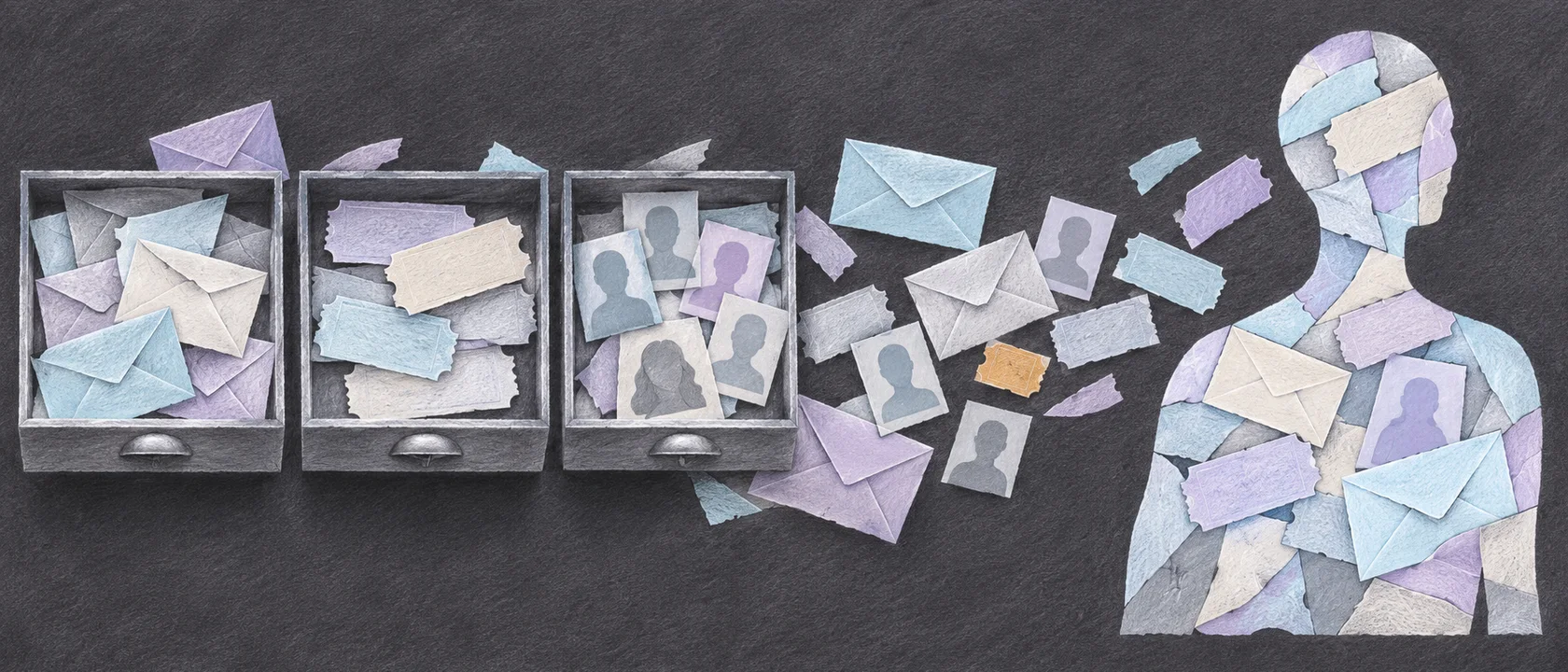
Contact details, transaction histories and authentication data have different uses—and combining them can change those uses. AI-generated conceptual illustration.
3. Fraud built on true details: the reservation is real, but the payment request is not
On June 2, 2026, Switzerland's NCSC reported fake refund messages containing actual hotel names, guest names and stay dates. Messages delivered through channels such as WhatsApp led to phishing pages. The agency linked this variant to an April 2026 leak in the Booking.com environment. It separately described hotel-account takeovers, where requests can arrive through the booking platform's genuine messaging system.[4]
That distinction matters. An attacker may use more than a forged sender name: real transaction information or a compromised legitimate communication channel may support the approach. A matching reservation or a message inside a familiar app does not independently validate an additional payment request.
“99 percent truth and 1 percent lie” is a metaphor here, not a measured ratio or a verified historical quotation. The offender does not need to fabricate the entire exchange. Changing the destination, bank account or final approval can be enough.
Consider a hypothetical delivery example: someone who knows what you ordered and when it should arrive requests an additional delivery charge. Because you are expecting the parcel, the message can feel more natural than unsolicited spam. An address leak alone does not reveal delivery schedules, however. Access to transaction data or an account would be an additional condition. This is not an allegation that a particular online retailer experienced that event.
The promise to protect your information can become another entry point
Japan's National Consumer Affairs Center warned in August 2024 about callers impersonating a public body and offering to delete leaked personal information. It states that it does not make such calls.[5]
Someone who has actually received a breach notice may find that story especially plausible. That is an analytical observation, not evidence that the published complaint used information from a confirmed breach. Public news about a leak can itself supply the pretext.
For the same reason, a legitimate decision to change a password should begin by opening the official app or a previously saved official website independently. An urgent desire to protect an account can otherwise carry someone through the wrong doorway.

A genuine booking does not authenticate an additional payment demand. Verify the request separately from the underlying transaction.
4. Harm extends beyond money: the data determines what needs protection
Instead of treating all personal information as equivalent, identify the fields involved. The following is a practical mapping of information to possible misuse. It does not mean that each listed consequence inevitably follows a leak.
| Information exposed | Misuse to consider | First check |
|---|---|---|
| Name, address and telephone number | Targeted approaches or impersonation of someone who knows you | Avoid supplying more information; verify the contact independently |
| Reservation and purchase history | Fake refunds or additional payment requests | Original order, agreement and official support |
| Passwords and authentication data | Account access and compromise of reused credentials | Password changes, sessions and recovery destinations |
| Identity-document images | Material for identity misuse or fraudulent agreements | Issuer, affected service and relevant credit-information body |
| Health or other sensitive records | Exposure, threats and invasion of private life | Publication status, support and personal safety |
| Images, voice and family information | Impersonation, synthesis and family-based persuasion | Independent verification within the family or workplace |
Australia: disclosing health information is itself harmful
Customer information stolen in the 2022 Medibank incident was subsequently published on the dark web. Australian authorities describe exposure of health information as well as identifying details. In 2024, the OAIC announced civil penalty proceedings alleging privacy interference affecting approximately 9.7 million Australians. This describes the allegation and procedural announcement at that time, not a final judgment.[6]
Medical history and private consultations cannot be replaced like a password. Even without a later fraudulent transfer, exposure and uncertainty about who can read the records are significant harms. “No secondary harm has been confirmed” should not be translated into “nothing harmful happened.”
Addresses and household details also concern physical safety
Japan's National Police Agency advises against answering telephone questions about occupancy, family circumstances or assets, and recommends checking visitors through an intercom or similar means. An address alone does not reveal cash storage or absence schedules; preventing additional disclosure matters.[7]
Do not treat “they already know” as a reason to correct a relative's name or supply a return-home time. That can update the other person's incomplete or outdated information. Suspicious visits and concrete threats require more than email precautions. Prioritize physical safety and contact 110 for emergencies in Japan.
5. What AI adds: matching faces and voices do not establish authority
List trading, family impersonation and fake websites all predate generative AI. What AI changes includes the work needed to prepare plausible language, images and voices, and the ease of reaching people across languages. In December 2024, the FBI warned that generative AI could increase the scale and credibility of fraud, including through text, fabricated profiles and audio.[8]
Awkward language and a crude website can still be warning signs. Their absence is not evidence of safety. Conversely, it would be an exaggeration to claim that anyone can instantly produce a perfect impersonation. Available material, circumstances and attacker capability differ. The practical point is to avoid making protection depend on every fake being visibly poor.
Hong Kong: a fabricated meeting and approximately HK$200 million in losses
A June 2024 Hong Kong government reply to the Legislative Council described an incident reported that January. An approach impersonating a UK head-office CFO led to a prerecorded fake meeting and authorized transfers to five accounts, with losses of approximately HK$200 million. Investigators believed public video and audio had been used. The reply specifically says the recording involved no actual interaction between the victim and fraudster. Presenting this as proof of unrestricted real-time impersonation would be inaccurate.[9]
This is not a confirmed example of a stolen customer database causing the fraud. It demonstrates that public material can also reinforce an apparent identity. Leaked data and public social-media material are different sources, although both can support impersonation.
The US FTC likewise warns that a short recording can be used to imitate a relative's voice, and recommends contacting the person through a number already known to be theirs. Ending the call and verifying independently is a more sustainable household practice than trying to detect every odd vocal feature or visual defect.[10]

Looking like the right person on screen is different from having authority to approve a payment. Return to the organization's authorization procedure.
6. Six quiet months do not make information expire—but vigilance need not become constant anxiety
Cards and passwords can be replaced. A date of birth or past medical treatment cannot. Even an old address may support an opening such as “You used to live here, didn't you?” This is analysis of information persistence, not a claim that there is a universal statistical spike in fraud six months after a breach.
Benesse's published record includes follow-up work after approaches initially made in 2014. It illustrates that efforts to halt use need not conclude quickly. It does not allow calculation of any individual's probability of victimization a particular number of years later.[1]
Crime totals need similar care. The NPA's provisional publication for the first half of 2026 reports 22,031 recognized cases and ¥181.62 billion in losses across its displayed categories, including social-media investment and romance fraud. This is not a total of losses caused by personal-data breaches. It cannot separate leaks, social-media contact and indiscriminate approaches as entry routes.[11]
The practical task is to make long-term vigilance compatible with ordinary life. Enable transaction notifications rather than anxiously checking every account each morning. Use a checkpoint before transfers and authentication rather than memorizing every new scam. Keep breach notices so the affected information can be reviewed later. These are the author's proposed operating habits.
A suspicious message arriving near a breach announcement does not identify the source of the information. Stopping an actual unauthorized login or charge should take priority over speculation about provenance. Organizations also have responsibilities beyond apologizing: they should clearly explain affected fields, treatment of authentication information, assistance and subsequent findings. Consumer caution cannot substitute for organizational protection.
7. What can we trust? Separate goodwill toward a person from permission to act
The following procedure is the author's practical synthesis of official advice. It applies to transfers, important agreements, identity-document submissions, authentication changes and sensitive disclosures. It is not intended to impose the same burden on casual conversation or ordinary inquiries.
- Pause. End the call. Do not open the supplied link or QR code, start remote control or share your screen. You do not need to persuade the caller or obtain a confession.
- Choose the contact route yourself. Use a previously saved family number, the number printed on your card or a familiar official app. Calling a new “verification number” supplied by the caller is not independent verification.
- Verify the actual request. Establish not just that the order exists, but whether this extra charge, destination account or authentication action is required. Because legitimate accounts can be compromised, asking again inside the same chat may be insufficient.
- Keep the action on hold if verification fails. Inability to reach someone does not validate the caller's account. If a relative's safety is in question, contact another relative or an appropriate public service.
When finding support, do not automatically treat a search advertisement or the first result as official. Existing statements, contracts and saved apps reduce dependence on the message that just arrived. Otherwise, an apparently separate check can lead back to another doorway supplied by the same attacker.
At home, make it a routine—not an accusation
Agree in advance to end unexpected money requests and call the original number back. If using a family passphrase, avoid public facts such as birthdays or pet names, and do not make the passphrase alone sufficient to authorize a transfer. The objective is a shared procedure that works under pressure, not a test of family members.
For children, “Tell us even if you have already opened it or sent the photo” is more useful than threatening punishment. Parents may not see the screen in time to identify the initial problem. Being able to report it without hiding is what enables the next protective action.
At work, a video call should not replace authorization
Bank-account changes and exceptional transfers should return to established supplier contacts and designated approvers. An apparently familiar face and voice do not justify bypassing approval because the matter is secret. Once independent verification is complete and the amount and authority meet the organization's rules, ordinary processing can proceed.
A family member physically in front of you makes remote synthetic impersonation much less relevant. It does not establish that an investment story or demand they received is genuine. Verifying the person and verifying the claim are different tasks. That distinction allows trust in people alongside care about consequential actions.
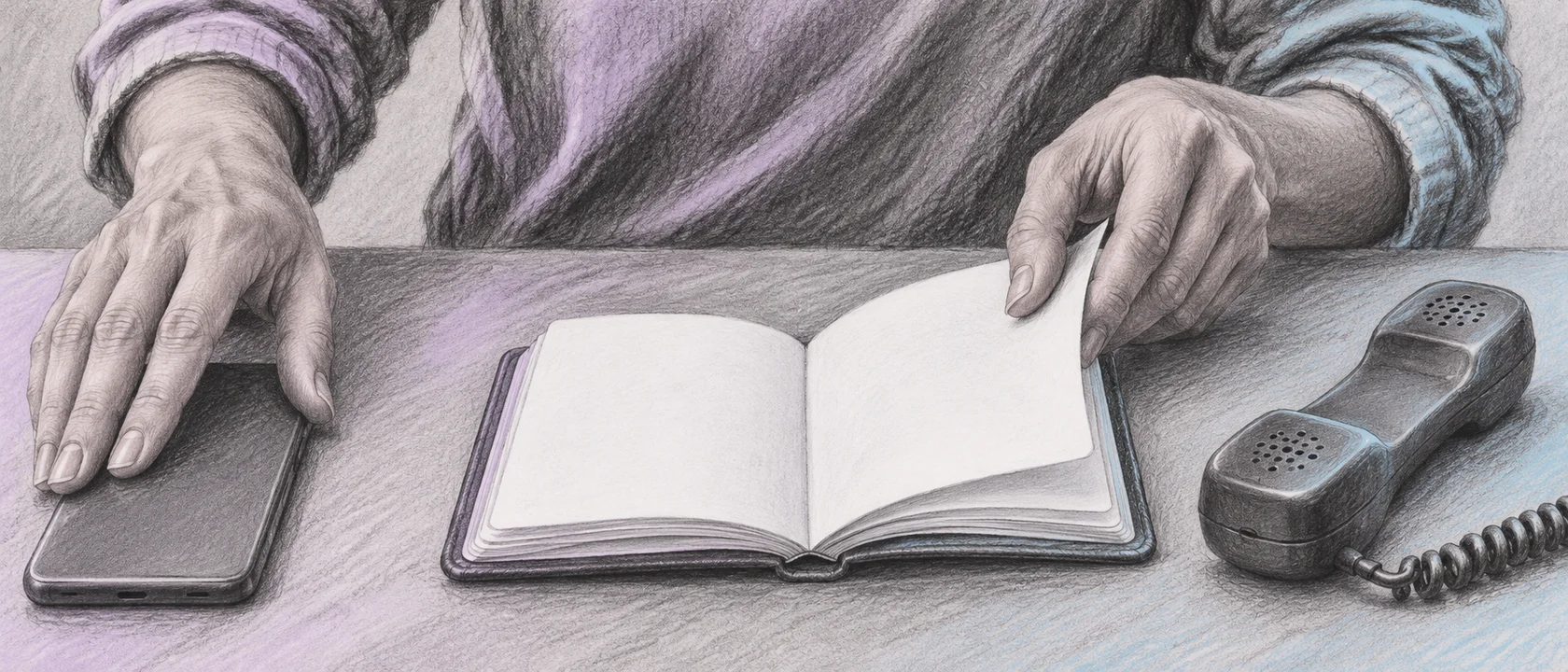
Instead of seeking certainty inside an incoming approach, start your own contact to verify it. The same transition works at home and at work.
8. What to do when a breach notice arrives—and afterward
Start with the affected fields and time period. Because a notice can itself be fraudulent, confirm it through the official app or an independently opened official website. Record whether the organization says exposure is confirmed, possible or still under investigation.
If a password was affected or entered on a fake site: open the official service from a safe device, change it and change any reused credentials. Prioritize email because it often supports recovery of other accounts. Review unfamiliar logins, recovery destinations, forwarding rules, connected applications and registered authentication methods. End unwanted sessions under the provider's recovery procedure. Suspected device infection requires more than changing a password on that same device.
When strengthening authentication: consider supported phishing-resistant methods such as passkeys. Where unavailable, use two-step verification; do not disclose codes to someone else or approve a login you did not initiate. The UK's NCSC published a comparison with traditional authentication in 2026. Passkeys reduce the problem of handing a password to an imitation website. They do not establish whether a transfer is legitimate or guarantee the safety of the device and recovery routes.[12]
If card information or a transfer is involved: promptly contact the bank or card issuer through an official route, ask about blocking access, reporting unauthorized use and available post-transfer action. Preserve dates, messages, URLs, destination details and transaction records. Recovery depends on the circumstances. Do not make an additional payment to someone claiming that recovery is guaranteed.
If identity documents are involved: consult the issuer and affected service, and check for unfamiliar agreements or bills. Japan's CIC offers a personal declaration system, but it provides a warning when a member company checks the file; it is not a guarantee that all agreements will be blocked. Confirm the appropriate process for the incident with CIC. A US credit freeze should not be presented as though the identical system exists in Japan.[13]
If only an address or telephone number is involved: this is not a blanket recommendation to close every account or move home. Set up notifications, avoid supplying more information and share a verification routine with your household. Stalking, a confidential refuge address or a concrete threat requires personal-safety advice beyond general nuisance-call precautions.
In Japan, call 110 for an emergency, #9110 for non-emergency police advice, and 188 for consumer problems. If financial harm is ongoing, contact the financial institution alongside seeking advice.[7][11][5]
A day without an incident can simply be a day without an incident. It is not proof that exposed information has been retrieved. A lost key can be replaced; your entire past cannot. Move from opening the door to anyone who knows your details to opening it for a request that has passed verification. Keep the procedure, rather than the fear, in everyday life.
This is general information based on public sources. Confirm individual exposure, misuse and compensation questions with the relevant organization, financial institution or police. For comparison of breach events themselves, see the article on personal-data breaches in Japan.
References
- [1]Benesse Customer Relations, activities to curb suspicious solicitation, figures dated May 14, 2026. https://www.benesse.co.jp/customer/measure3.html ↩
- [2]US Department of Justice, July 14, 2015, sentencing of Hieu Minh Ngo for an international hacking and identity-theft scheme. https://www.justice.gov/archives/opa/pr/vietnamese-national-sentenced-13-years-prison-operating-massive-international-hacking-and ↩
- [3]UK National Crime Agency, April 2023, international takedown of Genesis Market. Credentials and people are different counting units. https://www.nationalcrimeagency.gov.uk/news/notorious-criminal-marketplace-selling-victim-identities-taken-down-in-international-operation ↩
- [4]Swiss NCSC, June 2, 2026, targeted phishing impersonating booking platforms and hotels. https://www.bacs.admin.ch/en/26w22-en ↩
- [5]National Consumer Affairs Center of Japan, August 7, 2024, warnings about fake calls offering deletion of personal information. https://www.kokusen.go.jp/news/data/n-20240807_2.html ↩
- [6]Australian OAIC, June 5, 2024, announcement of civil penalty action against Medibank. https://www.oaic.gov.au/news/media-centre/oaic-takes-civil-penalty-action-against-medibank ↩
- [7]Japan National Police Agency, residential crime-prevention guidance. https://www.npa.go.jp/safetylife/seianki26/theme_b/b_e_1_main.html ↩
- [8]FBI/IC3, December 3, 2024, Criminals Use Generative Artificial Intelligence to Facilitate Financial Fraud. https://www.ic3.gov/PSA/2024/PSA241203 ↩
- [9]Hong Kong Government, June 26, 2024, LCQ9: Combating frauds involving deepfake. https://www.info.gov.hk/gia/general/202406/26/P2024062600192p.htm ↩
- [10]US FTC, March 2023, Scammers use AI to enhance their family emergency schemes. https://consumer.ftc.gov/consumer-alerts/2023/03/scammers-use-ai-enhance-their-family-emergency-schemes ↩
- [11]Japan National Police Agency, July 31, 2026, provisional fraud statistics for the first half of 2026. https://www.npa.go.jp/bureau/safetylife/sos47/new-topics/260731/01.html ↩
- [12]UK NCSC, 2026, Passkeys are more secure than traditional ways to log in. https://www.ncsc.gov.uk/blogs/passkeys-are-more-secure-than-traditional-ways-to-log-in ↩
- [13]CIC, FAQ on the personal declaration system following loss or theft of identity documents. https://www.cic.co.jp/faq/detail/1095.html ↩

NOVEL SERIES VOL.1
The World Became Slightly Farther Away
The world may not change, but distance can.
A story about a man who cannot treat promises lightly, and the people he meets.The sequel, Clouded Glass, is out too. Start here.
View on Amazon
Jijoden.com
Your life is worth writing.
There is a truer self you can tell only to AI.Gather fragments of memory into a single story.
Take a LookRelated Articles
Why Personal Data Breaches Keep Happening — Japan’s Incidents and What Businesses and Individuals Should Check
As of October 21, 2026: official disclosures from Times Car, Lawson, Furusato Choice and others, with practical guidance on AI-related threats, reporting, password hashes, MFA, AWS monitoring and personal responses.
What Can You Share with AI? Approval Criteria for Enterprise Code and Customer Logs
Authorize enterprise AI use with six repository acceptance criteria, log-sanitization examples, contract decisions and a reusable approval template. Primary sources checked September 19, 2026 distinguish permitted work, prohibited transfers and case-specific review.
Tomcat Vulnerability Response — Eight Flaws, AWS, Spring Boot, and Legacy Deployments【October 2026】
A primary-source guide to eight Tomcat vulnerabilities disclosed October 20, 2026: authentication bypass, HTTP/2 and AJP mix-ups, fixed releases, Amazon Linux status, embedded Tomcat, containment, and deployment verification.
What Makes Gemini 4 Argon Different? — GPT-6, Claude Fable 5.1, and Opus 5.5 Compared
Compare Gemini 4 Argon with GPT-6.1 Sol, GPT-6 Astra, and Claude Fable 5.1, Opus/Sonnet 5.5: shared context, long output, video and audio input, introductory pricing, and practical choices for coding, analysis, and everyday work.
PHP2Shell Response Guide — AWS, Legacy PHP, and Vulnerability Response in the AI Era
A primary-source guide to PHP2Shell disclosed on October 21, 2026, updated the night of October 22: exploitation attempts before disclosure, Japan’s government response and preventive outages worldwide, Amazon Linux fixes, AWS WAF limits, legacy backports, deployment verification, and AI-assisted discovery.
From the Pocho Lab