Table of Contents
Ask "which Japanese city has the lowest taxes?" and most answers talk about resident tax. In fact, resident tax is almost the same everywhere in Japan. What really changes from city to city is National Health Insurance (NHI) premiums.
For this article I collected the fiscal 2026 NHI rates published by each of Japan's 20 designated cities and Tokyo's 23 wards, then calculated the premium for the same households in every city. It is meant for the self-employed and freelancers, people who join NHI after retiring, and anyone planning to go independent or relocate.
1. The short answer: on the same income, Osaka costs ¥130,000–233,000 more a year than Fukuoka
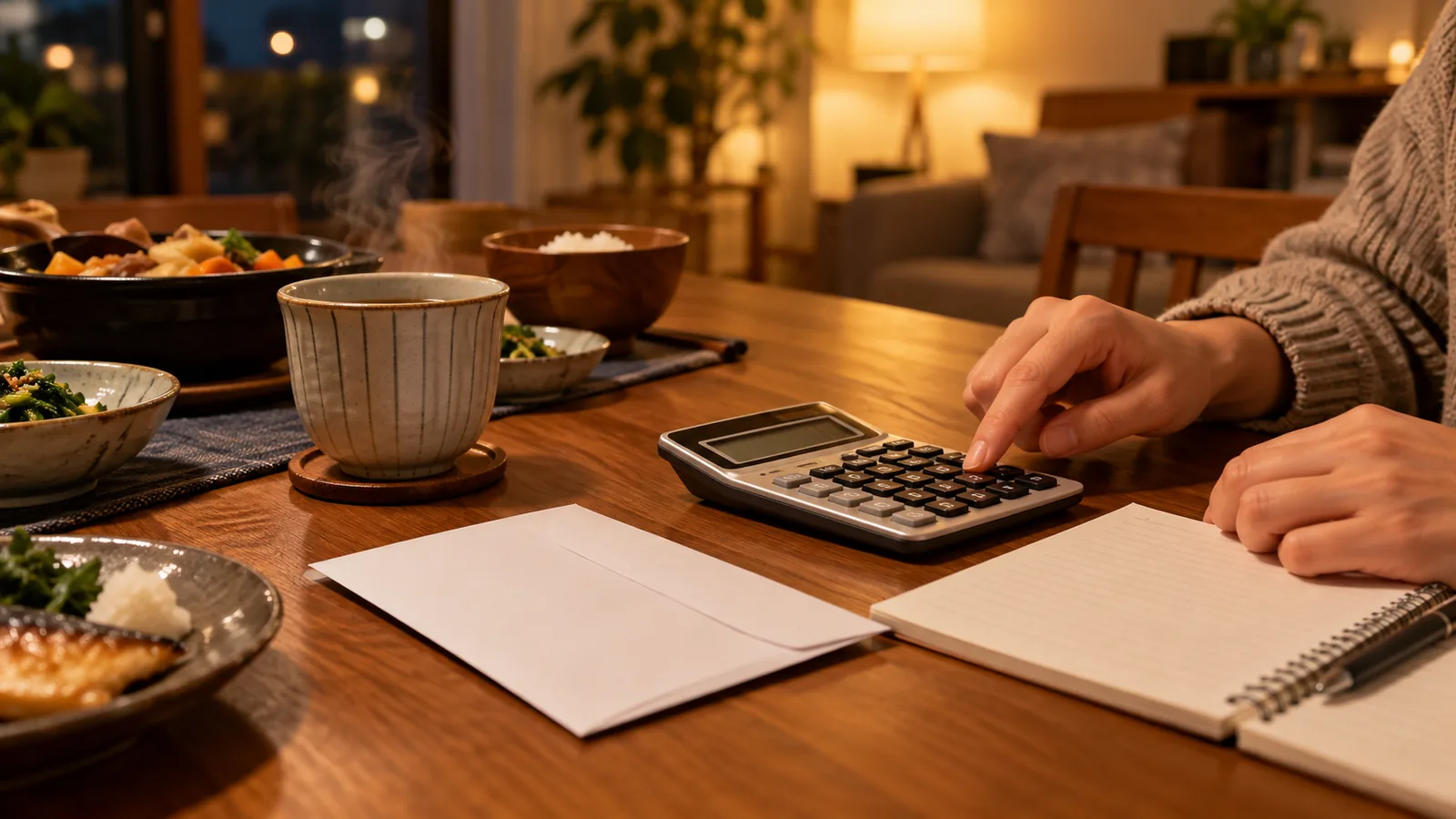
Many people only learn their NHI premium when the June notice arrives.
- Fukuoka is the cheapest. A single person (35, prior-year income ¥3.0 million) pays ¥292,000 a year; a couple (both 45, head of household income ¥5.0 million) pays ¥650,635.
- Osaka and Sakai are the most expensive (Osaka Prefecture sets one premium for all its municipalities): ¥422,763 for the single person and ¥883,769 for the couple.
- The gap is ¥130,763 a year for the single person, ¥233,134 for the couple, and ¥249,067 for a couple with one child.
- Resident tax differences are far smaller. The income-based rate is about 10% almost everywhere, with Nagoya (9.7%) among the rare exceptions.
"Income" here means income after business expenses or the employment income deduction, not sales or gross salary.
2. Resident tax is almost uniform
The standard income-based resident tax is 10% in total: 6% municipal plus 4% prefectural (8% city and 2% prefecture in designated cities), and nearly every municipality uses it.
According to the Ministry of Internal Affairs and Communications, as of April 2024 only one municipality charged an income-based individual resident tax above the standard rate[1]. The best-known city charging less is Nagoya, with a 7.7% city rate (9.7% including the 2% prefectural rate) and a lower per-capita charge of ¥2,800[2]. Kanagawa Prefecture adds 0.025% to its prefectural rate to protect water sources[3].
So on resident tax alone there is little to choose between cities, apart from Nagoya being slightly cheaper. On ¥3 million of taxable income, Nagoya's rate saves about ¥9,000 a year.
3. NHI premiums vary a lot
Company employees join their employer's health insurance, but the self-employed, freelancers, many part-timers and retirees join the NHI run by their municipality. The premium is the sum of four parts, and each municipality sets the rates for each part.
| Part | Who pays | Basis |
|---|---|---|
| Medical | All members | Income-based + per person + per household (some cities have no per-household charge) |
| Support for the over-75 system | All members | Same |
| Long-term care | Members aged 40–64 | Same |
| Child and childcare support (new from FY2026) | All members (no per-person charge for under-18s) | Same |
The income-based part applies the rate to "prior-year income minus the ¥430,000 basic deduction". The medical rate alone is 5.58% in Fukuoka against 9.50% under Osaka Prefecture's unified rate[4][5]. Rates are set each year from what the municipality expects to pay to its prefecture, among other factors[6].
4. The ranking: 20 designated cities plus Tokyo's wards (FY2026)
Using each municipality's published FY2026 rates, I calculated the annual premium for three households, ranked by the couple's premium.
- Single: age 35, prior-year income ¥3.0 million
- Couple: both 45 (so the long-term care part applies), only the head of household has income, ¥5.0 million
- Couple plus one child: the couple above with one elementary-school child
| Rank | City | Single, ¥3.0M income | Couple, ¥5.0M income | Couple + 1 child | Gap vs cheapest (couple) |
|---|---|---|---|---|---|
| 1 | Fukuoka | ¥292,000 | ¥650,635 | ¥680,883 | — |
| 2 | Hamamatsu | ¥321,916 | ¥673,346 | ¥709,346 | +¥22,711 |
| 3 | Shizuoka | ¥316,706 | ¥693,287 | ¥733,187 | +¥42,652 |
| 4 | Sagamihara | ¥319,777 | ¥693,861 | ¥734,361 | +¥43,226 |
| 5 | Niigata | ¥328,489 | ¥709,839 | ¥731,739 | +¥59,204 |
| 6 | Kumamoto | ¥315,949 | ¥720,749 | ¥762,449 | +¥70,114 |
| 7 | Chiba | ¥337,429 | ¥729,358 | ¥761,518 | +¥78,723 |
| 8 | Saitama | ¥333,091 | ¥746,100 | ¥804,300 | +¥95,465 |
| 9 | Kyoto | ¥345,996 | ¥747,463 | ¥787,903 | +¥96,828 |
| 10 | Sapporo | ¥366,052 | ¥749,303 | ¥776,183 | +¥98,668 |
| 11 | Tokyo (21 common wards) | ¥338,979 | ¥764,303 | ¥829,503 | +¥113,668 |
| 12 | Sendai | ¥365,461 | ¥766,789 | ¥805,049 | +¥116,154 |
| 13 | Okayama | ¥361,183 | ¥774,823 | ¥813,463 | +¥124,188 |
| 14 | Kobe | ¥352,587 | ¥775,193 | ¥822,403 | +¥124,558 |
| 15 | Hiroshima | ¥369,227 | ¥777,635 | ¥819,205 | +¥127,000 |
| 16 | Tokyo Edogawa Ward | ¥349,328 | ¥783,063 | ¥849,363 | +¥132,428 |
| 17 | Yokohama | ¥346,173 | ¥790,181 | ¥844,431 | +¥139,546 |
| 18 | Tokyo Nakano Ward | ¥355,241 | ¥797,435 | ¥861,935 | +¥146,800 |
| 19 | Kawasaki | ¥355,088 | ¥798,472 | ¥857,039 | +¥147,837 |
| 20 | Nagoya | ¥366,157 | ¥804,973 | ¥869,348 | +¥154,338 |
| 21 | Kitakyushu | ¥380,453 | ¥813,953 | ¥846,873 | +¥163,318 |
| 22 | Sakai | ¥422,763 | ¥883,769 | ¥929,950 | +¥233,134 |
| 23 | Osaka | ¥422,763 | ¥883,769 | ¥929,950 | +¥233,134 |
The cheapest are Fukuoka, Hamamatsu, Shizuoka, Sagamihara and Niigata. The most expensive are Osaka and Sakai, Kitakyushu, Nagoya and Kawasaki. Tokyo's wards sit in the middle, a little below Yokohama and Kawasaki.
Gaps within a prefecture can be large too. In Miyagi, Sendai's medical income rate is 7.96%, while nearby Tomiya's is 5.50%[7]. This comparison covers only designated cities and Tokyo's wards, so surrounding towns may be cheaper or more expensive.
5. Even within Tokyo, Nakano and Edogawa cost more
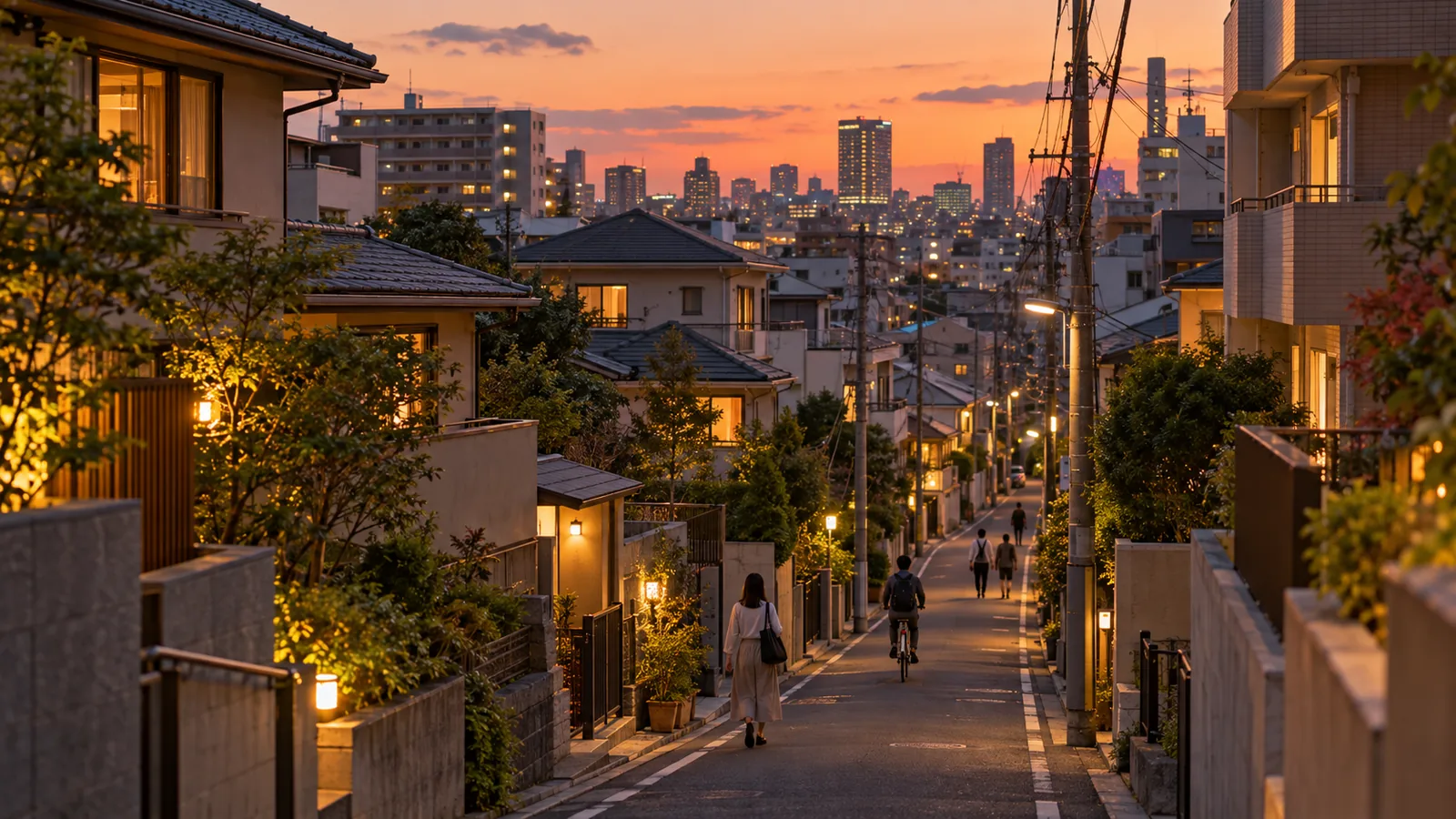
Cross one street into another ward and your premium notice can change.
Each of Tokyo's 23 wards runs its own NHI, but they coordinate rates, and in FY2026 21 of the 23 wards used identical rates[8]. The exceptions:
- Nakano: higher in all three main parts (for example a medical income rate of 8.03% versus 7.51%). The couple pays ¥33,132 more a year than in the other 21 wards.
- Edogawa: a 7.83% medical income rate and a ¥48,900 per-person charge, among others. The couple pays ¥18,760 more.
- Meguro: only its long-term care rate is slightly lower, at 2.35%.
6. Why the differences, and is it worth moving?
Rates reflect the age and income mix of members, local medical costs, what the municipality owes its prefecture, and how much it tops up the NHI from its general budget. Osaka Prefecture has unified premiums across its municipalities, so "the same income and household pay the same premium anywhere in the prefecture"[5]. Its unified level is high by national standards, which is why Osaka and Sakai come out on top here.
Should you move to save on NHI? I would not recommend it on that basis alone.
- Even the largest gaps are ¥100,000–250,000 a year, often smaller than differences in rent or commuting costs.
- Rates change every year. A cheap city in FY2026 may not stay cheap.
- If you work for a company and join its health insurance (such as Kyokai Kenpo), you do not pay NHI at all. Kyokai Kenpo rates also vary by prefecture, but the employer pays half.
But if you are choosing where to live as you go independent or retire, it is worth knowing. ¥200,000 a year for a couple adds up to ¥2 million over ten years.
7. Property tax varies a little too
Fixed asset tax on land and buildings has a standard rate of 1.4%, which most municipalities use. However, 148 municipalities set a higher rate, raising about ¥35.5 billion a year above the standard (as of April 2024)[1]. If you plan to buy a home, check the rate where you want to live.
8. Assumptions and caveats
- Rates are the FY2026 values published by each municipality. The calculation ignores rounding down to the nearest ¥100, the reduction for preschool children, the 70/50/20% reductions for low-income households and local discretionary reductions (only Nagoya's ¥2,000 per-person deduction is included).
- The model incomes are well below the annual caps.
- Check your actual premium on the notice that arrives around June; most municipalities also offer an online estimator.
9. Sources for each city's FY2026 rates
- Tokyo's 23 wards: official page (Japanese)
- Yokohama: official page (Japanese)
- Osaka: official page (Japanese)
- Fukuoka: official page (Japanese)
- Kobe: official page (Japanese)
- Sapporo: official page (Japanese)
- Okayama: official page (Japanese)
- Sendai: official page (Japanese)
- Saitama: official page (Japanese)
- Kyoto: official page (Japanese)
- Hiroshima: official page (Japanese)
- Kawasaki: official page (Japanese)
- Nagoya: official page (Japanese)
- Chiba: official page (Japanese)
- Sagamihara: official page (Japanese)
- Niigata: official page (Japanese)
- Shizuoka: official page (Japanese)
- Hamamatsu: official page (Japanese)
- Kitakyushu: official page (Japanese)
- Kumamoto: official page (Japanese)
- Sakai: Osaka Prefecture's unified rates (same as Osaka)
This article is for information only and does not recommend moving or changing how you work. Rates are those published by each municipality as of October 2026.
References
- [1]Ministry of Internal Affairs and Communications, "Status of above-standard taxation (as of 1 April 2024)" (Japanese). MIC ↩
- [2]City of Nagoya, "Income-based tax rate" and "Municipal tax cut" (Japanese). Nagoya ↩
- [3]City of Kawasaki FAQ on individual resident tax (Kanagawa's additional 0.025%) (Japanese). Kawasaki ↩
- [4]City of Fukuoka, "Calculating premiums" (updated 15 June 2026) (Japanese). Fukuoka ↩
- [5]Osaka Prefecture, "FY2026 standard premium rates for municipalities in Osaka" (Japanese). Osaka Prefecture ↩
- [6]City of Chiba, "FY2026 NHI premium rates decided" (Japanese). Chiba ↩
- [7]Miyagi Prefecture, "FY2026 NHI premium (tax) rates by municipality" (Japanese). Miyagi ↩
- [8]Tokyo Metropolitan Government Bureau of Public Health, "FY2026 NHI premium list for the special wards" (as of 1 April 2026) (Japanese). Tokyo ↩
NEW NOVEL 2026/08/01
Clouded Glass
Polishing is not about force.
Volume two of The World Became Slightly Farther Away.Five stories that can also be read as a starting point.
View on Amazon
Jijoden.com
Your life is worth writing.
There is a truer self you can tell only to AI.Gather fragments of memory into a single story.
Take a LookRelated Articles
The Most Expensive Trading Cards Ever Sold (2026): A $16.5M Pikachu, an $11M Ohtani, and What Makes a Card Worth Millions
In February 2026 a Pikachu Illustrator Pokémon card sold for $16.49 million, the highest price ever paid for a trading card. Here are the biggest sports and trading card game sales, what drives those prices, how to read the records, and what buyers should watch for.
Japan’s Most Expensive Condominiums: 2026 Price Rankings as Tokyo-Area New Builds Average Over ¥100 Million
In the first half of 2026 the average new condominium in greater Tokyo topped ¥100 million for the first time (¥142.49 million in the 23 wards). Here are the reported record prices (about ¥20 billion, ¥6.76 billion, ¥5.5 billion), the ten priciest homes on sale now, and Nagoya’s ¥600 million penthouse — with sources and caveats.
So, What Is Tobacco Really About? A Smoker’s Evidence-Based Guide to Its History, Health Risks, Taxes, and Politics
Why did tobacco spread worldwide, and why has smoking moved to society’s margins over the past two decades? A smoking author examines history, global prevalence, relative and absolute health risks, vaping, taxation, and competing interests without cheerleading or condemnation.
Are AI Agents Really Driving the IT Freelance Boom? A Data-Driven Check
Examines freelance growth, AI agent adoption, and shifts in project volume/rates to test whether AI is truly fueling the rise of IT freelancers—grounded in long-term trends and data.
Top Self-Help Books in Japan for 2025 and Why They Resonate
A curated list of five self-help titles dominating Japan’s 2025 charts, with insights into what makes each one click for readers.
From the Pocho Lab