Table of Contents
1. Conclusion: Gemini Spark Is Google's Official 24/7 Personal AI Agent
Google announced Gemini Spark at Google I/O on May 19, 2026. Google's own description presents it as a personal agent in the Gemini app that can work with Gmail, Docs, Slides, and other services under the user's direction, continuing in the cloud after a laptop is closed or a phone is locked. The important point is not an assumed meaning of the word “Spark,” but the product shift from answering questions to carrying out authorized work over time. (Google announcement)
An announcement does not mean identical availability for everyone. The initial release went to trusted testers and Google AI Ultra subscribers in the United States, while later regional announcements expanded access in markets including India and Indonesia. Plans, languages, and regions continue to change, so users should check the Gemini app and official Google One guidance for their own account.
2. Gemini Spark Architecture and Capabilities
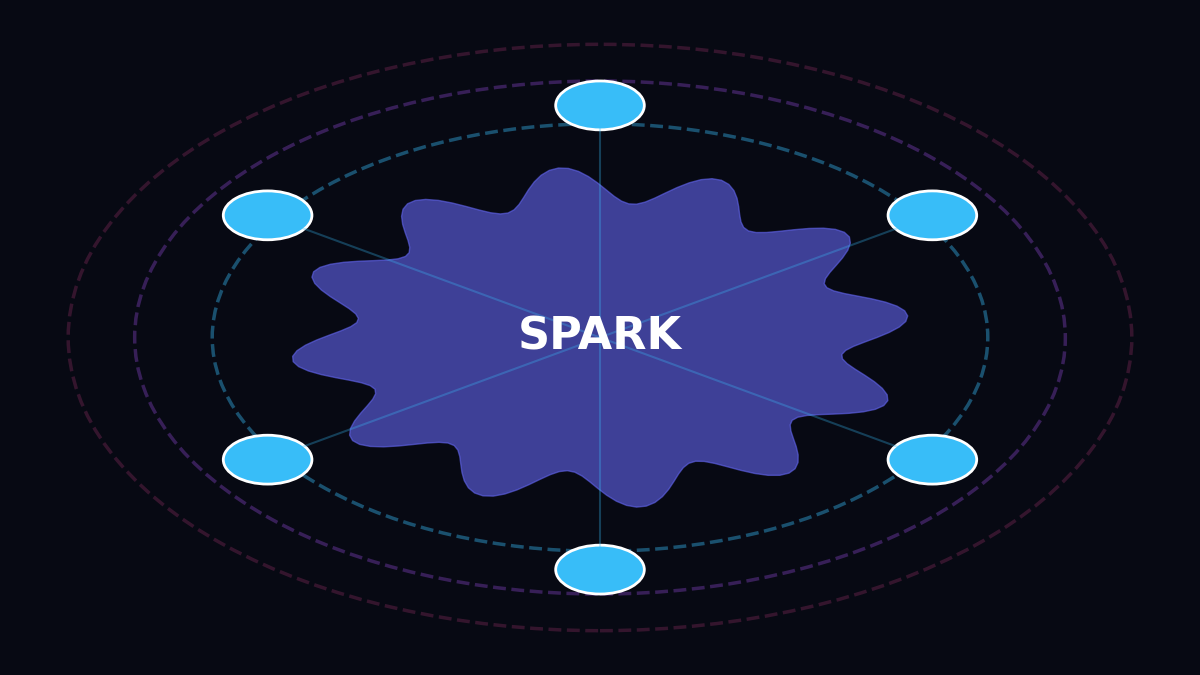
At its core, Gemini Spark utilizes a "Long-Horizon Execution Engine" capable of running tasks on Google Cloud long after you close your browser or turn off your computer.
① Dedicated Google Cloud Virtual Machines
Google's keynote says Spark runs on dedicated Google Cloud virtual machines and can continue without the user's device remaining open. That enables the 24/7 model, but users still need to limit connected data and permissions.
② Long-Running Work Through the Antigravity Harness
Google says Spark uses Gemini 3.5 and the Antigravity harness for long-horizon background tasks. It does not publish one fixed number of internal steps or self-correction cycles for every task.
③ Integrated Ecosystems
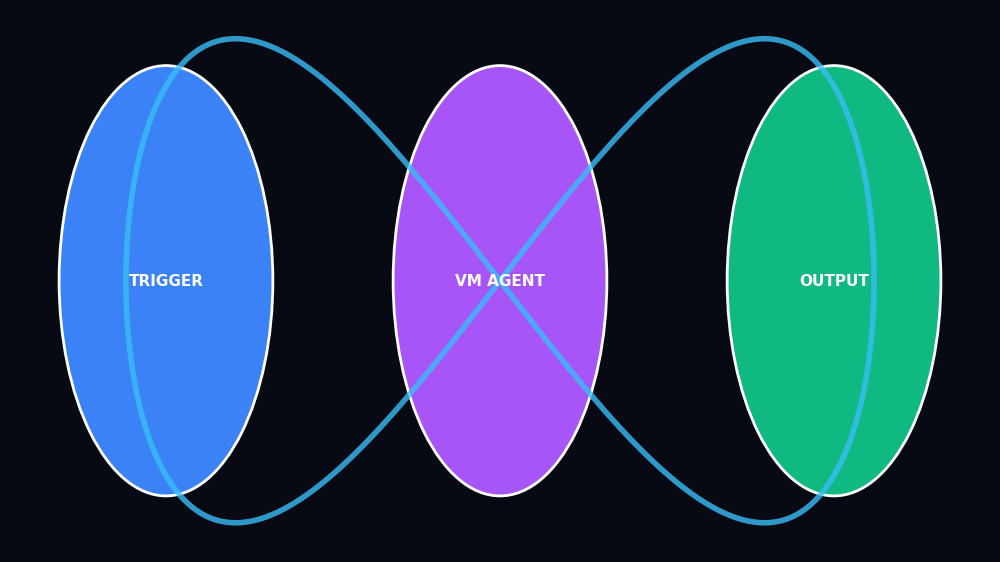
- Google Workspace: Gmail, Docs, Slides, and other services named in Google's announcement.
- The web: sources including signed-in websites, subject to region, settings, and permission.
- Planned expansion: Google has announced future access through email, chat, Chrome, and third-party tools over MCP.
Gemini Spark directly orchestrates:
3. Availability and Plans Change by Region, So a Fixed Credit Table Misleads
As of August 2026, Spark's conditions differ by market. It began as a U.S. beta for Google AI Ultra, while Google India later announced access for Ultra and Pro subscribers. Google One help and plan pages also vary by region, and describe limits as dependent on the feature, model, plan, and testing conditions rather than as one universal monthly credit number. (Google One plan guidance)
Before subscribing, check whether Spark is available in the country and account, whether Pro or Ultra is required, and what limits, approvals, and connected services are shown before execution.
4. Architectural Comparison & Tool Positioning
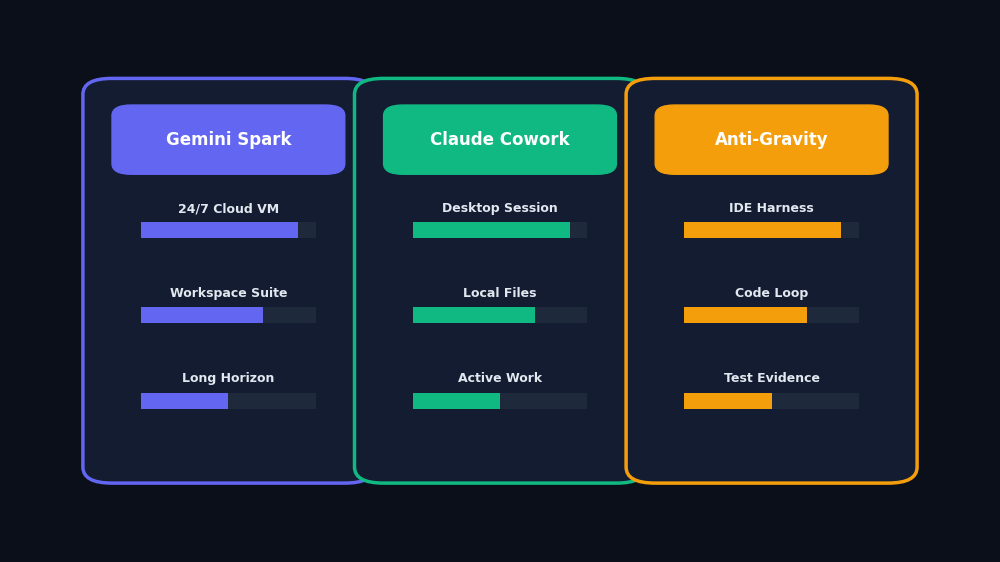
Gemini Spark, Antigravity, Codex, and Claude's desktop features should not be forced into one intelligence ranking. The useful comparison is which jobs and data boundaries each product is meant to handle.
Positioning Matrix
- Claude desktop features: suited to user-selected local files and desktop work.
- Google Antigravity / OpenAI Codex: centered on software repositories, terminals, builds, and tests.
- Gemini Spark: designed as a personal agent for ongoing digital work across approved services such as Gmail and documents.
5. What Official Use Cases Show: Turning Scattered Routine Work into One Bounded Task
A sweeping profile built from years of private email and calendar history should not be presented as the default Spark experience. Google's official examples are more concrete and easier to bound.
They include organizing scattered school emails so a parent does not miss a permission deadline, checking monthly card statements for new subscriptions, and monitoring recurring tasks across approved sources. These jobs require reading several inputs, watching for conditions, and returning a result later rather than producing one chat response. (Official Google India example)
The same reach creates privacy risk. Narrow the folders, date range, permitted actions, and approval points. Avoid starting with an open-ended request to read everything and infer a complete personal profile.
6. Strengths and Limitations
🌟 Strengths
- Proximity to Workspace data: It can work with approved information already held in Google services.
- 24/7 Cloud Background Execution: Tasks run asynchronously on Ephemeral VMs.
- Circuit Breaker Security: Explicit human-in-the-loop approval required before performing high-risk actions (e.g., sending emails, deleting files).
⚠️ Limitations
- Availability is moving: regions, languages, eligible plans, and limits do not arrive everywhere at once.
- Broad permissions increase responsibility: access across mail, calendars, documents, and signed-in websites increases the impact of a mistake or excessive collection.
- Long tasks still need checkpoints: narrow the goal, time range, and output, and return consequential external actions to a human for review.
7. Conclusion
Gemini Spark represents the move from an interface that answers questions to an agent that can use approved data and tools over time.
The important decision is not which product has the most futuristic demo. It is which data the agent may read, which actions it may take, and where control returns to a person. Choose by the boundary of the job and its permissions: development tools such as Antigravity or Codex for repositories, and Spark for bounded Workspace tasks.

NEW NOVEL 2026/08/01
Clouded Glass
Polishing is not about force.
Volume two of The World Became Slightly Farther Away.Five stories that can also be read as a starting point.
View on Amazon
Jijoden.com
Your life is worth writing.
There is a truer self you can tell only to AI.Gather fragments of memory into a single story.
Take a LookRelated Articles
Choosing Between Gemini and ChatGPT: Why Version Comparisons Rot, and Three Criteria That Do Not
Comparisons of the newest models stop being useful within six months. After laying out what actually shipped between November 2025 and August 2026, this article gives three criteria that survive the churn: where your data lives, whether you feed in long documents, and whether you have kept yourself able to switch.
Why the Same AI Model Yields Different "Intelligence": The Hidden Prompt Transformations and Autonomous Loops Inside Modern IDEs
"Why do I get different results when using the exact same Claude Opus 5 model?" We dive deep into the "black magic" (context injection, prompt transformation, and hidden LGTM loops) that IDEs perform behind the scenes. Exploring the architectures of Cursor, Claude Code, Devin Desktop, and ChatGPT Codex.
Is ChatGPT Still the Runaway Leader? Why Google Struggles to Catch Up in the AI Race
Analyzes the current positions of ChatGPT and Gemini through users, loyalty, business models, and organizational culture, and explains what Japan's market and Google would need for a comeback.
What is RAG (Retrieval-Augmented Generation)? Complete Guide to Generative AI, AI Agents, and MCP
A beginner-friendly guide to RAG (Retrieval-Augmented Generation), explaining its differences and relationships with Generative AI, AI Agents, and MCP, including how ChatGPT's web search relates to RAG.
Complete Guide to Devin AI Developer Agent – The 2026 Ecosystem and the Reality of Autonomy
A deep dive into Devin, the leading AI developer agent, as of August 2026. Explore its desktop integration, the new subscription model vs. enterprise ACU, Cursor comparisons, and realistic operational best practices.