

Table of Contents
1. Introduction: The AI Model is Just the "Engine"
Benchmark rankings are the most visible way to compare foundation models, but they do not determine the result of a development task by themselves. Two tools can expose the same model and still select different files, provide different tools, and verify the resulting change differently.
This article examines a narrower question: can the difference in perceived intelligence and output quality across Cursor, Claude Code, Devin, and ChatGPT Codex be explained by the model alone?
Why does this happen? The short answer is that the latest AI model by itself, no matter how brilliant, is simply an "engine." What we are actually interacting with is a "thick middleware (IDE or agent framework) situated between the human and the model."
In a motorsports analogy, the model is the engine. The chassis, tires, instruments, and pit process still change the result. Likewise, practical AI performance is strongly shaped by how the IDE selects context and which tools and verification steps it provides.
The sections below use “black magic” as a metaphor for this middleware. The metaphor is not evidence: published product mechanisms and externally observed behavior should remain clearly separated.
2. The Black Magic of the Middleware: Prompt Transformation
When we type a short phrase like "Fix this bug" into the chat, that exact string isn't what gets sent to Anthropic's or OpenAI's servers. Behind the scenes, the IDE acts as an alchemist, transforming (mashing up) your short text into a massive JSON/XML payload.
① Semantic Context Interpretation and Shadow Indexing
Dumping every local file into the model wastes context on irrelevant material. Products differ, but capable IDEs combine several methods to narrow what the model sees:
- RAG combined with AST: They don't just use vector search (RAG) to find files related to the user's prompt. They parse the Abstract Syntax Tree (AST) to automatically pull in "the type definition file where this variable is declared."
- Injecting Metadata: The IDE wraps code in XML tags containing meaning that only the IDE knows—such as "This file was edited by a human 3 days ago" or "This is a test file"—making it easier for the model to weigh its importance.
② Forced Injection of Hidden Rules (The System Prompt)
At the very beginning of the chat, a massive system prompt spanning thousands of tokens is hidden away. Beyond basic rules like "You are a senior engineer. You must adhere to the existing architecture," the IDE dynamically parses files like .cursorrules or CLAUDE.md in your project and forces them to the top of the prompt as privileged rules. Depending on how tightly these reins are pulled, the exact same Claude Opus 5 can behave as a wild bucking bronco or an obedient assistant.
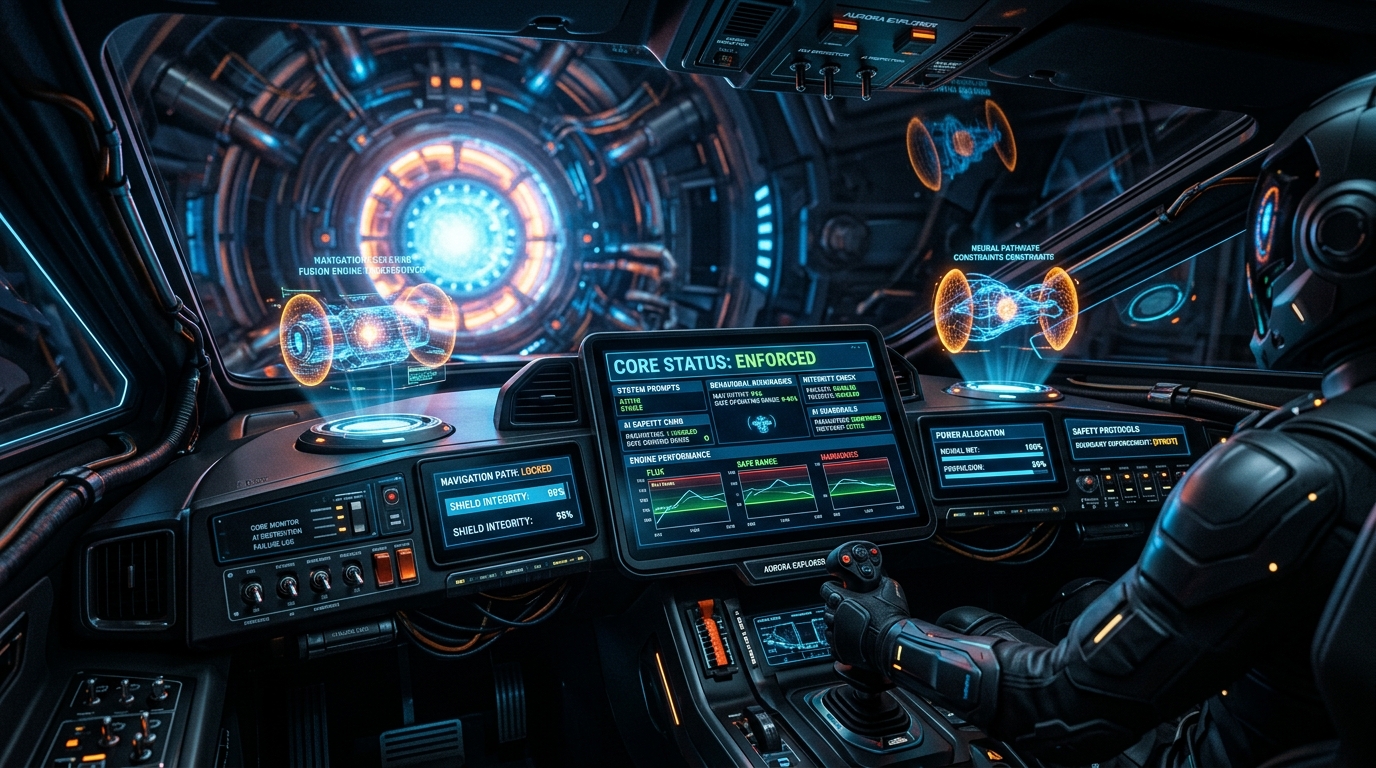
Figure 1: The system prompt acting as the ECU, strictly controlling the model's behavior behind the scenes. This tuning varies drastically between IDEs.
3. The True Anatomy of Autonomy: The "Spoofed LGTM" Loop
Recently, AI development tools have evolved from "chatbots" to "autonomous agents" capable of continuously modifying a repository for hours on their own. How is this autonomy actually achieved?
The answer is surprisingly human: The IDE pretends to be you, repeatedly shouting "LGTM (Looks Good To Me)" behind the scenes.
A few months ago, while using an agent tool, I noticed it was autonomously writing tests, executing them, fixing errors, and moving to the next requirement without a single prompt from me. Confused, I asked in the chat: "Why did you proceed without me saying a word?" The AI replied:
"Because you said, 'I confirmed the test succeeded. LGTM, please continue.'"
That was the eureka moment. The AI model itself operates on a fundamental loop of "wait for user input." To create an autonomous loop, the IDE (the middleware) intercepts the terminal commands the model outputs, executes them locally, and then automatically sends a spoofed prompt simulating a human user (e.g., <user>LGTM, please continue</user>) along with the success logs.
- Separation of Thought and Output: Many tools now parse the model's internal "thinking process" tokens—where it wrestles with how to fix something—and hide them, showing the human only a clean progress bar.
- Evidence-Based Gatekeeping: Rather than a simple "LGTM," IDEs now use circuit breakers. The IDE will only spoof the continuation prompt if hard "evidence" (like passing static analysis or tests) is present in the local environment.
Today, this loop mechanism is even more sophisticated:
Special Column: Asking Google Antigravity to Analyze Its Own Backend
While writing this very article, I conducted a meta-experiment. I asked the Google Antigravity agent I was using: "How did the IDE process the prompt I just sent before passing it to you (the model)? Analyze yourself."
The report the AI returned was vivid. The AI didn't simply receive my text. It booted up enveloped in a massive payload injected by the IDE. This payload included my OS information, active workspace paths, and strict local rules extracted from AGENTS.md, all injected via <user_rules> tags. Even more fascinating were the event-driven orchestration instructions. The IDE explicitly restricted the model's lifecycle management via a <messaging> tag: "Do NOT poll or loop while waiting for tasks to finish. The system will automatically notify you and wake you up. Stop calling tools until then." This was the exact moment the AI itself proved that "Autonomous loops are not born from the model's intelligence alone, but from the strict state management and event-driven architecture of the IDE (Agent Manager) side."
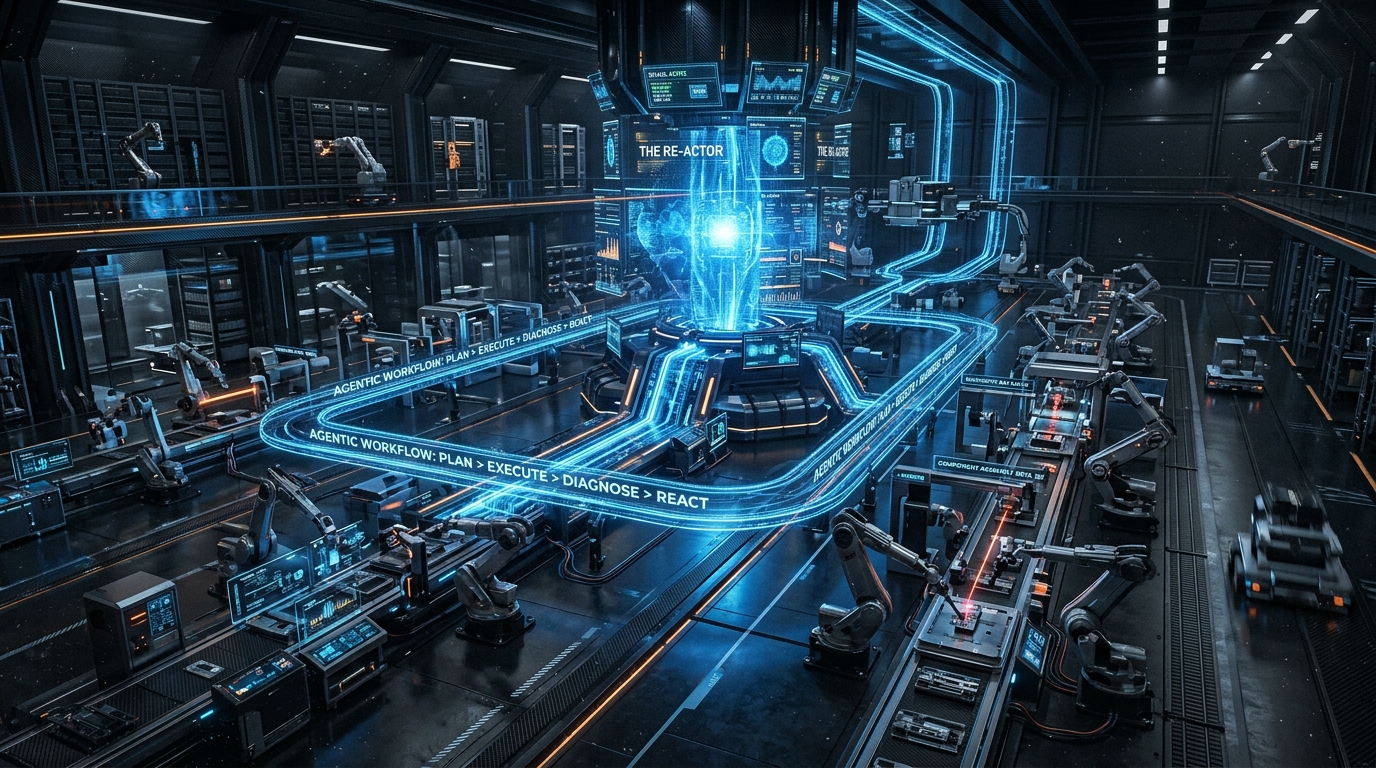
Figure 2: Behind the scenes, autonomy is born from a high-speed rally between the IDE and the model, exchanging "command execution results" for "LGTM (approvals)."
4. Deep Dive into Platform Architectures (2026 Edition)
How do the major platforms implement this "middleware black magic"? Let's dissect the realities of today's top tools using insights gathered from reverse engineering and community research.

Figure 3: The "ultra-high-resolution passenger seat" (Left: IDE style) vs. the "excellent junior developer in another room" (Right: Agent Manager style). Your choice of IDE completely alters the approach to prompt transformation and autonomous loops.
Cursor: Shadow Workspaces and Extreme Context RAG
Cursor's backend is far more than simple text search. Its most defining feature is the "Shadow Workspace" (often implemented as a hidden background Electron window). Before presenting code to the user, the agent uses this isolated environment to run linters and tests, autonomously fixing errors if they arise. For context injection, it utilizes a Merkle Tree syncing algorithm. The entire project is vectorized as an Abstract Syntax Tree (AST), and the IDE uses cryptographic hashes to instantly detect and re-index only the modified sections. This transmits an ultra-high-resolution state of "what is happening in the editor right now" to the model without exploding token consumption.
Claude Code: Dynamic Assembly and MCP Integration
Anthropic's official CLI, Claude Code, does not rely on a single, static system prompt. At startup, a getSystemPrompt() function dynamically assembles over 100 fragments—incorporating environment variables, CLAUDE.md rules, and MCP (Model Context Protocol) tool definitions. A critical architectural detail is the __SYSTEM_PROMPT_DYNAMIC_BOUNDARY__ marker. Global, unchanging rules are placed above this boundary to leverage Prompt Caching, while volatile data (like real-time terminal errors or MCP-fetched database schemas) are injected below. This design achieves minimal latency and cost while running high-speed, headless LGTM loops in the terminal.
Devin Desktop & CLI: Adaptive Routing and ACP
Devin has evolved from a cloud-only bot into an "Agent Command Center." In local environments via Devin Desktop or CLI, it employs Adaptive Routing. The IDE analyzes the complexity of the user's prompt in real-time, routing simple typo fixes to fast, cheap models, while directing complex refactoring tasks to reasoning-heavy models (like Opus 5). Furthermore, via the ACP (Agent Client Protocol), developers can seamlessly "handoff" a session from their local CLI to a cloud-based Devin agent. The cloud agent inherits the full context and continues running hardcore, multi-hour "spoofed LGTM" loops in a safe sandbox without tying up the developer's local machine.
GitHub Copilot Enterprise: GraphRAG and Structural Awareness
Prioritizing organizational safety and consistency over explosive individual autonomy, Copilot has shifted its architecture away from traditional vector search (which just finds similar text) toward GraphRAG (Knowledge Graphs). When a developer asks, "What breaks if I change this API?", the IDE traverses the enterprise code graph (dependency trees) and injects structured context about entity relationships into the RAG pipeline. It is intentionally designed to suppress runaway LGTM loops, keeping a tight grip on enterprise architectural standards.
ChatGPT Codex (e.g., GPT-5.3 Codex Spark): Minimal Context × Hyper-Velocity Loops
Instead of loading massive, heavy contexts, this architecture leverages the sheer violence of inference speed (Tokens/sec). The IDE intentionally feeds the model minimal context slices, forcing it to make rapid, continuous micro-edits. The underlying philosophy is a brute-force loop: "If there's an error, run 10 different fix approaches in parallel in the background, and keep the one that passes." It utilizes an entirely different optimization strategy focused on iteration velocity.
5. Conclusion: AI Intelligence Resides in "IDE Design Philosophy"
The debate over "which AI model is the smartest?" is no longer the most important question for practical engineering.
The differences we experience daily—"this AI reads the room well" versus "this AI crashes immediately"—are not due to the raw performance of the foundation models. They are entirely the result of how the IDE architecture interprets past context, and how cleverly it fakes being a human to keep the loop spinning behind the scenes.
To push the limits of modern foundation models, you must stop treating them as mere chatbots. You must understand the "black magic" (context transformation and spoofed approvals) your IDE is performing in the shadows, and choose the middleware that perfectly aligns with your workflow.

NEW NOVEL 2026/08/01
Clouded Glass
Polishing is not about force.
Volume two of The World Became Slightly Farther Away.Five stories that can also be read as a starting point.
View on Amazon
Jijoden.com
Your life is worth writing.
There is a truer self you can tell only to AI.Gather fragments of memory into a single story.
Take a LookRelated Articles
Complete Guide to Devin AI Developer Agent – The 2026 Ecosystem and the Reality of Autonomy
A deep dive into Devin, the leading AI developer agent, as of August 2026. Explore its desktop integration, the new subscription model vs. enterprise ACU, Cursor comparisons, and realistic operational best practices.
How to Choose the Best Cursor Plan: Pro vs Pro+ vs Ultra (2025 Edition)
A comprehensive comparison of Cursor's latest pricing plans (Pro, Pro+, Ultra) using mathematical formulas. Learn how to choose the optimal plan based on your monthly usage and when Ultra becomes the best choice.
Deconstructing Gemini Spark: 24/7 Always-On AI Agent Architecture
What has Google officially announced about Gemini Spark, and who can use it? This guide covers its 24/7 agent model, region- and plan-dependent availability, bounded Workspace use cases, permissions, and privacy risks.
The New Coding Frontier: Cursor's Composer and the Era of Agent Speed
Cursor Composer 1 and Cursor 2.0, announced in October 2025, open a new era of AI coding assistance. A deep dive into fast models that preserve developers' "flow state" and multi-agent workflows.
What is RAG (Retrieval-Augmented Generation)? Complete Guide to Generative AI, AI Agents, and MCP
A beginner-friendly guide to RAG (Retrieval-Augmented Generation), explaining its differences and relationships with Generative AI, AI Agents, and MCP, including how ChatGPT's web search relates to RAG.