
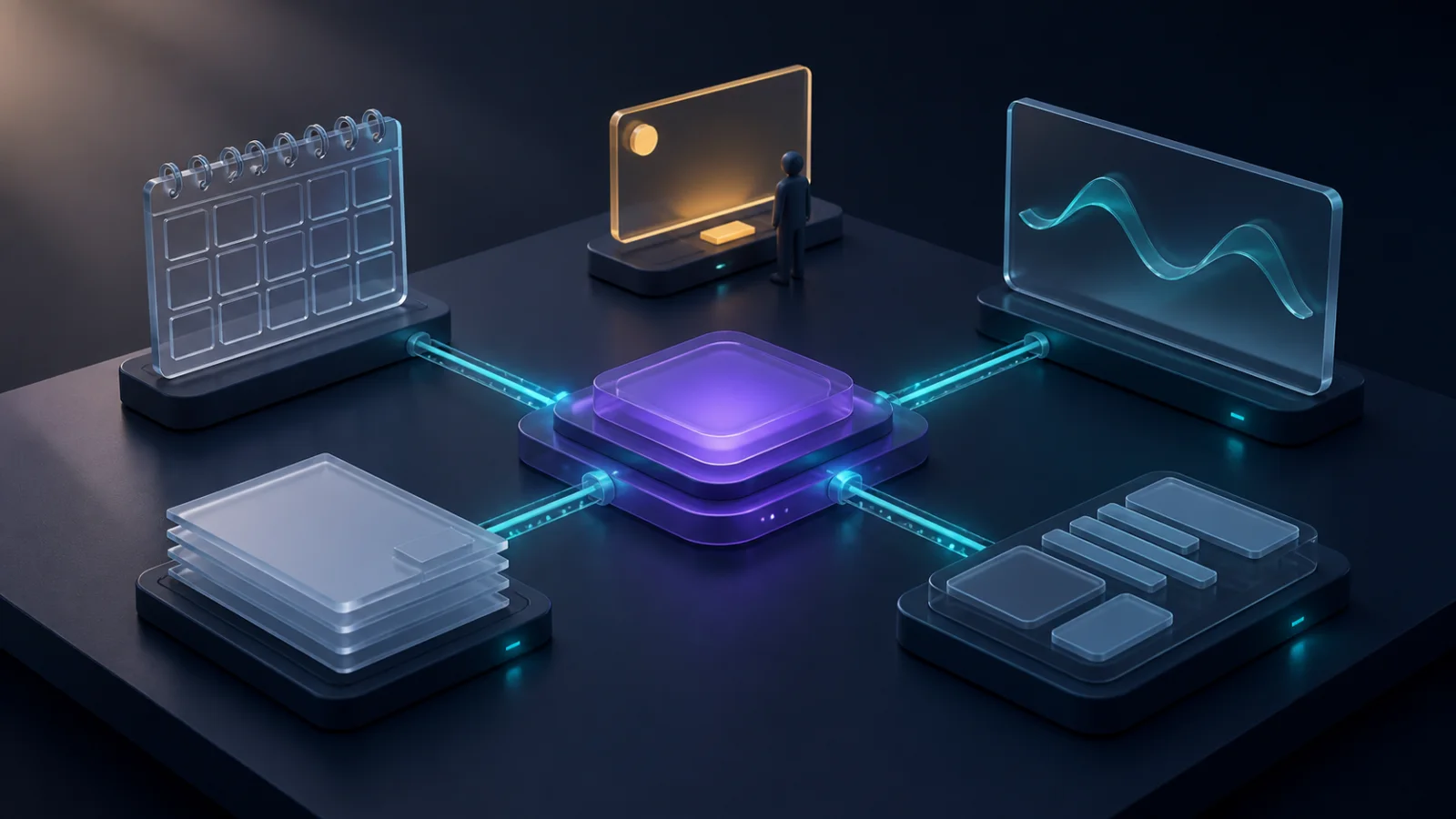
Table of Contents
1. The Answer: Build the AI Interface—But Make It Disposable
Should a SaaS company embed an AI agent in its product, or assume that human-facing GUIs will eventually lose primacy and go all-in on APIs and MCP?
Either choice is dangerous when treated as an all-or-nothing bet.
An API-first product may be technically correct but commercially premature: customers may not understand its value before the company runs out of cash. At the other extreme, a company can spend heavily on an impressive chat panel only to watch a user's “main agent” perform the same work from outside the product a few years later. The interface then becomes expensive legacy code.
Pochang Lab proposes a two-track strategy:
- Track 1—survive the present: Put a visible, useful AI assistant inside the SaaS interface. Use it as a sales hook, a low-friction adoption path, and a source of near-term revenue.
- Track 2—win the future: Make the same business capabilities callable through semantic APIs, MCP, strict authorization, auditability, idempotency, and rollback—an agent-native foundation.
The crucial point is not to build the two tracks twice. The embedded assistant and a future main agent should invoke the same domain services under the same authorization model. Treat the screen as a replaceable adapter; treat the API, business rules, and authoritative data as durable assets.
In other words, admit that today's interface may be temporary. Temporary does not mean wasteful. Like a detour used while a bridge is built, it brings today's customers toward the future, recovers development costs, and generates evidence from real use. This is how a SaaS company avoids both running out of money with an answer that arrived too early and falling behind with an optimization that arrived too late.
2. From Software for Humans to Software for Agents: The Shift Has Already Started
As of August 2026, an AI working across services—researching, processing data, creating files, and operating screens—is no longer a laboratory demo.
OpenAI's ChatGPT agent combines a visual browser, text browser, terminal, and direct API access. It can read calendar data efficiently through an API and operate a screen when a site was built only for humans.[1] In June 2026, OpenAI said Codex had more than five million weekly users and that roughly 20% were in non-engineering roles. The experience of using code to finish work is moving beyond a specialist developer skill.[2]
AWS has made the same direction unusually concrete. Its AWS MCP Server, generally available since May 2026, lets MCP-compatible agents operate AWS within existing IAM permissions. The AWS Security Blog says it covers more than 15,000 APIs and provides context keys that can distinguish agent-mediated calls from direct human activity.[3][4]
MCP, which Anthropic initiated, is no longer a connection method controlled by one vendor. In late 2025, it was donated to the Agentic AI Foundation under the Linux Foundation, with OpenAI, Google, Microsoft, AWS, and others supporting neutral stewardship. Official Python and TypeScript SDKs had surpassed 97 million monthly downloads.[5]
This does not mean SaaS disappears. It means the user changes. APIs used to be consumed mainly by developers and other software. Increasingly, a major consumer will be an agent acting on behalf of a user.
A service with only a GUI can still be used through a screen-operating model such as Google's Computer Use. As of August 26, 2026, Google documented support for browser, mobile, and desktop environments. But it also warned that the preview can make mistakes and contain security vulnerabilities, and recommended supervision for important work and avoiding irreversible actions.[6]
Screen control is a powerful final compatibility layer, but it is fragile under layout shifts, waiting states, and mistaken clicks. An API requires deliberate design, yet it is faster, structurally explicit, and easier to govern with permissions and audits. In the main-agent era, the SaaS products selected most reliably will not be those that are easiest to click by imitation, but those with legitimate machine-facing entrances.
3. Why Build Embedded AI Now? The Technology Clock and the Customer Clock Disagree
A future can be correct without being something customers will buy today.
McKinsey's global 2025 survey found that 23% of organizations were scaling an agentic AI system somewhere and another 39% were experimenting. Yet in every individual business function, the share reporting scaled deployment was 10% or less. AI use is broadening, but handing an entire workflow to an autonomous agent remains a minority practice.[7]
The gap is larger in Japan. IPA's DX Trends 2025 says roughly eight in ten U.S. and German companies had introduced or planned to introduce generative AI, compared with just over half in Japan. Nearly 40% of U.S. and German companies had embedded it in departmental processes, versus around 10% in Japan. Among Japanese companies with 100 employees or fewer, only 12.1% reported introduction or trial use.[8]
These figures do not justify declaring that Japan is exactly a fixed number of years behind. Adoption varies by industry, size, regulation, and customer group. But for planning purposes, it is sensible to allow for a one-to-five-year transition and build something that survives whether that interval is short or long.
To today's customer, an AI button or chat panel at the edge of a familiar screen is legible. Sales can demonstrate that the product is “AI-ready.” The user can experiment inside an interface and authorization model they already know, inspect the output and history, and take a smaller psychological step than delegating everything to an autonomous agent.
Embedded AI fails when it is treated as decoration for customers assumed to be behind the curve. Its real role is to be the training wheels between an existing workflow and agent-assisted work.
A good Track 1 is not a universal chat box. It finishes one measurable job: explain unprocessed invoices and propose journal entries; compare schedules and prepare candidate times; collect abnormal metrics and rank possible causes. A person reviews the evidence and diff in the same interface before approval.
A right answer delivered too early can be a wrong business decision. A company that sells only the final autonomous future may give today's majority no clear use case. A company that earns and learns through embedded AI while making the back end agent-native turns the transition period into migration capital instead of sunk cost.
4. Designing the Two Tracks: Connect a Temporary UI and a Durable API to the Same Capability
Two-track does not mean placing an “API team” and a “UI team” on parallel implementations. To prevent duplication, separate the product into three layers.
The current SaaS screens, embedded AI, a future main agent, voice, and dynamic UI. Change them as customer behavior changes.
Scheduling, invoice handling, analysis, approval, and document generation. Every entrance invokes the same rules.
Authoritative data, identity, permissions, audits, state, history, contracts, and rollback. Do not rebuild these for each short-term trend.
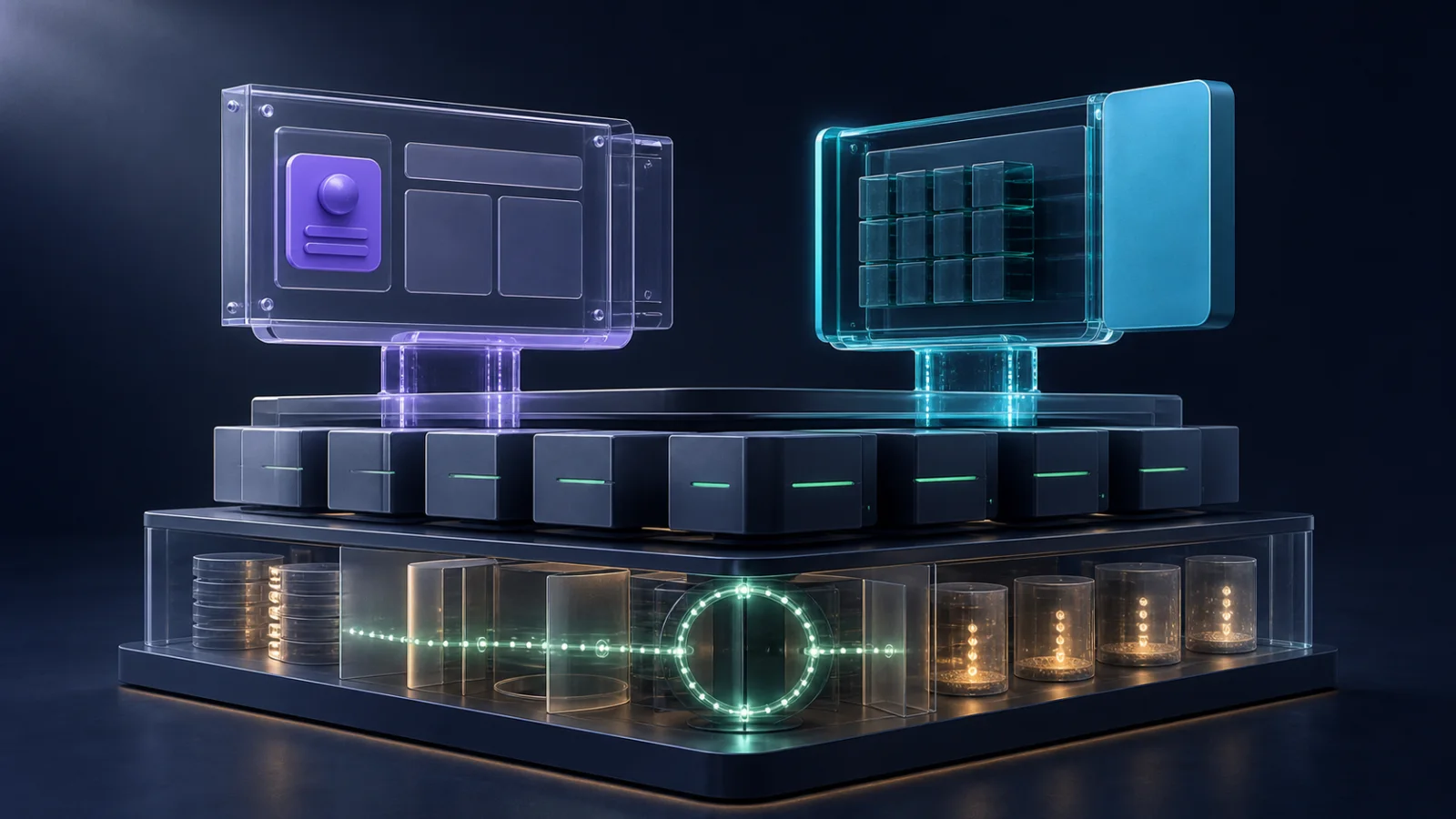
The entrance is temporary; the business logic is not. A capability validated through embedded AI should be callable through APIs and MCP without being rebuilt.
Track 1—Embedded AI That Pays for the Present
Track 1 is not only about immediate revenue. It reveals which requests recur, where users correct the system, which actions they are afraid to approve, and which outcomes they will pay for. That evidence should shape the future tool contract.
Do not put the business logic in the interface. If a chat panel updates the database directly or handles exceptions only through screen-specific prompts, discarding that entrance discards the capability. Make the embedded assistant a thin client of shared domain services.
Track 2—An Agent-Native Foundation That Wins the Future
Track 2 should aim beyond “we have an API.” The standard is whether an agent can complete work safely:
- schemas, explanations, examples, and machine-readable contracts with unambiguous meaning;
- typed errors that distinguish success, retryable failure, and permanent rejection;
- idempotency keys and status retrieval for long-running work;
- least-privilege authentication that distinguishes people, services, and agents;
- scopes separating reading, proposing, executing, and destructive operations;
- audit logs showing who did what and why;
- preview, diff, approval, undo, and compensating transactions; and
- explicit cost, rate limits, freshness, and timeouts.
Postman's 2025 survey of more than 5,700 developers, architects, and executives found that 89% used AI, while only 24% designed APIs with agents in mind. Seventy percent knew of MCP, but only 10% used it regularly. Fifty-one percent named unauthorized or excessive agent access as their leading security concern.[9]
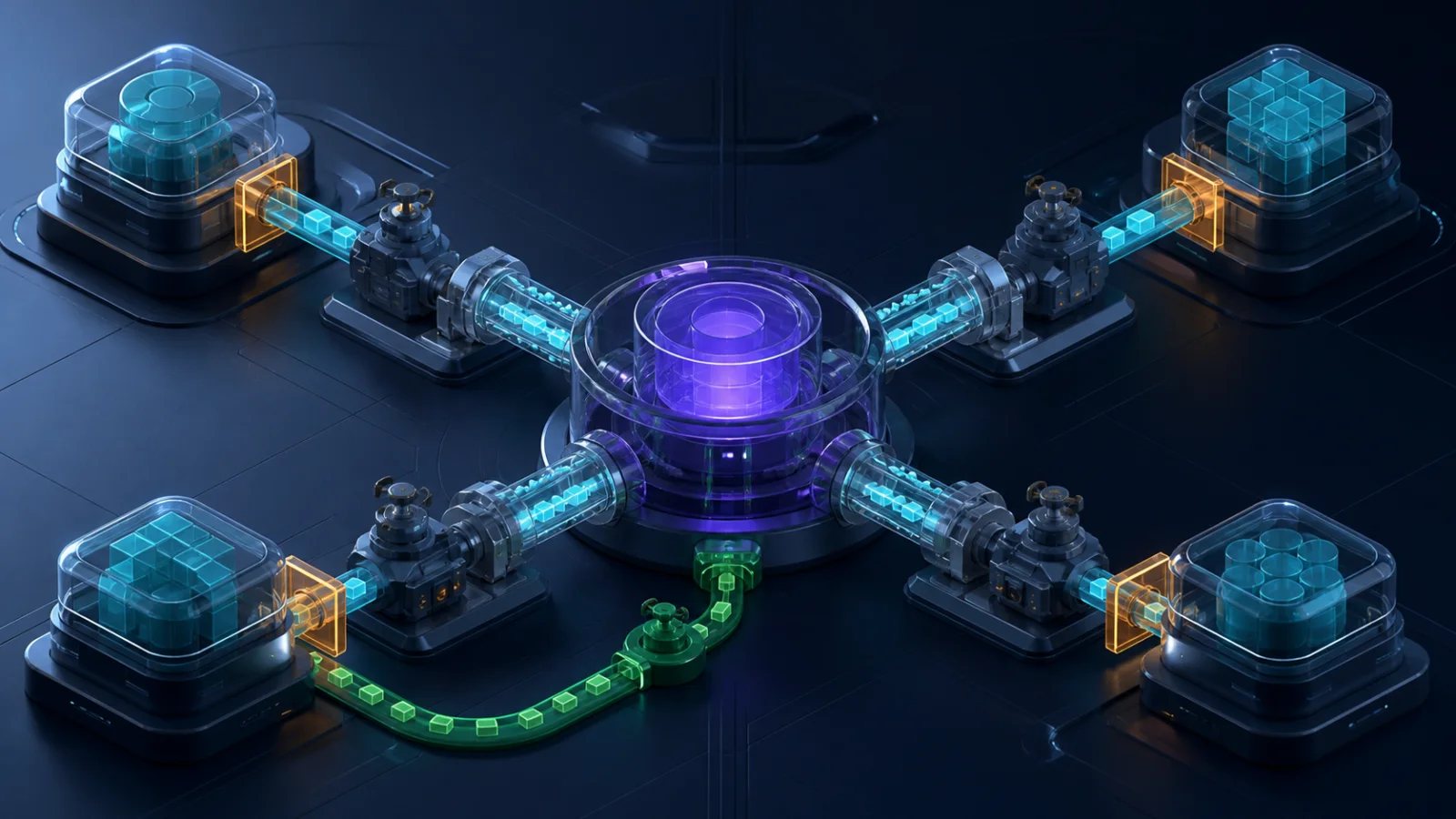
If the model is the brain, APIs are the nerves and blood vessels. Autonomous work becomes dependable only when data shape, permissions, failure, and reversal are designed together.
MCP does not replace APIs. It gives agents a common entrance through which to discover capabilities, read their descriptions, and invoke them as tools. Wrapping an ambiguous business contract in MCP only distributes the ambiguity.
5. The GUI Will Not Disappear: It Changes from Control Panel to Verification, Sharing, and Exception Surface
Even if a main agent becomes common, people will still need screens.
At Pochang Lab, we open the AWS Management Console less often than before. It is faster to collect configurations and metrics through APIs and have an agent produce an integrated report than to gather information across multiple pages. We still visually inspect the finished state, a strange fall in a time series, or a divergence between several lines.
The distinction is easier to see when work is divided into two categories:
- Changing state: creating, configuring, moving, aggregating, scheduling, and sending. This moves readily to agents.
- Understanding state: surveying, comparing, spotting anomalies, agreeing, and making a final check. Human vision remains strong here.
In Google Calendar, Gemini can propose times from attendee availability and suggest alternatives when a slot fails.[10] A weekly grid still lets someone notice instantly that Wednesday is overloaded. Just as a paper calendar on the wall became a digital one, AI can arrange the events without eliminating the value of seeing time as a shape.
The same applies to an FX crash and recovery, service latency, or the flow of a meeting deck. There are moments when a waterfall-like form communicates faster than numbers or prose.
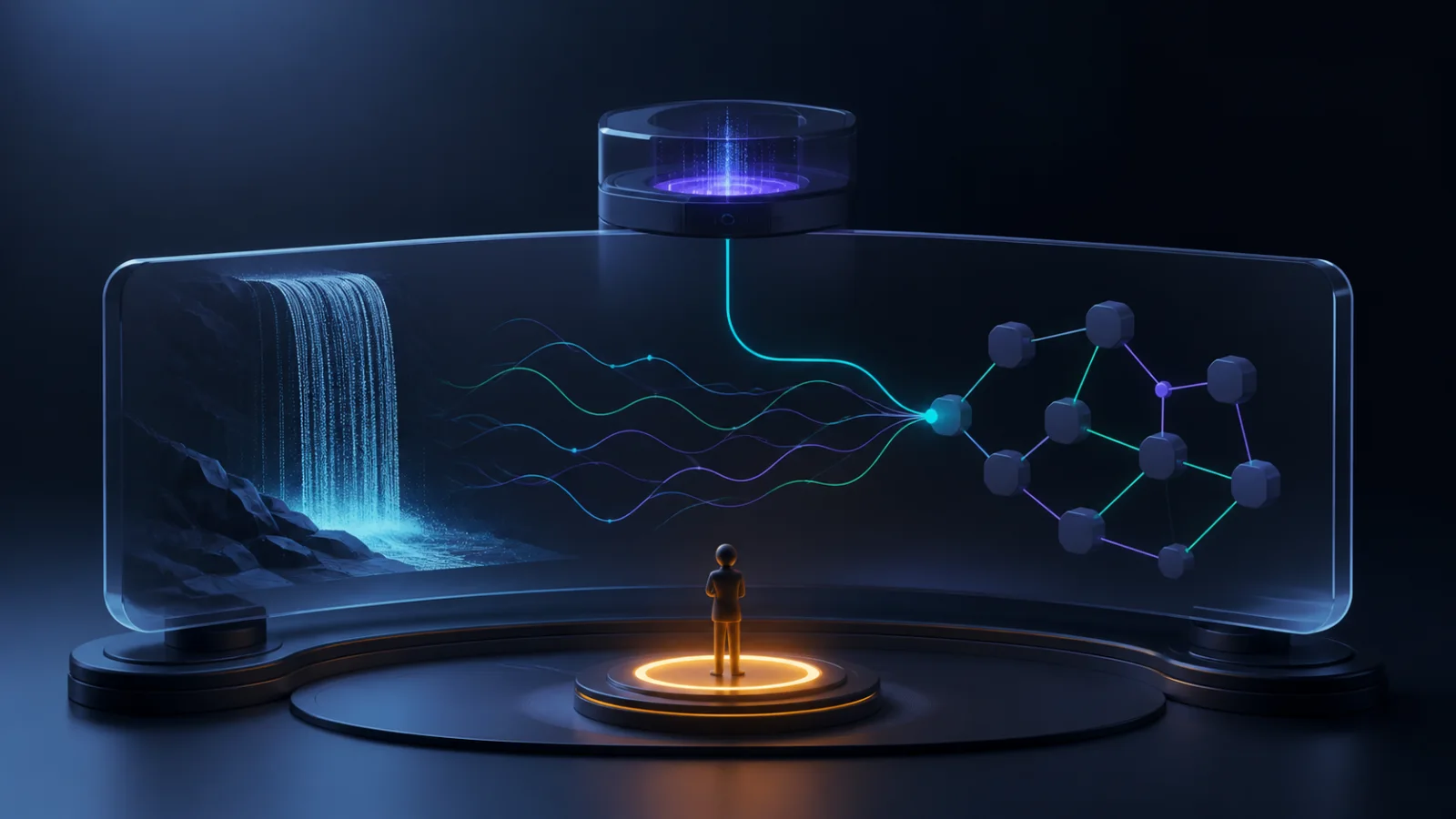
Even when AI gathers and analyzes the information, people use screens to perceive shape, density, outliers, and the whole situation. The GUI moves from control panel to verification window.
AWS's OpenSearch Service MCP Apps, announced August 25, 2026, productize this change. They return both an agent's summary and interactive trace, topology, and log-pattern views generated deterministically from real data inside the AI client.[11] Instead of visiting separate dashboards, the needed GUI migrates into the conversation.
Google's A2UI points in the same direction: an agent can compose an input form or approval dashboard, while a web, Flutter, or native client renders it safely from approved components.[12]
The future “one agent” is not necessarily one giant text box. There may be one entrance that summons a calendar, chart, slide, or form when needed. Fixed SaaS screens may decline while visual interfaces remain.
6. Experience Consuming APIs Becomes an Asset: What Money Forward Demonstrated
With reliable information, AI can classify, compare, summarize, and form hypotheses quickly. When information is missing, it may fill the gap with a plausible inference and hallucinate. The competitiveness of an agent-native product therefore depends not only on the model but on authoritative data, timestamps, consent, permissions, and history.
Money Forward ME built this foundation before the agent era. It retrieves information from banks, brokerages, cards, electronic money, and points programs, then connects it into one person's household and asset context.
In 2020, the company announced API agreements with all relevant institutions then connected to its services, including 125 banks. Its underlying account aggregation retrieves account information through APIs or scraping.[13] By 2025, the service had surpassed 17.3 million users and introduced a Share Board that lets two people selectively share data from connected accounts.[14]
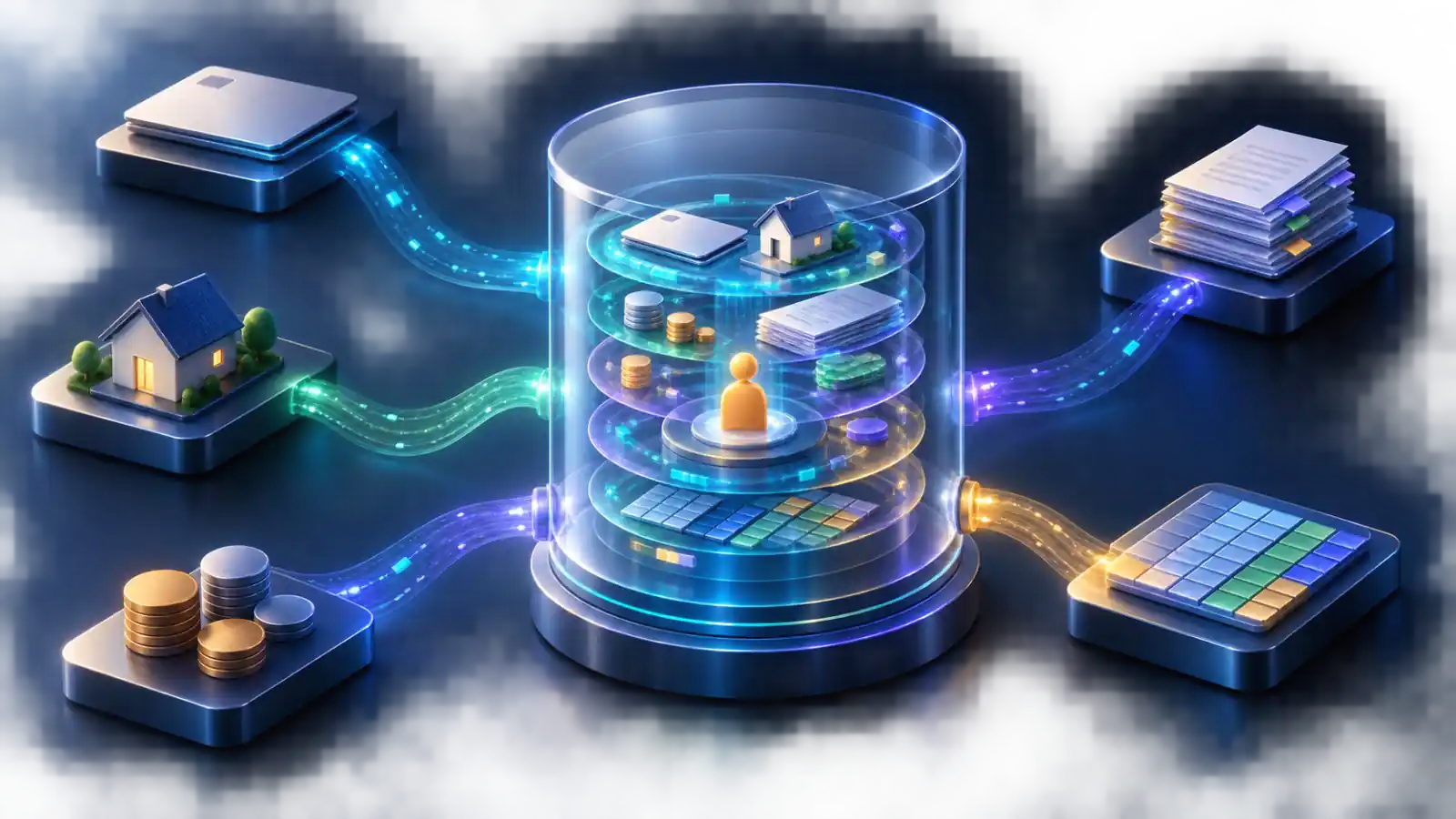
The value of integration is not merely putting screens in one place. It connects histories scattered across services into the long-term context of the same person.
There is no need to predict one company's future. The strategic lesson is that it has spent more than a decade learning connection negotiations, data quirks, synchronization failures, entity matching, consent, and security.
People who understand the pain of consuming APIs can specify the errors, permissions, and undo paths that agents genuinely need. Knowing how information becomes missing, inconsistent, and stuck in real operations matters more than knowing MCP syntax alone. That is why API engineers and integration architects may finally move into the spotlight.
7. 2026, 2027, 2028, or 2030? Use Scenarios to Allocate Investment, Not to Pretend We Know the Date
New technology does not diffuse in a straight line. As Pochang Lab's article on Rogers's diffusion of innovations explains, the famous 2.5% and 13.5% shares are category definitions, not universal measurements. Movement from pioneers to a majority still depends on relative advantage, compatibility, simplicity, trialability, and visible results.
The following is an investment scenario, not a published fact or guaranteed forecast. It is based on the technical and adoption evidence available in August 2026.
Developers and advanced companies combine APIs, MCP, and Computer Use. Embedded SaaS AI is a strong sales hook, but company-wide autonomy remains rare. Weight investment toward Track 1 while always building a shared domain layer.
“AI proposes, human approves” becomes common in calendars, CRM, accounting, and observability. Measure API and screen usage together and expand external access to Track 2.
Industry- and company-specific main agents take repeatable cross-SaaS workflows into production. Products with screen-only business logic pay a connection penalty.
An orchestration agent becomes a common entry point and invokes or generates the necessary GUI. Authoritative SaaS systems, specialist screens, and human approval remain.
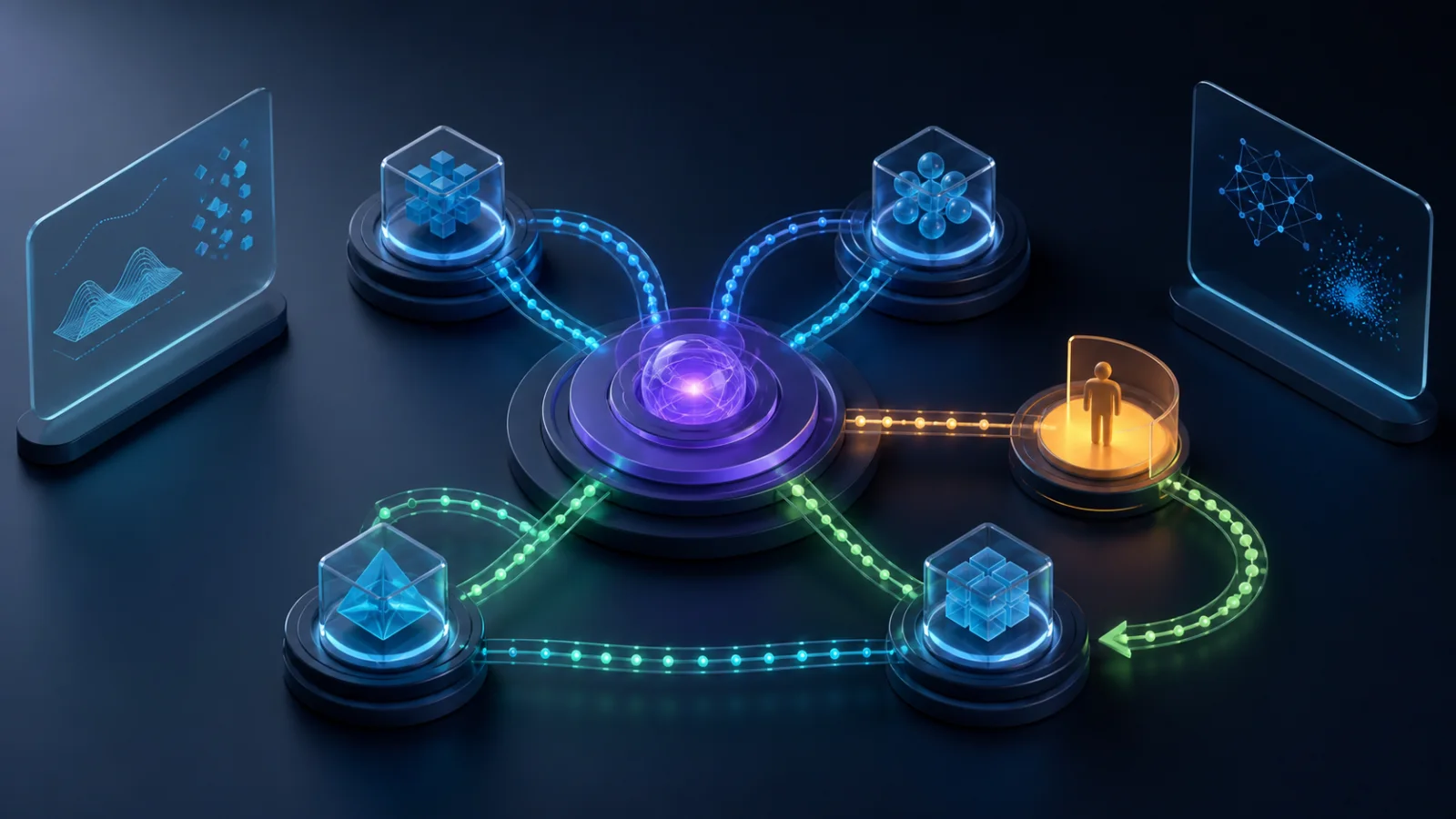
The goal is not an unmanned company. Give automatable operations to AI while preserving a person, evidence, and a path to reversal for consequential decisions.
Predicting the exact year is not the objective. If adoption accelerates in 2027 or remains gradual until 2030, an architecture that exposes the same business capability through multiple entrances protects the investment. A design that can recover its cost only if someone correctly guesses how long embedded AI will sell is too large a bet.
8. A Practical Decision Test: Can Today's AI Feature Become Tomorrow's Asset?
SaaS teams can use the following questions when deciding what to build.
Track 1 deserves more investment when
- customers use the existing interface every day and want to inspect evidence and diffs there;
- one concrete workflow can be shortened and measured through usage, time saved, approvals, or revenue;
- the AI feature lowers adoption anxiety and supports sales or expansion; and
- the interface can invoke shared domain services without creating screen-only logic.
Track 2 is urgent when
- customers already export data through CSV, APIs, RPA, or their own agents;
- the same operation is reimplemented across web, mobile, batch jobs, and integrations;
- auditing, permissions, retries, and undo exist only inside the interface;
- the product cannot explain its capabilities to an external agent in machine-readable form; or
- the product's value lies more in accumulated data, specialist rules, and correct execution than in its screens.
The greatest danger is not building embedded AI. It is building a business capability that exists only inside embedded AI.
SaaS will probably not disappear. The era in which people visit every screen, collect the information, and repeat each operation is beginning to end. The GUI moves from the center of execution toward verification, sharing, and exception handling. SaaS becomes software for humans and, simultaneously, a tool, data layer, and source of business rules for agents.
So sell the AI interface now if it helps. Just make sure its success does not depend on that interface living forever. Use a temporary UI to create today's cash, and a durable API to buy tomorrow's options. That is a practical way to survive the transition to Software for Agents.
References
- [1]OpenAI, “Introducing ChatGPT agent”, describing its visual browser, text browser, terminal, and direct API access. ↩
- [2]OpenAI, “Codex for every role, tool, and workflow”, reporting weekly users and the non-engineering share in June 2026. ↩
- [3]AWS News Blog, “The AWS MCP Server is now generally available”, May 6, 2026. ↩
- [4]AWS Security Blog, “Understanding IAM for Managed AWS MCP Servers”, covering more than 15,000 APIs, existing IAM, and agent-aware context keys. ↩
- [5]Anthropic, “Donating the Model Context Protocol and establishing the Agentic AI Foundation”, on neutral governance and SDK adoption. ↩
- [6]Google AI for Developers, “Computer Use”, updated August 26, 2026; supported environments and preview safety warnings. ↩
- [7]McKinsey, “The state of AI in 2025: Agents, innovation, and transformation”, on experimentation and scaling of AI agents. ↩
- [8]IPA, DX Trends 2025 webinar materials, comparing generative-AI adoption in Japan, the United States, and Germany. ↩
- [9]Postman, “2025 State of the API Report”, based on more than 5,700 respondents. ↩
- [10]Google Workspace Blog, “Google Workspace with Gemini helps you move work forward in meetings”, on scheduling features in Calendar and Gmail. ↩
- [11]AWS Machine Learning Blog, “Agentic observability with Amazon OpenSearch Service MCP Apps”, August 25, 2026. ↩
- [12]Google Developers Blog, “Introducing A2UI”, on declarative, client-rendered interfaces from agents. ↩
- [13]Money Forward, API agreements with all connected financial institutions, October 2020. ↩

NEW NOVEL 2026/08/01
Clouded Glass
Polishing is not about force.
Volume two of The World Became Slightly Farther Away.Five stories that can also be read as a starting point.
View on Amazon
Jijoden.com
Your life is worth writing.
There is a truer self you can tell only to AI.Gather fragments of memory into a single story.
Take a LookRelated Articles
Will Figma Disappear in the AI Era? What Remains When Design, Code, and Debate Converge
A 2026 evidence-based analysis of whether AI-generated working interfaces make Figma obsolete, covering Code Layers, agents, MCP, economics, competitors, and the workflows that will actually disappear.
What Is Claude Cowork, and Does It Accelerate “SaaS Is Dead”?
A practical analysis of Claude Cowork features, pricing, safety, and competitive positioning to evaluate whether it accelerates the “SaaS is dead” thesis.
GitHub Projects in Practice: AI Agents Read, Update, and Share Project Context
Make GitHub Projects shared context for people and AI agents: setup, search, reporting, startup reads, automatic status updates, AGENTS.md and CLAUDE.md instructions, reusable skills, and human oversight.
Making Jev’s Speed and Cost Playable: Two Hours of Conversation, Zero Handwritten Lines
Trying Jev turned into a buzzword game through conversations with Claude Code. A real demo, roughly 400ms responses, about ¥5 in API usage, and the mistakes that moved decisions back into code.
Why Orca Passed 80,000 GitHub Stars: One Place to Run, Review, and Return to Parallel Agent Work
A balanced look at Orca’s 81.6k stars: CLI portability, worktrees, review, Design Mode, screen limits, competitors, founders, and the business behind a free agent development environment.